Technical Specifications
| Brand | Mazda |
| Model | 6 |
| Generation | 6 II Combi (GH) |
| Type (Engine) | 1.8 (120 Hp) |
| Start of production | 2007 |
| End of production | 2010 |
| Powertrain Architecture | Internal Combustion engine |
| Body type | Station wagon (estate) |
| Seats | 5 |
| Doors | 5 |
| Fuel consumption (urban) | 9.3 l/100 km (25.3 US mpg) |
| Fuel consumption (extra urban) | 5.1 l/100 km (46.1 US mpg) |
| Fuel consumption (combined) | 6.6 l/100 km (35.6 US mpg) |
| Fuel Type | Petrol (Gasoline) |
| Acceleration 0 – 100 km/h | 11.8 sec |
| Acceleration 0 – 62 mph | 11.8 sec |
| Acceleration 0 – 60 mph | 11.2 sec |
| Maximum speed | 190 km/h (118.06 mph) |
| Emission standard | Euro 4 |
| Weight-to-power ratio | 11.9 kg/Hp |
| Weight-to-torque ratio | 8.6 kg/Nm |
| Power | 120 Hp @ 5500 rpm |
| Torque | 165 Nm @ 4300 rpm (121.7 lb.-ft. @ 4300 rpm) |
| Engine layout | Front, Transverse |
| Engine displacement | 1798 cm3 (109.72 cu. in.) |
| Number of cylinders | 4 |
| Engine configuration | Inline |
| Cylinder Bore | 83 mm (3.27 in.) |
| Piston Stroke | 83.1 mm (3.27 in.) |
| Compression ratio | 10.8:1 |
| Number of valves per cylinder | 4 |
| Fuel injection system | Multi-port manifold injection |
| Engine aspiration | Naturally aspirated engine |
| Kerb Weight | 1425 kg (3141.59 lbs.) |
| Max. weight | 1965 kg (4332.08 lbs.) |
| Max load | 540 kg (1190.5 lbs.) |
| Trunk (boot) space – minimum | 519 l (18.33 cu. ft.) |
| Fuel tank capacity | 64 l (16.91 US gal | 14.08 UK gal) |
| Length | 4765 mm (187.6 in.) |
| Width | 1795 mm (70.67 in.) |
| Height | 1490 mm (58.66 in.) |
| Wheelbase | 2725 mm (107.28 in.) |
| Front track | 1550 mm (61.02 in.) |
| Rear (Back) track | 1550 mm (61.02 in.) |
| Drivetrain Architecture | The Internal combustion engine (ICE) drives the front wheels of the vehicle. |
| Drive wheel | Front wheel drive |
| Number of gears and type of gearbox | 5 gears, manual transmission |
| Front brakes | Ventilated discs |
| Rear brakes | Ventilated discs |
| Assisting systems | ABS (Anti-lock braking system) |
| Steering type | Steering rack and pinion |
| Power steering | Electric Steering |
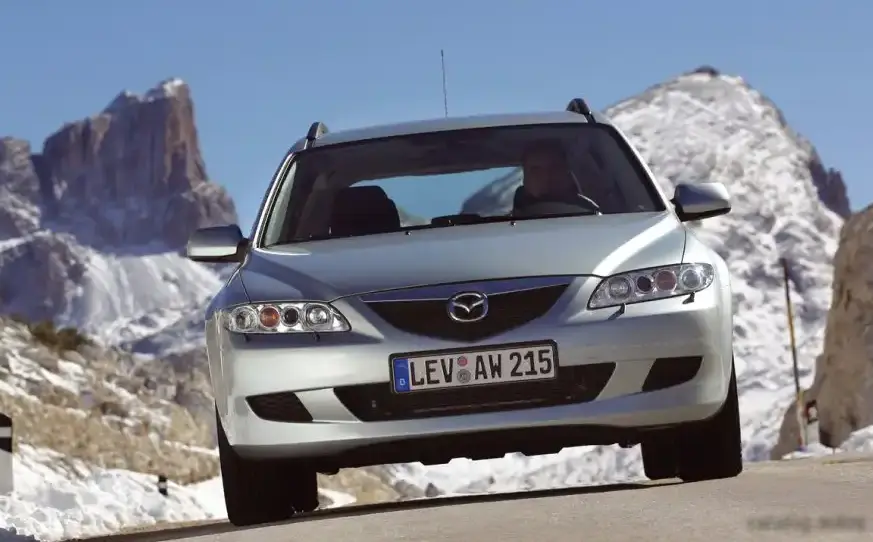
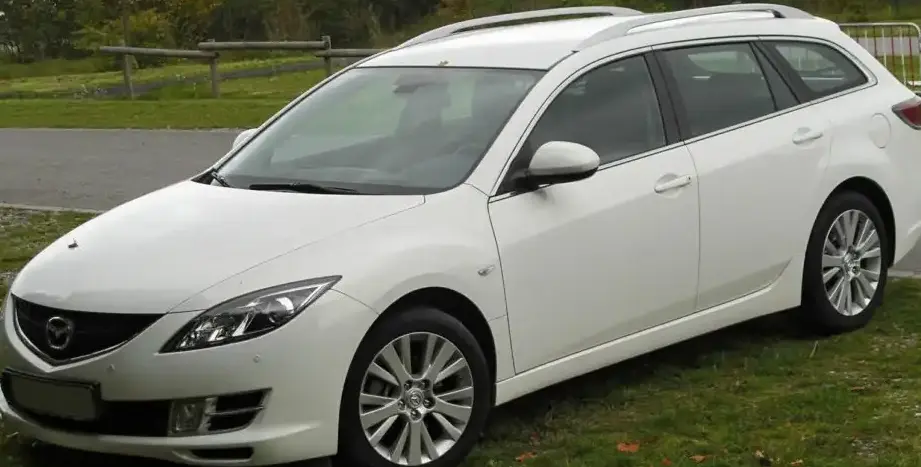
The Mazda 6 II Combi 1.8, produced between 2007 and 2010, represents a significant variant within the second generation of Mazda’s popular mid-size wagon. Positioned as an entry-level offering in many European markets, this model aimed to provide a balance of practicality, fuel efficiency, and affordability within the 6 Combi range. It was a key vehicle for Mazda, contributing to the brand’s growing reputation for stylish and reliable vehicles in the competitive family car segment. The “Combi” designation signifies the station wagon (estate) body style, offering increased cargo capacity compared to the sedan version. This particular variant served as a gateway into the 6 Combi lineup, appealing to buyers prioritizing value and economy.
Powertrain & Engine Architecture
The Mazda 6 II Combi 1.8 utilized the Mazda MZR 1.8-liter inline-four cylinder engine. This engine, internally designated as F8-DE, is a naturally aspirated powerplant featuring multi-point fuel injection. The engine’s design prioritized fuel efficiency and smooth operation over outright performance. It employed a single overhead camshaft (SOHC) design with four valves per cylinder, contributing to reasonable power output for its displacement. The 1.8L engine produced 120 horsepower at 5,500 rpm and 165 Nm (121.7 lb-ft) of torque at 4,300 rpm. The engine’s compression ratio was 10.8:1. While a five-speed manual gearbox was the most common pairing, a four-speed automatic transmission was also available, though less frequently chosen. This automatic transmission was designed for smooth, comfortable shifts rather than aggressive performance. It featured a traditional torque converter setup and was geared towards maximizing fuel economy. The engine management system was a sophisticated electronic control unit (ECU) that optimized fuel delivery and ignition timing for varying driving conditions.
Driving Characteristics
The 1.8-liter engine, coupled with the five-speed manual transmission, provided adequate performance for everyday driving. Acceleration from 0 to 60 mph took approximately 11.2 seconds, and top speed was around 118 mph. While not particularly quick, the engine offered a linear power delivery, making it predictable and easy to control. The automatic transmission, while offering convenience, noticeably dulled acceleration and responsiveness. Gear ratios were optimized for fuel economy, resulting in a slightly lethargic feel during overtaking maneuvers. Compared to the higher-output 2.0-liter and 2.5-liter variants, the 1.8L model felt noticeably less powerful, but it compensated with better fuel economy. The manual transmission allowed drivers to extract more performance from the engine, but still didn’t match the responsiveness of the larger displacement options. Steering was light and precise, making it easy to maneuver in urban environments. The suspension provided a comfortable ride, absorbing bumps and imperfections in the road surface effectively.
Equipment & Trim Levels
The 1.8-liter Mazda 6 Combi typically came with a reasonable level of standard equipment. This generally included air conditioning, power windows, power door locks, a CD player with auxiliary input, and ABS brakes. Higher trim levels, such as the ‘TS’ or ‘Sport’ variants, added features like alloy wheels, fog lights, cruise control, and upgraded interior trim. Interior upholstery was typically cloth, with options for partial leather in higher trims. The dashboard layout was functional and well-designed, with a focus on ergonomics. Optional extras included a sunroof, navigation system, and premium sound system. The base trim focused on essential features, while the higher trims offered a more refined and luxurious experience. The availability of optional extras allowed buyers to customize the vehicle to their specific needs and preferences.
Chassis & Braking
The Mazda 6 II Combi featured a MacPherson strut front suspension and a multi-link rear suspension, providing a comfortable and controlled ride. The suspension was tuned to prioritize comfort over sporty handling, but still offered decent body control. The 1.8-liter models typically used ventilated disc brakes on all four wheels, providing adequate stopping power. ABS (Anti-lock Braking System) was standard. Stabilizer bars were fitted to both the front and rear axles to reduce body roll during cornering. The weight distribution was relatively balanced, contributing to predictable handling characteristics. The chassis was designed to provide a stable and secure platform for the vehicle, enhancing driver confidence. The braking system was reliable and effective, providing consistent stopping performance.
Market Reception & Comparison
The Mazda 6 II Combi 1.8 was generally well-received by automotive critics as a practical and affordable family car. It was praised for its spacious interior, comfortable ride, and good fuel economy. However, some critics noted that the 1.8-liter engine lacked the power and refinement of the larger displacement options. Compared to rivals like the Ford Mondeo, Volkswagen Passat, and Opel/Vauxhall Insignia, the Mazda 6 offered a more stylish design and a more engaging driving experience, but often at a slightly higher price point. Fuel economy figures of around 35.6 US mpg (combined) were competitive for its class. Reliability was generally good, with few major issues reported. The 1.8L model appealed to buyers who prioritized fuel efficiency and affordability over outright performance, while the higher-output variants attracted those seeking a more dynamic driving experience.
Legacy
The Mazda 6 II Combi 1.8 remains a popular choice in the used car market, particularly for buyers seeking an affordable and reliable family wagon. The MZR 1.8-liter engine is known for its durability and relatively low maintenance costs. While not the most exciting engine in the lineup, it has proven to be a dependable powerplant over the long term. Parts availability is generally good, and the car’s relatively simple mechanical design makes it relatively easy to repair. The 1.8L automatic variant, while less desirable to driving enthusiasts, offers a comfortable and convenient driving experience for those prioritizing ease of use. Today, these vehicles represent a good value proposition for budget-conscious buyers looking for a practical and reliable family car. The Mazda 6 II Combi 1.8’s enduring appeal is a testament to its well-rounded design and proven reliability.