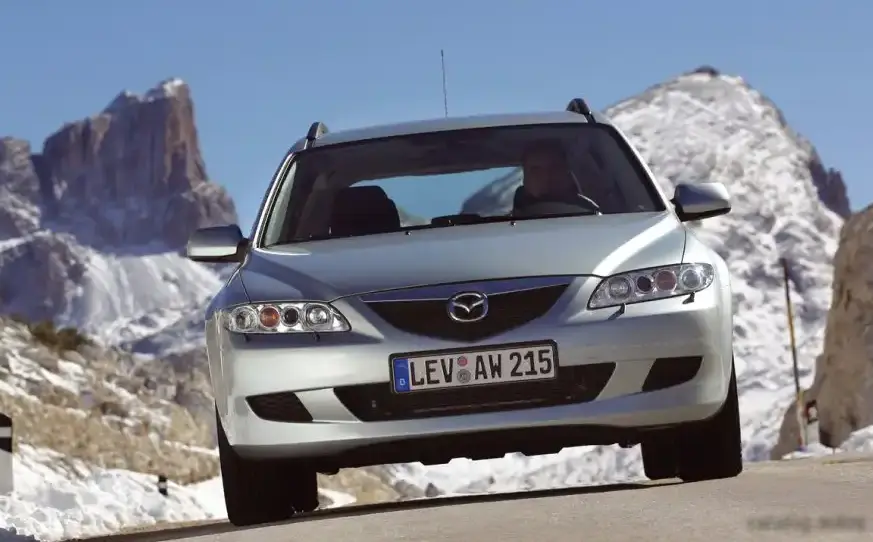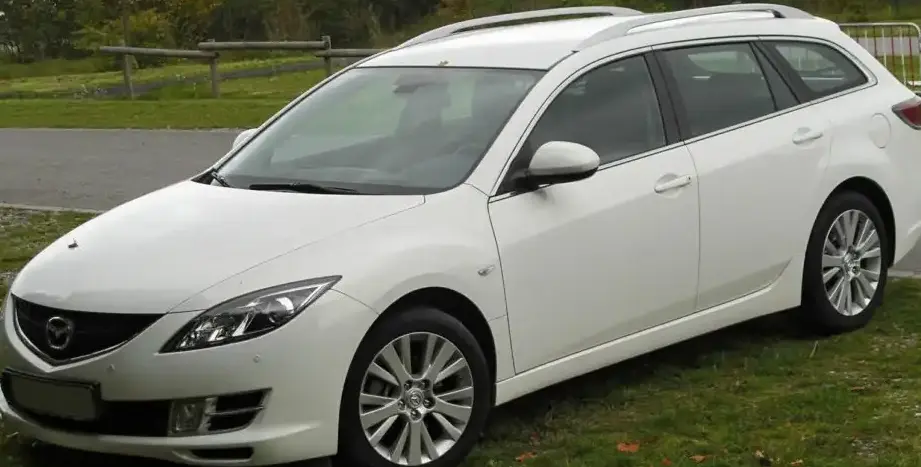
The Mazda 6 II Combi (GH) 2.0 CD, produced from 2007 to 2010, represents a significant iteration of Mazda’s popular mid-size wagon. Positioned as a practical and efficient option within the second-generation 6 lineup (GH), this variant offered a diesel-powered alternative to the gasoline engines available. The Combi, Mazda’s designation for a station wagon or estate body style, aimed to provide increased cargo capacity and versatility compared to the sedan version. This particular 2.0 CD model, generating 140 horsepower, was a key offering in European markets where diesel engines held a substantial market share, and offered a balance between fuel economy and performance for family and business users.
Technical Specifications
| Brand | Mazda |
| Model | 6 |
| Generation | 6 II Combi (GH) |
| Type (Engine) | 2.0 CD (140 Hp) |
| Start of production | 2007 |
| End of production | 2010 |
| Powertrain Architecture | Internal Combustion engine |
| Body type | Station wagon (estate) |
| Seats | 5 |
| Doors | 5 |
| Fuel consumption (economy) – urban (NEDC) | 6.8 l/100 km (34.6 US mpg, 41.5 UK mpg, 14.7 km/l) |
| Fuel consumption (economy) – extra urban (NEDC) | 5 l/100 km (47 US mpg, 56.5 UK mpg, 20 km/l) |
| Fuel consumption (economy) – combined (NEDC) | 5.7 l/100 km (41.3 US mpg, 49.6 UK mpg, 17.5 km/l) |
| CO2 emissions (NEDC) | 149 g/km |
| Fuel Type | Diesel |
| Acceleration 0 – 100 km/h | 10.9 sec |
| Acceleration 0 – 62 mph | 10.9 sec |
| Acceleration 0 – 60 mph | 10.4 sec |
| Maximum speed | 198 km/h (123.03 mph) |
| Emission standard | Euro 4 |
| Weight-to-power ratio | 10.5 kg/Hp, 95.2 Hp/tonne |
| Weight-to-torque ratio | 4.5 kg/Nm, 224.5 Nm/tonne |
| Power | 140 Hp @ 3500 rpm |
| Power per litre | 70.1 Hp/l |
| Torque | 330 Nm @ 2000 rpm (243.4 lb.-ft. @ 2000 rpm) |
| Engine layout | Front, Transverse |
| Engine Model/Code | RF7J |
| Engine displacement | 1998 cm3 (121.93 cu. in.) |
| Number of cylinders | 4 |
| Engine configuration | Inline |
| Cylinder Bore | 86 mm (3.39 in.) |
| Piston Stroke | 86 mm (3.39 in.) |
| Compression ratio | 16.7:1 |
| Number of valves per cylinder | 4 |
| Fuel injection system | Diesel Commonrail |
| Engine aspiration | Turbocharger, Intercooler |
| Valvetrain | DOHC |
| Engine oil capacity | 4.1 l (4.33 US qt, 3.61 UK qt) |
| Coolant | 9 l (9.51 US qt, 7.92 UK qt) |
| Kerb Weight | 1470 kg (3240.8 lbs.) |
| Max. weight | 2110 kg (4651.75 lbs.) |
| Max load | 640 kg (1410.96 lbs.) |
| Trunk (boot) space – minimum | 519 l (18.33 cu. ft.) |
| Trunk (boot) space – maximum | 1751 l (61.84 cu. ft.) |
| Fuel tank capacity | 64 l (16.91 US gal, 14.08 UK gal) |
| Max. roof load | 100 kg (220.46 lbs.) |
| Permitted trailer load with brakes (8%) | 1800 kg (3968.32 lbs.) |
| Permitted trailer load with brakes (12%) | 1600 kg (3527.4 lbs.) |
| Permitted towbar download | 75 kg (165.35 lbs.) |
| Length | 4785 mm (188.39 in.) |
| Width | 1795 mm (70.67 in.) |
| Height | 1490 mm (58.66 in.) |
| Wheelbase | 2725 mm (107.28 in.) |
| Front track | 1550-1570 mm (61.02 – 61.81 in.) |
| Rear (Back) track | 1550-1570 mm (61.02 – 61.81 in.) |
| Ride height (ground clearance) | 165 mm (6.5 in.) |
| Minimum turning circle (turning diameter) | 11.4 m (37.4 ft.) |
| Drivetrain Architecture | The Internal combustion engine (ICE) drives the front wheels of the vehicle. |
| Drive wheel | Front wheel drive |
| Number of gears and type of gearbox | 6 gears, manual transmission |
| Front suspension | Double wishbone, Transverse stabilizer |
| Rear suspension | Independent multi-link suspension, Transverse stabilizer |
| Front brakes | Ventilated discs, 299 mm |
| Rear brakes | Disc, 280 mm |
| Assisting systems | ABS (Anti-lock braking system) |
| Steering type | Steering rack and pinion |
| Power steering | Electric Steering |
| Tires size | 205/60 R16; 215/50 R17; 225/45 R18 |
| Wheel rims size | 6.5J x 16; 7J x 17; 7.5J x 18 |
INTRODUCTION
The Mazda 6 II Combi 2.0 CD, launched in 2007 as part of the GH series, was a crucial model for Mazda in the European market. Building upon the success of the first-generation 6, the GH series aimed to elevate the car’s appeal with improved styling, refinement, and technology. The Combi body style, specifically, targeted buyers needing the practicality of a wagon without sacrificing the driving dynamics Mazda was becoming known for. The 2.0 CD variant, powered by the RF7J engine, was designed to offer a compelling blend of fuel efficiency and usable performance, appealing to both private buyers and fleet operators. It sat in the middle of the diesel range, offering more power than the 1.6 CD but being more affordable than the 2.2 CD models.
Powertrain & Engine Architecture
The heart of the 2.0 CD Combi is the RF7J engine, a 1998cc inline-four cylinder diesel. This engine utilized a common-rail direct injection system, delivering fuel at extremely high pressure for optimized combustion. The RF7J featured a turbocharger with an intercooler, boosting power output and improving torque delivery. The engine employed a double overhead camshaft (DOHC) valvetrain with four valves per cylinder, enhancing breathing and contributing to its power characteristics. A key feature of this engine was its relatively high compression ratio of 16.7:1, typical for diesel engines, which aids in efficiency. The engine was paired with a six-speed manual transmission, providing a good balance between fuel economy and driver control. While an automatic transmission was available on some 6 models, it was less common with the 2.0 CD engine.
Driving Characteristics
The 140 horsepower and 330 Nm (243 lb-ft) of torque produced by the 2.0 CD engine provided adequate performance for everyday driving. Acceleration from 0-60 mph took around 10.4 seconds, and top speed was rated at 198 km/h (123 mph). Compared to the more powerful 2.2 CD variants, the 2.0 CD felt less urgent in acceleration, particularly at higher speeds. However, the engine delivered strong low-end torque, making it well-suited for overtaking and navigating hilly terrain. The six-speed manual transmission allowed drivers to keep the engine in its optimal power band. The Combi’s suspension, tuned for comfort, provided a reasonably compliant ride, although it wasn’t as sporty as some competitors. The steering was precise and well-weighted, contributing to a confident driving experience.
Equipment & Trim Levels
The Mazda 6 II Combi 2.0 CD was typically offered in several trim levels, varying by market. Standard equipment generally included air conditioning, power windows, power mirrors, a CD stereo, and ABS brakes. Higher trim levels added features such as alloy wheels, a multi-function steering wheel, cruise control, and automatic climate control. Interior upholstery was typically cloth, with leather options available on higher-spec models. The Combi’s spacious interior offered comfortable seating for five adults, and the rear seats could be folded down to create a large cargo area. Optional extras included a sunroof, navigation system, and parking sensors.
Chassis & Braking
The Mazda 6 II Combi featured a front-wheel-drive layout with a double wishbone suspension at the front and an independent multi-link suspension at the rear. This suspension setup provided a good balance between ride comfort and handling. The car was equipped with ventilated disc brakes at the front and solid discs at the rear. ABS (Anti-lock Braking System) was standard, enhancing braking performance and safety. Stabilizer bars were fitted to both the front and rear axles to reduce body roll during cornering.
Market Reception & Comparison
The Mazda 6 II Combi 2.0 CD was generally well-received by automotive critics. It was praised for its stylish design, spacious interior, and fuel efficiency. However, some reviewers noted that the 2.0 CD engine lacked the outright performance of its larger 2.2-liter counterpart. Compared to competitors such as the Ford Mondeo, Volkswagen Passat, and Peugeot 407, the Mazda 6 offered a more engaging driving experience and a more premium interior feel. Fuel economy was competitive, with combined figures around 5.7 l/100 km (41.3 US mpg). Reliability was generally good, although some owners reported issues with the diesel particulate filter (DPF).
Legacy
The Mazda 6 II Combi 2.0 CD remains a popular choice in the used car market. The RF7J engine, while not without its potential issues (such as DPF clogging if not driven on longer journeys), is generally considered reliable if properly maintained. Parts availability is good, and maintenance costs are reasonable. The Combi’s spacious interior and practical wagon body style continue to appeal to buyers seeking a versatile and fuel-efficient vehicle. Today, these cars represent a good value proposition for those seeking a comfortable and reliable family car with a touch of Mazda’s signature driving dynamics.