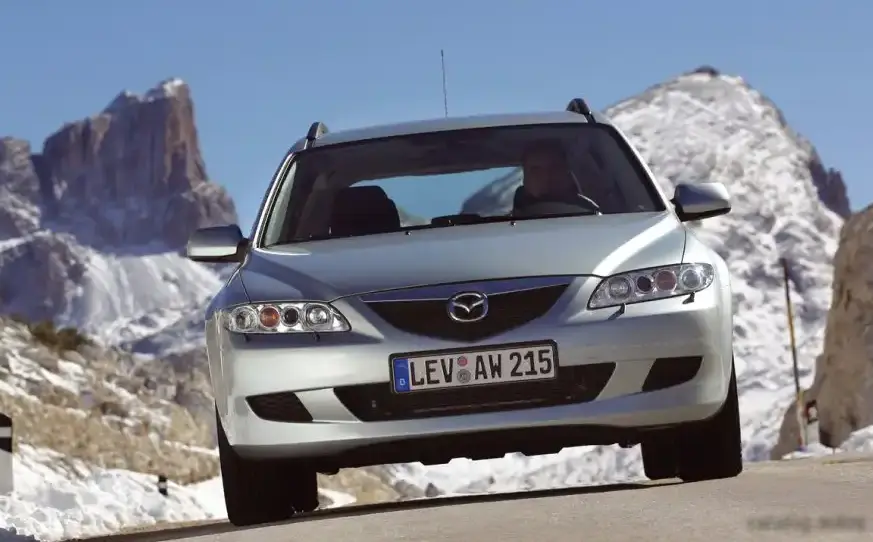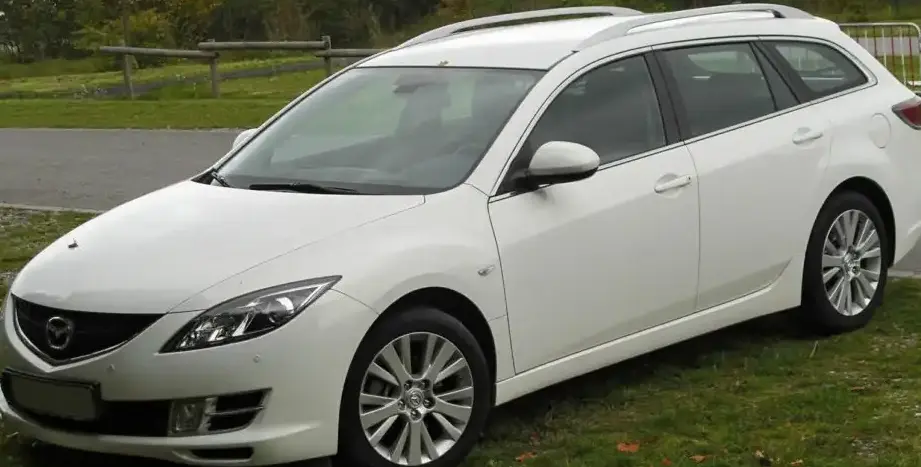
The Mazda 6 II Combi (GH) 2.2 CD, produced from 2007 to 2010, represents a significant iteration of Mazda’s popular mid-size wagon. Positioned as a practical and relatively efficient option within the second-generation 6 lineup (GH platform), this variant offered a diesel engine paired with a six-speed manual transmission. It aimed to appeal to buyers seeking a blend of fuel economy, cargo space, and reasonable performance, particularly in European markets where diesel station wagons were highly favored. This model served as a key competitor to vehicles like the Ford Mondeo Estate, Volkswagen Passat Variant, and Opel/Vauxhall Insignia Sports Tourer.
Technical Specifications
| Brand | Mazda |
| Model | 6 |
| Generation | 6 II Combi (GH) |
| Type (Engine) | 2.2 CD (163 Hp) |
| Start of production | 2007 |
| End of production | 2010 |
| Powertrain Architecture | Internal Combustion engine |
| Body type | Station wagon (estate) |
| Seats | 5 |
| Doors | 5 |
| Fuel consumption (urban) | 6.9 l/100 km (34.1 US mpg) |
| Fuel consumption (extra urban) | 4.5 l/100 km (52.3 US mpg) |
| Fuel consumption (combined) | 5.4 l/100 km (43.6 US mpg) |
| Fuel Type | Diesel |
| Acceleration 0 – 100 km/h | 9.2 sec |
| Acceleration 0 – 62 mph | 9.2 sec |
| Acceleration 0 – 60 mph | 8.7 sec |
| Maximum speed | 211 km/h (131.11 mph) |
| Emission standard | Euro 5 |
| Weight-to-power ratio | 9.7 kg/Hp |
| Power | 163 Hp @ 3500 rpm |
| Engine layout | Front, Transverse |
| Engine Model/Code | R2AA |
| Engine displacement | 2184 cm3 (133.28 cu. in.) |
| Number of cylinders | 4 |
| Engine configuration | Inline |
| Cylinder Bore | 86 mm (3.39 in.) |
| Piston Stroke | 94 mm (3.7 in.) |
| Compression ratio | 16.3:1 |
| Number of valves per cylinder | 4 |
| Fuel injection system | Diesel Commonrail |
| Engine aspiration | Turbocharger, Intercooler |
| Engine oil capacity | 4.7 l (4.97 US qt | 4.14 UK qt) |
| Coolant capacity | 9 l (9.51 US qt | 7.92 UK qt) |
| Kerb Weight | 1575 kg (3472.28 lbs.) |
| Max. weight | 2145 kg (4728.92 lbs.) |
| Max load | 570 kg (1256.63 lbs.) |
| Trunk (boot) space – minimum | 519 l (18.33 cu. ft.) |
| Fuel tank capacity | 64 l (16.91 US gal | 14.08 UK gal) |
| Length | 4765 mm (187.6 in.) |
| Width | 1795 mm (70.67 in.) |
| Height | 1490 mm (58.66 in.) |
| Wheelbase | 2725 mm (107.28 in.) |
| Drivetrain Architecture | Front wheel drive |
| Number of gears and type of gearbox | 6 gears, manual transmission |
| Front brakes | Ventilated discs |
| Rear brakes | Ventilated discs |
Powertrain & Engine Architecture
The heart of the Mazda 6 II Combi 2.2 CD is the R2AA engine, a 2.2-liter inline-four cylinder diesel. This engine utilizes a common-rail direct injection system, delivering fuel at extremely high pressure for optimized combustion. A turbocharger with an intercooler is employed to boost power output and improve torque across the rev range. The engine produces 163 horsepower at 3500 rpm and a substantial amount of torque, making it well-suited for hauling passengers and cargo. The engine’s 16.3:1 compression ratio is typical for a diesel engine, contributing to its efficiency. The six-speed manual transmission was the standard offering for this variant, providing drivers with precise control over gear selection and contributing to the vehicle’s overall responsiveness.
Driving Characteristics
The 2.2 CD with the six-speed manual transmission offered a balanced driving experience. While not a sports car, the engine provided ample torque for confident overtaking and comfortable cruising. The manual gearbox allowed for engaging driving, and the gear ratios were well-matched to the engine’s powerband. Compared to the gasoline-powered versions of the Mazda 6, the diesel offered significantly better fuel economy. However, it lacked the immediate responsiveness of the petrol engines. Compared to higher-output diesel variants (like those found in some European markets), the 163 hp version felt less powerful, but it also offered improved refinement and potentially better long-term reliability due to the lower stress on the engine components.
Equipment & Trim Levels
The Mazda 6 II Combi 2.2 CD typically came equipped with a respectable level of standard features. These included air conditioning, power windows, power mirrors, a CD player with auxiliary input, and ABS brakes. Higher trim levels, such as the ‘Sport’ or ‘Luxury’ variants, added features like alloy wheels, a sunroof, leather upholstery, automatic climate control, and a more advanced audio system. Optional extras included navigation systems, parking sensors, and xenon headlights. Interior upholstery was generally cloth on base models, with leather available as an upgrade. The dashboard layout was functional and driver-focused, with clear instrumentation and logically placed controls.
Chassis & Braking
The Mazda 6 II Combi featured a MacPherson strut front suspension and a multi-link rear suspension, providing a comfortable ride and good handling characteristics. The 2.2 CD variant typically used ventilated disc brakes on all four wheels, offering strong stopping power. ABS (Anti-lock Braking System) was standard, enhancing safety during emergency braking situations. Stabilizer bars were fitted to both the front and rear axles to reduce body roll during cornering. The suspension tuning was geared towards comfort and stability, making it a pleasant vehicle for long journeys.
Market Reception & Comparison
The Mazda 6 II Combi 2.2 CD was generally well-received by automotive critics. It was praised for its fuel efficiency, spacious interior, and comfortable ride. However, some reviewers noted that the engine could be somewhat noisy compared to some of its competitors. In terms of fuel economy, the 2.2 CD consistently outperformed the gasoline-powered versions of the Mazda 6, achieving combined fuel consumption figures of around 43.6 US mpg. Compared to other diesel station wagons in its class, the Mazda 6 offered a competitive blend of performance, economy, and value. Reliability was generally considered good, although like any diesel engine, it was susceptible to issues related to the fuel injection system and turbocharger.
Legacy
The Mazda 6 II Combi 2.2 CD has proven to be a relatively reliable vehicle in the used car market. The R2AA engine, while requiring regular maintenance, is generally durable. Common issues include wear and tear on the turbocharger and potential problems with the diesel particulate filter (DPF), particularly on vehicles that have primarily been used for short journeys. Today, these vehicles represent a good value proposition for buyers seeking a practical and fuel-efficient station wagon. The combination of a spacious interior, comfortable ride, and reasonable running costs makes it a popular choice for families and individuals alike. The 6 II Combi, in general, helped solidify Mazda’s reputation for building well-engineered and stylish vehicles.