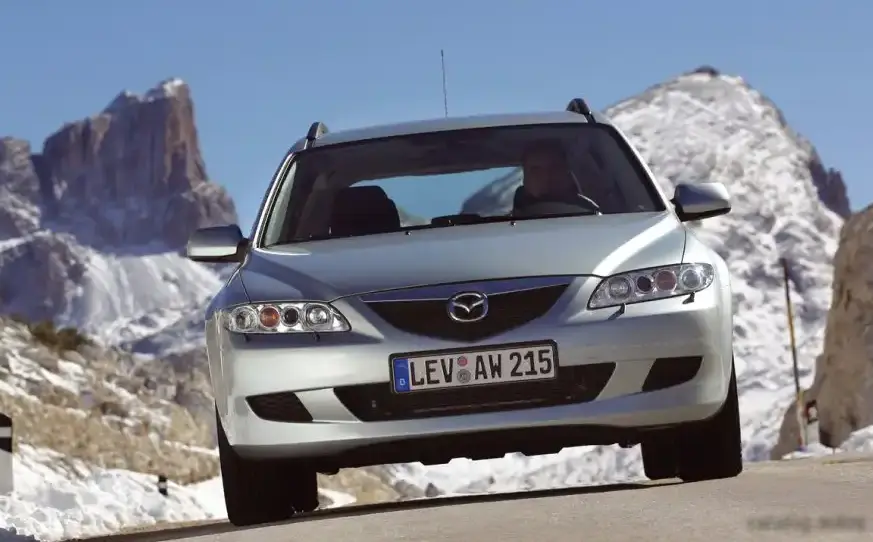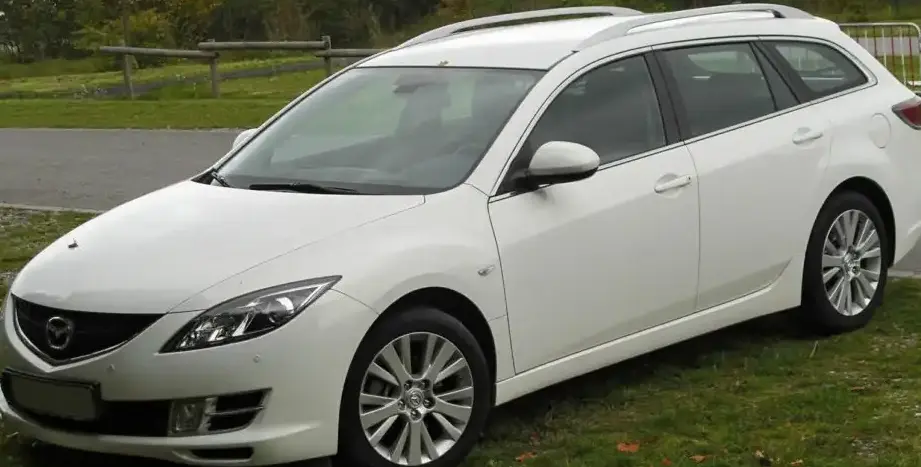
The Mazda 6 II Combi (GH) 2.2 CD, producing 185 horsepower, was a key variant of Mazda’s second-generation 6 wagon, sold primarily in the European market from 2007 to 2010. Positioned as a mid-to-upper trim level, it offered a blend of performance, fuel efficiency, and practicality aimed at buyers seeking a refined and capable family vehicle. The “Combi” designation signifies the station wagon (estate) body style, a popular choice in Europe for its increased cargo capacity compared to the sedan. This model resided on the GH platform, representing a significant evolution over the first-generation 6, with improvements in design, technology, and driving dynamics.
Technical Specifications
| Brand | Mazda |
| Model | 6 |
| Generation | 6 II Combi (GH) |
| Type (Engine) | 2.2 CD (185 Hp) |
| Start of production | 2007 |
| End of production | 2010 |
| Powertrain Architecture | Internal Combustion engine |
| Body type | Station wagon (estate) |
| Seats | 5 |
| Doors | 5 |
| Fuel consumption (economy) – urban (NEDC) | 7.2 l/100 km (32.7 US mpg, 39.2 UK mpg, 13.9 km/l) |
| Fuel consumption (economy) – extra urban (NEDC) | 4.8 l/100 km (49 US mpg, 58.9 UK mpg, 20.8 km/l) |
| Fuel consumption (economy) – combined (NEDC) | 5.7 l/100 km (41.3 US mpg, 49.6 UK mpg, 17.5 km/l) |
| CO2 emissions (NEDC) | 152 g/km |
| Fuel Type | Diesel |
| Acceleration 0 – 100 km/h | 8.5 sec |
| Acceleration 0 – 62 mph | 8.5 sec |
| Acceleration 0 – 60 mph | 8.1 sec |
| Maximum speed | 216 km/h (134.22 mph) |
| Emission standard | Euro 4 |
| Weight-to-power ratio | 8.2 kg/Hp, 122.5 Hp/tonne |
| Weight-to-torque ratio | 3.8 kg/Nm, 264.9 Nm/tonne |
| Power | 185 Hp @ 3500 rpm |
| Power per litre | 84.7 Hp/l |
| Torque | 400 Nm @ 1600 rpm (295.02 lb.-ft. @ 1600 rpm) |
| Engine layout | Front, Transverse |
| Engine Model/Code | R2AA |
| Engine displacement | 2183 cm3 (133.21 cu. in.) |
| Number of cylinders | 4 |
| Engine configuration | Inline |
| Cylinder Bore | 86 mm (3.39 in.) |
| Piston Stroke | 94 mm (3.7 in.) |
| Compression ratio | 16.3:1 |
| Number of valves per cylinder | 4 |
| Fuel injection system | Diesel Commonrail |
| Engine aspiration | Turbocharger, Intercooler |
| Valvetrain | DOHC |
| Engine oil capacity | 4.7 l (4.97 US qt | 4.14 UK qt) |
| Coolant | 9 l (9.51 US qt | 7.92 UK qt) |
| Kerb Weight | 1510 kg (3328.98 lbs.) |
| Max. weight | 2145 kg (4728.92 lbs.) |
| Max load | 635 kg (1399.94 lbs.) |
| Trunk (boot) space – minimum | 519 l (18.33 cu. ft.) |
| Trunk (boot) space – maximum | 1751 l (61.84 cu. ft.) |
| Fuel tank capacity | 64 l (16.91 US gal | 14.08 UK gal) |
| Max. roof load | 100 kg (220.46 lbs.) |
| Permitted trailer load with brakes (12%) | 1600 kg (3527.4 lbs.) |
| Permitted towbar download | 75 kg (165.35 lbs.) |
| Length | 4785 mm (188.39 in.) |
| Width | 1795 mm (70.67 in.) |
| Height | 1490 mm (58.66 in.) |
| Wheelbase | 2725 mm (107.28 in.) |
| Front track | 1550-1570 mm (61.02 – 61.81 in.) |
| Rear (Back) track | 1550-1570 mm (61.02 – 61.81 in.) |
| Ride height (ground clearance) | 165 mm (6.5 in.) |
| Minimum turning circle (turning diameter) | 11.4 m (37.4 ft.) |
| Drivetrain Architecture | The Internal combustion engine (ICE) drives the front wheels of the vehicle. |
| Drive wheel | Front wheel drive |
| Number of gears and type of gearbox | 6 gears, manual transmission |
| Front suspension | Double wishbone, Transverse stabilizer |
| Rear suspension | Independent multi-link suspension, Transverse stabilizer |
| Front brakes | Ventilated discs, 299 mm |
| Rear brakes | Disc, 280 mm |
| Assisting systems | ABS (Anti-lock braking system) |
| Steering type | Steering rack and pinion |
| Power steering | Electric Steering |
| Tires size | 205/60 R16; 215/50 R17; 225/45 R18 |
| Wheel rims size | 6.5J x 16; 7J x 17; 7.5J x 18 |
Powertrain & Engine Architecture
The heart of the Mazda 6 II Combi 2.2 CD was the R2AA engine, a 2.2-liter inline-four cylinder diesel. This engine was a product of Mazda’s ongoing development of common-rail direct injection technology. The R2AA featured a high-pressure common rail system, delivering fuel directly into the cylinders at extremely high pressure for optimized combustion. A variable geometry turbocharger (VGT) with an intercooler was employed to boost power and torque across a wide RPM range. The engine utilized a Double Overhead Camshaft (DOHC) valvetrain with four valves per cylinder, enhancing breathing and contributing to its power output. The 185 horsepower peak was achieved at 3500 rpm, while the substantial 400 Nm (295 lb-ft) of torque was available from just 1600 rpm, providing strong low-end and mid-range acceleration. The engine met Euro 4 emissions standards, incorporating a diesel particulate filter (DPF) to reduce soot emissions.
Driving Characteristics
The 2.2 CD engine, paired with a six-speed manual transmission, provided a balanced driving experience. Acceleration from 0-100 km/h (0-62 mph) took approximately 8.5 seconds, making it reasonably quick for a family wagon. The high torque output meant that overtaking maneuvers were executed with confidence, and the engine felt responsive even when fully loaded. Compared to the lower-powered 2.0-liter diesel variants, the 2.2 CD offered a noticeable performance upgrade. While not as sporty as the gasoline-powered models, it provided ample power for everyday driving and long-distance journeys. The six-speed gearbox allowed for efficient cruising at highway speeds, keeping engine RPMs low and contributing to good fuel economy.
Equipment & Trim Levels
The 2.2 CD trim typically included a generous level of standard equipment. This often encompassed features like air conditioning, power windows and mirrors, a CD/radio system with steering wheel-mounted audio controls, and alloy wheels. Higher trim levels within the 2.2 CD range could add features such as leather upholstery, a sunroof, automatic climate control, and a more advanced audio system. Safety features like ABS, electronic brakeforce distribution (EBD), and multiple airbags were standard across the range. Optional extras included navigation systems, parking sensors, and xenon headlights.
Chassis & Braking
The Mazda 6 II Combi featured a robust chassis with a double wishbone front suspension and an independent multi-link rear suspension. This setup provided a good balance between ride comfort and handling. Stabilizer bars were fitted to both the front and rear axles to reduce body roll during cornering. Braking duties were handled by ventilated discs at the front and solid discs at the rear, providing adequate stopping power. The ABS system helped to maintain steering control during emergency braking situations.
Market Reception & Comparison
The Mazda 6 II Combi 2.2 CD was generally well-received by automotive critics. It was praised for its stylish design, spacious interior, and refined driving experience. The 2.2 CD engine was considered a strong performer, offering a good compromise between power and fuel economy. Compared to rivals like the Ford Mondeo, Volkswagen Passat, and Peugeot 407, the Mazda 6 was often seen as a more engaging and driver-focused option. Fuel economy figures of around 5.7 l/100 km (41.3 US mpg) were competitive for its class. Reliability was generally good, although some owners reported issues with the DPF system, a common concern with diesel vehicles of this era.
Legacy
The Mazda 6 II Combi 2.2 CD remains a popular choice in the used car market, particularly for those seeking a practical and reliable family wagon. The R2AA engine, while requiring regular maintenance, is generally considered durable. The availability of spare parts is good, and the car’s relatively simple mechanical design makes it relatively easy to maintain. However, potential buyers should be aware of the potential for DPF issues and ensure that the vehicle has been properly serviced throughout its life. The 2.2 CD variant represents a sweet spot in the second-generation Mazda 6 lineup, offering a compelling blend of performance, economy, and practicality.