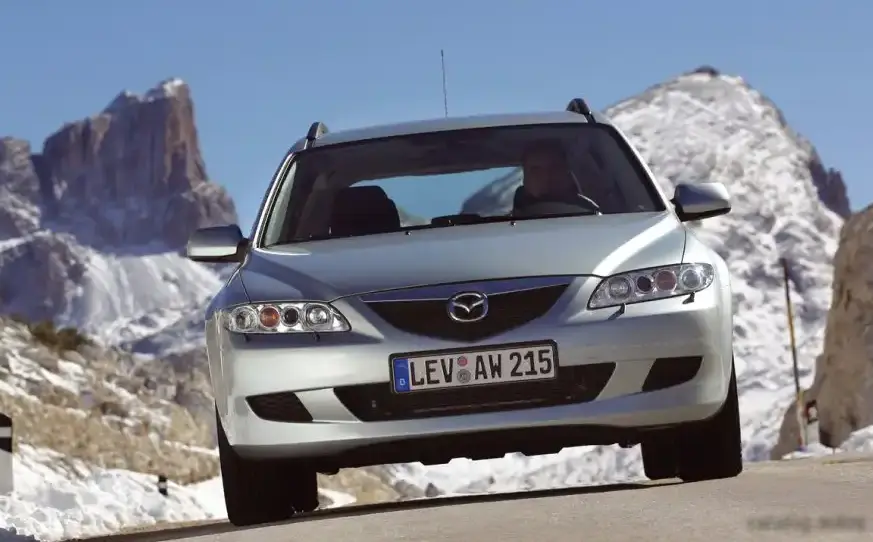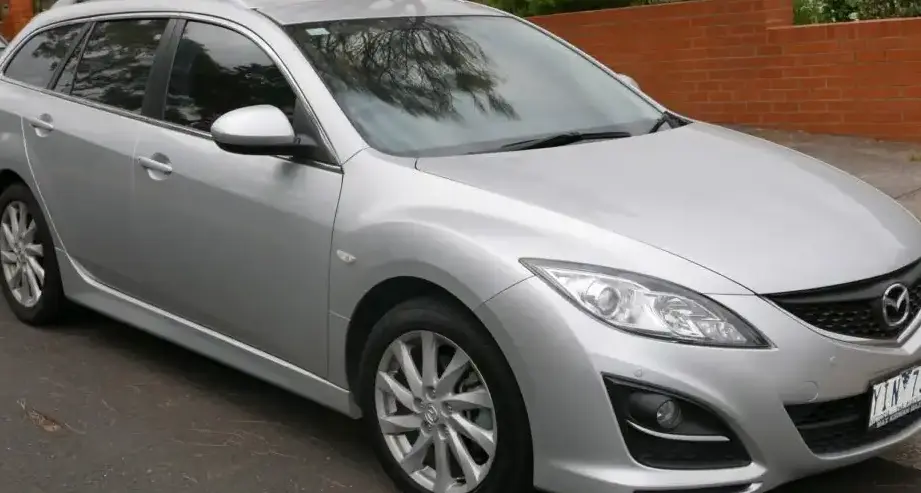
The Mazda 6 II Combi (GH series, post-facelift 2010) 2.0-liter Activematic represents a significant iteration of Mazda’s popular D-segment wagon, aimed at providing a practical and comfortable family vehicle. Produced from 2010 to 2012, this variant occupied a middle ground within the second-generation 6 lineup, offering a balance between performance, fuel efficiency, and affordability. It was primarily marketed in Europe and other international markets where the station wagon body style remained highly favored. The facelift brought styling updates and refinements to the existing GH platform, enhancing its appeal against competitors like the Ford Mondeo, Volkswagen Passat, and Opel/Vauxhall Insignia.
Technical Specifications
| Brand | Mazda |
| Model | 6 |
| Generation | 6 II Combi (GH, facelift 2010) |
| Type (Engine) | 2.0 (155 Hp) Activematic |
| Start of production | 2010 |
| End of production | 2012 |
| Powertrain Architecture | Internal Combustion engine |
| Body type | Station wagon (estate) |
| Seats | 5 |
| Doors | 5 |
| Fuel consumption (urban) | 10.7 l/100 km (22 US mpg, 26.4 UK mpg, 9.3 km/l) |
| Fuel consumption (extra urban) | 5.8 l/100 km (40.6 US mpg, 48.7 UK mpg, 17.2 km/l) |
| Fuel consumption (combined) | 7.7 l/100 km (30.5 US mpg, 36.7 UK mpg, 13 km/l) |
| CO2 emissions | 178 g/km |
| Fuel Type | Petrol (Gasoline) |
| Acceleration 0 – 100 km/h | 11.3 sec |
| Acceleration 0 – 62 mph | 11.3 sec |
| Acceleration 0 – 60 mph | 10.7 sec |
| Maximum speed | 202 km/h (125.52 mph) |
| Emission standard | Euro 5 |
| Weight-to-power ratio | 9.1 kg/Hp, 110.3 Hp/tonne |
| Weight-to-torque ratio | 7.3 kg/Nm, 137.4 Nm/tonne |
| Power | 155 Hp @ 6200 rpm |
| Power per litre | 77.5 Hp/l |
| Torque | 193 Nm @ 4500 rpm (142.35 lb.-ft. @ 4500 rpm) |
| Engine layout | Front, Transverse |
| Engine Model/Code | LF-VD |
| Engine displacement | 1999 cm3 (121.99 cu. in.) |
| Number of cylinders | 4 |
| Engine configuration | Inline |
| Cylinder Bore | 87.5 mm (3.44 in.) |
| Piston Stroke | 83.1 mm (3.27 in.) |
| Compression ratio | 11.2:1 |
| Number of valves per cylinder | 4 |
| Fuel injection system | Direct injection |
| Engine aspiration | Naturally aspirated engine |
| Valvetrain | DOHC |
| Engine oil capacity | 4.3 l (4.54 US qt | 3.78 UK qt) |
| Coolant capacity | 7.5 l (7.93 US qt | 6.6 UK qt) |
| Kerb Weight | 1405 kg (3097.49 lbs.) |
| Max. weight | 2030 kg (4475.38 lbs.) |
| Max load | 625 kg (1377.89 lbs.) |
| Trunk (boot) space – minimum | 519 l (18.33 cu. ft.) |
| Trunk (boot) space – maximum | 1751 l (61.84 cu. ft.) |
| Fuel tank capacity | 64 l (16.91 US gal | 14.08 UK gal) |
| Max. roof load | 100 kg (220.46 lbs.) |
| Permitted trailer load with brakes (12%) | 1500 kg (3306.93 lbs.) |
| Permitted trailer load without brakes | 550 kg (1212.54 lbs.) |
| Length | 4785 mm (188.39 in.) |
| Width | 1795 mm (70.67 in.) |
| Height | 1490 mm (58.66 in.) |
| Wheelbase | 2725 mm (107.28 in.) |
| Front track | 1550-1570 mm (61.02 – 61.81 in.) |
| Rear track | 1550-1570 mm (61.02 – 61.81 in.) |
| Ride height (ground clearance) | 165 mm (6.5 in.) |
| Minimum turning circle | 11.8 m (38.71 ft.) |
| Drivetrain Architecture | Front wheel drive |
| Number of gears | 5 |
| Gearbox type | Automatic transmission Activematic |
| Front suspension | Double wishbone, Transverse stabilizer |
| Rear suspension | Independent multi-link suspension, Transverse stabilizer |
| Front brakes | Ventilated discs, 299 mm |
| Rear brakes | Disc, 280 mm |
| Assisting systems | ABS (Anti-lock braking system) |
| Steering type | Steering rack and pinion |
| Power steering | Electric Steering |
| Tires size | 205/60 R16; 215/50 R17; 225/45 R18 |
| Wheel rims size | 6.5J x 16; 7J x 17; 7.5J x 18 |
Powertrain & Engine Architecture
The heart of this Mazda 6 variant is the LF-VD engine, a 1.999-liter inline-four cylinder gasoline engine. This engine utilizes direct injection technology, contributing to improved fuel efficiency and power output. The LF-VD features a double overhead camshaft (DOHC) valvetrain with four valves per cylinder, optimizing airflow for enhanced performance. The engine produces 155 horsepower at 6200 rpm and 193 Nm (142.35 lb-ft) of torque at 4500 rpm. Paired with this engine is Mazda’s “Activematic” transmission, a five-speed automatic gearbox. This transmission was designed to provide smooth shifts and contribute to the overall driving comfort. While not offering the sportiness of a manual transmission, the Activematic was favored by buyers prioritizing ease of use, particularly in urban environments.
Driving Characteristics
The 2.0-liter Activematic Mazda 6 Combi delivers a comfortable and predictable driving experience. Acceleration from 0 to 100 km/h (0-62 mph) takes approximately 11.3 seconds, which is adequate for everyday driving but doesn’t offer particularly brisk performance. Compared to the manual transmission version of the same engine, the Activematic slightly diminishes acceleration due to the inherent power loss in the torque converter. The automatic transmission’s gear ratios are tuned for fuel efficiency and smooth cruising, rather than aggressive acceleration. The power delivery is linear, making it easy to modulate the throttle. Compared to higher-output variants like the 2.5-liter engine, this 2.0-liter version feels less powerful, but it offers a more economical and refined driving experience.
Equipment & Trim Levels
The 2.0 Activematic trim typically included standard features such as air conditioning, power windows, power mirrors, a CD/MP3 stereo system, and alloy wheels. Safety features included ABS, front and side airbags, and seatbelt pretensioners. Higher trim levels offered options like leather upholstery, a sunroof, navigation system, and automatic climate control. The interior design featured a functional and ergonomic layout, with a focus on practicality and ease of use. The Combi body style provided ample cargo space, making it ideal for families and those needing to transport larger items.
Chassis & Braking
The Mazda 6 Combi utilizes a front-engine, front-wheel-drive layout. The front suspension consists of a double wishbone setup with a transverse stabilizer bar, while the rear suspension employs an independent multi-link system, also with a stabilizer bar. This suspension configuration provides a good balance between ride comfort and handling. The braking system features ventilated discs on the front wheels and solid discs on the rear wheels. ABS (Anti-lock Braking System) is standard, enhancing braking performance and stability, especially in adverse conditions.
Market Reception & Comparison
The Mazda 6 II Combi 2.0 Activematic was generally well-received by automotive critics for its comfortable ride, spacious interior, and good fuel economy. However, some reviewers noted that the engine lacked the punch of its competitors and that the Activematic transmission could feel somewhat sluggish at times. Compared to the manual transmission version, the Activematic offered slightly lower fuel economy but greater convenience. Against rivals like the Ford Mondeo and Volkswagen Passat, the Mazda 6 offered a more engaging driving experience and a more stylish design, but it often came at a slightly higher price point.
Legacy
The LF-VD engine, while not known for being exceptionally groundbreaking, proved to be a relatively reliable powerplant when properly maintained. The Activematic transmission, while not as durable as some other automatic transmissions, generally held up well with regular fluid changes. Today, used examples of the Mazda 6 II Combi 2.0 Activematic are readily available and represent a relatively affordable option for those seeking a practical and comfortable family wagon. Common issues to look for include worn suspension components, corrosion (particularly in regions with harsh winters), and potential transmission issues if maintenance has been neglected. Overall, this variant remains a viable choice for buyers prioritizing value, practicality, and a comfortable driving experience.