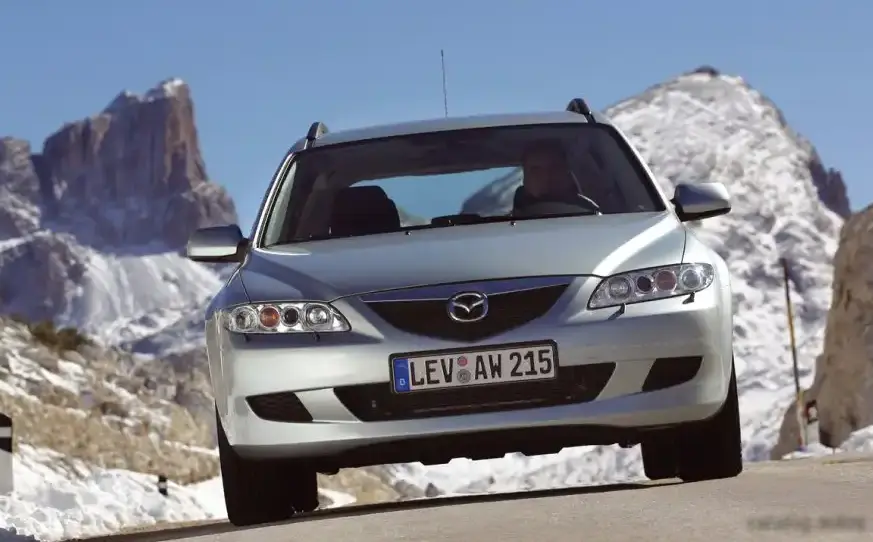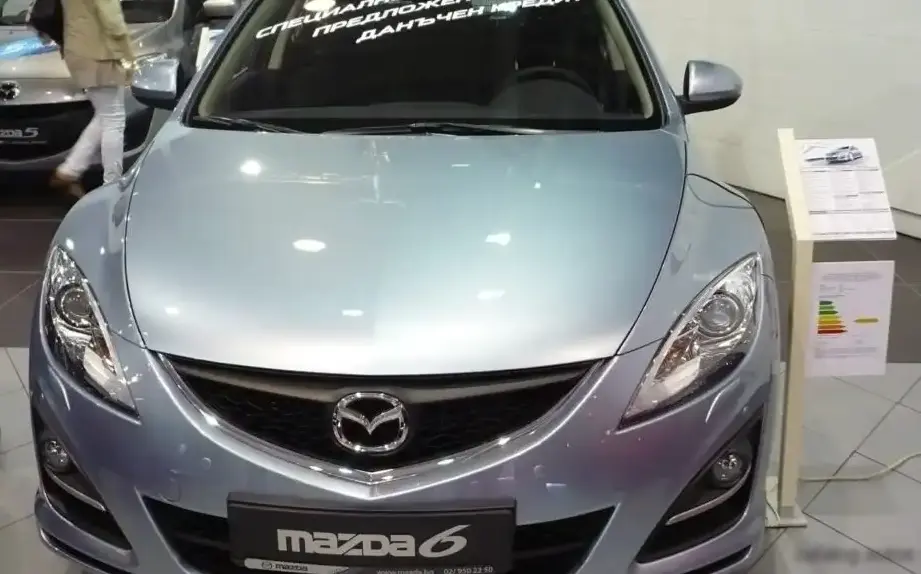
The Mazda 6 II Hatchback, specifically the 1.8-liter (120 hp) variant produced from 2010 to 2012, represents a key offering within the second generation (GH) of Mazda’s globally successful mid-size family car. This facelifted model, introduced in 2010, aimed to refine the aesthetics and improve the overall driving experience of the original GH platform. Positioned as an entry-level option within the Mazda 6 Hatchback range, the 1.8L model prioritized fuel efficiency and affordability, appealing to buyers seeking a practical and reliable vehicle for daily commuting and family use. It served as a more accessible alternative to the higher-performance 2.5-liter variants and the diesel-powered options available in European markets.
Technical Specifications
| Brand | Mazda |
| Model | 6 |
| Generation | 6 II Hatchback (GH, facelift 2010) |
| Type (Engine) | 1.8 (120 Hp) |
| Start of production | 2010 |
| End of production | 2012 |
| Powertrain Architecture | Internal Combustion engine |
| Body type | Hatchback |
| Seats | 5 |
| Doors | 5 |
| Fuel consumption (urban) | 9.4 l/100 km (25 US mpg, 30.1 UK mpg) |
| Fuel consumption (extra urban) | 5.1 l/100 km (46.1 US mpg, 55.4 UK mpg) |
| Fuel consumption (combined) | 6.7 l/100 km (35.1 US mpg, 42.2 UK mpg) |
| CO2 emissions | 155 g/km |
| Fuel Type | Petrol (Gasoline) |
| Acceleration 0 – 100 km/h | 11.7 sec |
| Acceleration 0 – 62 mph | 11.7 sec |
| Acceleration 0 – 60 mph | 11.1 sec |
| Maximum speed | 194 km/h (120.55 mph) |
| Emission standard | Euro 4 |
| Weight-to-power ratio | 11.1 kg/Hp |
| Weight-to-torque ratio | 8.1 kg/Nm |
| Power | 120 Hp @ 5500 rpm |
| Torque | 165 Nm @ 4300 rpm (121.7 lb.-ft. @ 4300 rpm) |
| Engine layout | Front, Transverse |
| Engine Model/Code | L8 |
| Engine displacement | 1798 cm3 (109.72 cu. in.) |
| Number of cylinders | 4 |
| Engine configuration | Inline |
| Cylinder Bore | 83 mm (3.27 in.) |
| Piston Stroke | 83.1 mm (3.27 in.) |
| Compression ratio | 10.8:1 |
| Number of valves per cylinder | 4 |
| Fuel injection system | Multi-port manifold injection |
| Engine aspiration | Naturally aspirated engine |
| Valvetrain | DOHC |
| Engine oil capacity | 4.3 l (4.54 US qt | 3.78 UK qt) |
| Coolant capacity | 7.5 l (7.93 US qt | 6.6 UK qt) |
| Kerb Weight | 1335 kg (2943.17 lbs.) |
| Max. weight | 1925 kg (4243.9 lbs.) |
| Max load | 590 kg (1300.73 lbs.) |
| Trunk (boot) space – minimum | 510 l (18.01 cu. ft.) |
| Trunk (boot) space – maximum | 1702 l (60.11 cu. ft.) |
| Fuel tank capacity | 64 l (16.91 US gal | 14.08 UK gal) |
| Max. roof load | 100 kg (220.46 lbs.) |
| Permitted trailer load with brakes (12%) | 1300 kg (2866.01 lbs.) |
| Permitted trailer load without brakes | 550 kg (1212.54 lbs.) |
| Length | 4755 mm (187.2 in.) |
| Width | 1795 mm (70.67 in.) |
| Height | 1440 mm (56.69 in.) |
| Wheelbase | 2725 mm (107.28 in.) |
| Front track | 1550-1570 mm (61.02 – 61.81 in.) |
| Rear track | 1550-1570 mm (61.02 – 61.81 in.) |
| Ride height (ground clearance) | 165 mm (6.5 in.) |
| Minimum turning circle | 11.8 m (38.71 ft.) |
| Drivetrain | Front wheel drive |
| Number of gears | 5 |
| Gearbox type | Manual transmission |
| Front suspension | Double wishbone, Transverse stabilizer |
| Rear suspension | Independent multi-link suspension, Transverse stabilizer |
| Front brakes | Ventilated discs, 299 mm |
| Rear brakes | Disc, 280 mm |
| Assisting systems | ABS (Anti-lock braking system) |
| Steering type | Steering rack and pinion |
| Power steering | Electric Steering |
| Tires size | 205/60 R16; 215/50 R17; 225/45 R18 |
| Wheel rims size | 6.5J x 16; 7J x 17; 7.5J x 18 |
Powertrain & Engine Architecture
The heart of this Mazda 6 variant is the 1.8-liter inline-four cylinder gasoline engine, internally designated as the L8 engine. This engine is a naturally aspirated unit, meaning it doesn’t employ forced induction like a turbocharger or supercharger. It features a double overhead camshaft (DOHC) valvetrain with four valves per cylinder, contributing to efficient cylinder filling and improved breathing. Fuel delivery is managed by a multi-port fuel injection system, providing precise fuel metering for optimal combustion. The engine produces 120 horsepower at 5500 rpm and 165 Nm (121.7 lb-ft) of torque at 4300 rpm. The engine’s relatively modest output is a characteristic of its design, prioritizing fuel economy over outright performance. The engine is paired with a five-speed manual transmission, delivering power to the front wheels.
Driving Characteristics
The 1.8-liter engine, coupled with the five-speed manual gearbox, delivers a driving experience focused on practicality and efficiency. Acceleration from 0 to 60 mph takes approximately 11.1 seconds, and the top speed is around 120.55 mph. While not particularly sporty, the engine provides adequate power for everyday driving situations. The gear ratios are tuned to maximize fuel economy, meaning the engine needs to be revved somewhat to achieve brisk acceleration. Compared to the higher-output 2.5-liter variants, the 1.8L feels noticeably less powerful, especially when fully loaded or tackling steep inclines. However, the lighter engine weight contributes to a more nimble feel in corners.
Equipment & Trim Levels
The 1.8-liter Mazda 6 Hatchback typically came equipped with a reasonable level of standard features. These generally included air conditioning, power windows, power door locks, a basic audio system with CD player, and alloy wheels. Safety features such as ABS (Anti-lock Braking System) and front airbags were also standard. Higher trim levels offered optional extras like climate control, a more advanced audio system with Bluetooth connectivity, and parking sensors. Interior upholstery was typically cloth, with a functional and durable design. The dashboard layout was straightforward and user-friendly, prioritizing ease of use over luxurious aesthetics.
Chassis & Braking
The Mazda 6 II Hatchback utilizes a front-engine, front-wheel-drive layout. The suspension system consists of a double wishbone setup at the front and an independent multi-link suspension at the rear, providing a good balance between ride comfort and handling. Stabilizer bars are fitted to both axles to reduce body roll during cornering. The braking system features ventilated discs at the front and solid discs at the rear, providing adequate stopping power for the vehicle’s weight and performance. The electric power steering offers a light and responsive feel, making it easy to maneuver in urban environments.
Market Reception & Comparison
The 1.8-liter Mazda 6 Hatchback was generally well-received as a practical and affordable option within its segment. Critics praised its fuel efficiency and comfortable ride, but noted its lack of outright performance compared to higher-powered variants. Compared to the 2.5-liter models, the 1.8L offered significantly better fuel economy, making it a more attractive choice for budget-conscious buyers. The diesel-powered options, popular in Europe, provided even greater fuel efficiency but came with a higher purchase price and potentially higher maintenance costs. The 1.8L model represented a sweet spot for those prioritizing value and practicality.
Legacy
The L8 engine, while not known for being particularly groundbreaking, proved to be a reliable and durable unit. Long-term reliability is generally good, with many examples still on the road today. Common maintenance issues are relatively minor and typically involve routine servicing items such as spark plugs, air filters, and oil changes. The Mazda 6 II Hatchback, in general, has earned a reputation for being a dependable and well-built vehicle. In the used car market, the 1.8-liter variant remains an affordable and practical option, appealing to buyers seeking a reliable family car with low running costs.