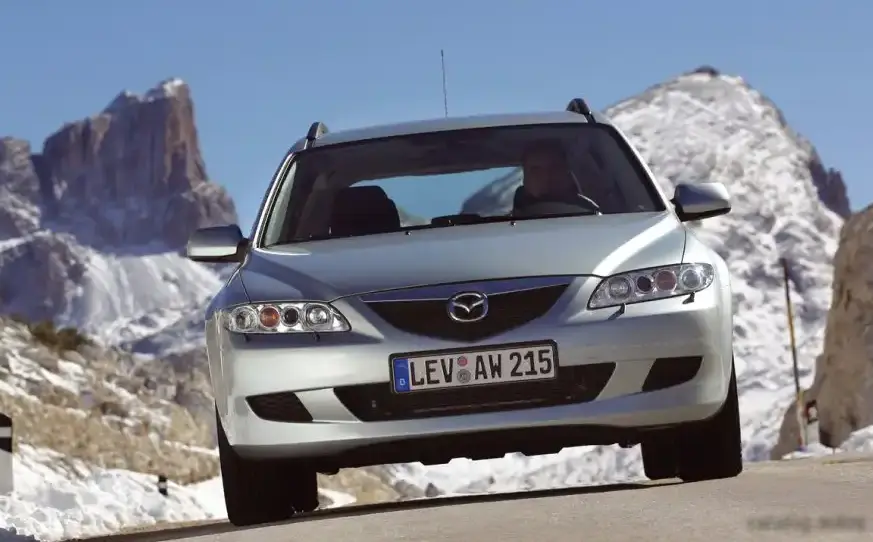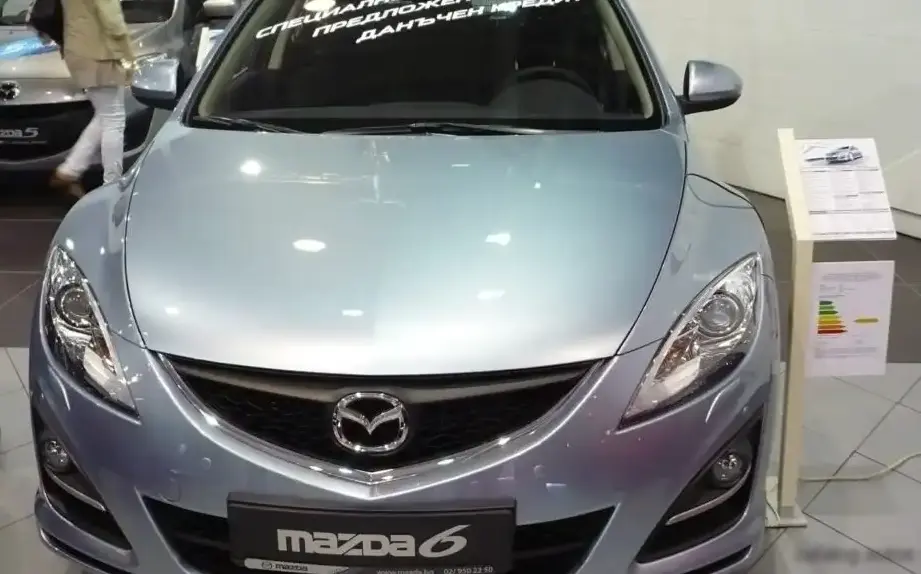
The Mazda 6 II Hatchback, specifically the 2.0-liter (155 hp) variant equipped with the Activematic transmission, was a key offering in Mazda’s lineup from 2010 to 2012. This model represents a facelift of the second-generation Mazda 6 (GH platform), introducing revised styling, improved efficiency, and updated technology. Positioned as a mid-range trim, it aimed to balance performance, fuel economy, and affordability within the broader Mazda 6 range, which also included 2.5-liter gasoline and 2.2-liter diesel options. The hatchback body style, while less common in the North American market, was a popular choice in Europe and other regions, offering a blend of practicality and sporty aesthetics.
Technical Specifications
| Brand | Mazda |
| Model | 6 |
| Generation | 6 II Hatchback (GH, facelift 2010) |
| Type (Engine) | 2.0 (155 Hp) Activematic |
| Start of production | 2010 |
| End of production | 2012 |
| Powertrain Architecture | Internal Combustion engine |
| Body type | Hatchback |
| Seats | 5 |
| Doors | 5 |
| Fuel consumption (urban) | 10.7 l/100 km (22 US mpg, 26.4 UK mpg, 9.3 km/l) |
| Fuel consumption (extra urban) | 5.8 l/100 km (40.6 US mpg, 48.7 UK mpg, 17.2 km/l) |
| Fuel consumption (combined) | 7.6 l/100 km (30.9 US mpg, 37.2 UK mpg, 13.2 km/l) |
| CO2 emissions | 186 g/km |
| Fuel Type | Petrol (Gasoline) |
| Acceleration 0 – 100 km/h | 11.2 sec |
| Acceleration 0 – 62 mph | 11.2 sec |
| Acceleration 0 – 60 mph | 10.6 sec |
| Maximum speed | 206 km/h (128 mph) |
| Emission standard | Euro 5 |
| Weight-to-power ratio | 9 kg/Hp, 111.5 Hp/tonne |
| Weight-to-torque ratio | 7.2 kg/Nm, 138.8 Nm/tonne |
| Power | 155 Hp @ 6200 rpm |
| Power per litre | 77.5 Hp/l |
| Torque | 193 Nm @ 4500 rpm (142.35 lb.-ft. @ 4500 rpm) |
| Engine layout | Front, Transverse |
| Engine Model/Code | LF-VD |
| Engine displacement | 1999 cm3 (121.99 cu. in.) |
| Number of cylinders | 4 |
| Engine configuration | Inline |
| Cylinder Bore | 87.5 mm (3.44 in.) |
| Piston Stroke | 83.1 mm (3.27 in.) |
| Compression ratio | 11.2:1 |
| Number of valves per cylinder | 4 |
| Fuel injection system | Direct injection |
| Engine aspiration | Naturally aspirated engine |
| Valvetrain | DOHC |
| Engine oil capacity | 4.3 l (4.54 US qt | 3.78 UK qt) |
| Coolant capacity | 7.5 l (7.93 US qt | 6.6 UK qt) |
| Kerb Weight | 1390 kg (3064.43 lbs.) |
| Max. weight | 1980 kg (4365.15 lbs.) |
| Max load | 590 kg (1300.73 lbs.) |
| Trunk (boot) space – minimum | 510 l (18.01 cu. ft.) |
| Trunk (boot) space – maximum | 1702 l (60.11 cu. ft.) |
| Fuel tank capacity | 64 l (16.91 US gal | 14.08 UK gal) |
| Max. roof load | 100 kg (220.46 lbs.) |
| Permitted trailer load with brakes (12%) | 1500 kg (3306.93 lbs.) |
| Permitted trailer load without brakes | 550 kg (1212.54 lbs.) |
| Length | 4755 mm (187.2 in.) |
| Width | 1795 mm (70.67 in.) |
| Height | 1440 mm (56.69 in.) |
| Wheelbase | 2725 mm (107.28 in.) |
| Front track | 1550-1570 mm (61.02 – 61.81 in.) |
| Rear track | 1550-1570 mm (61.02 – 61.81 in.) |
| Ride height (ground clearance) | 165 mm (6.5 in.) |
| Minimum turning circle | 11.8 m (38.71 ft.) |
| Drivetrain | Front wheel drive |
| Number of gears and type of gearbox | 5 gears, automatic transmission Activematic |
| Front suspension | Double wishbone, Transverse stabilizer |
| Rear suspension | Independent multi-link suspension, Transverse stabilizer |
| Front brakes | Ventilated discs, 299 mm |
| Rear brakes | Disc, 280 mm |
| Assisting systems | ABS (Anti-lock braking system) |
| Steering type | Steering rack and pinion |
| Power steering | Electric Steering |
| Tires size | 205/60 R16; 215/50 R17; 225/45 R18 |
| Wheel rims size | 6.5J x 16; 7J x 17; 7.5J x 18 |
Powertrain & Engine Architecture
The heart of this Mazda 6 variant is the LF-VD engine, a 1999cc inline-four cylinder gasoline engine. This engine utilizes direct injection technology, a key feature for improving fuel efficiency and power output. The LF-VD engine boasts a relatively high compression ratio of 11.2:1, contributing to its performance. The engine is paired with Mazda’s Activematic transmission, a five-speed automatic gearbox. This transmission isn’t a traditional torque-converter automatic; it incorporates a continuously variable transmission (CVT) element to provide smoother shifts and improved fuel economy. The Activematic transmission also features a manual shift mode, allowing drivers some control over gear selection.
Driving Characteristics
The 155 hp and 193 Nm (142 lb-ft) of torque delivered by the 2.0-liter engine and Activematic transmission resulted in a comfortable, rather than sporty, driving experience. Acceleration from 0-60 mph took around 10.6 seconds, and top speed was limited to 128 mph. The Activematic transmission, while smooth, could sometimes feel sluggish during quick acceleration, especially compared to the six-speed manual transmission offered on other Mazda 6 models. The gear ratios were tuned for fuel efficiency, prioritizing relaxed cruising over outright performance. The engine provided adequate power for everyday driving, but overtaking maneuvers required careful planning.
Equipment & Trim Levels
The 2.0-liter Activematic Mazda 6 typically came equipped with a respectable level of standard features. These included air conditioning, power windows and mirrors, a CD/MP3 stereo system, and alloy wheels. Higher trim levels offered upgrades such as leather upholstery, a sunroof, and a more advanced audio system with navigation. Safety features like ABS, front and side airbags, and stability control were standard across the range. The interior design was functional and well-built, with a focus on ergonomics and ease of use.
Chassis & Braking
The Mazda 6 II Hatchback featured a double wishbone front suspension and an independent multi-link rear suspension, providing a comfortable ride and decent handling. The front brakes were ventilated discs, while the rear brakes were solid discs. The suspension was tuned to prioritize comfort over sporty handling, but still offered a reasonably controlled driving experience. The steering was precise and well-weighted, providing good feedback to the driver.
Market Reception & Comparison
The 2.0-liter Activematic Mazda 6 was generally well-received by critics as a practical and fuel-efficient option. However, some reviewers noted that the Activematic transmission lacked the responsiveness of a traditional automatic or a manual gearbox. Compared to the 2.5-liter gasoline engine, the 2.0-liter offered lower running costs but less performance. The 2.2-liter diesel engine provided even better fuel economy and more torque, but at a higher purchase price. The hatchback body style was praised for its versatility and practicality, offering more cargo space than the sedan version.
Legacy
The LF-VD engine proved to be a reliable unit, with few major issues reported over the years. The Activematic transmission, while not without its quirks, also demonstrated reasonable durability. Today, used examples of the 2.0-liter Activematic Mazda 6 are relatively affordable and represent a good value for money. Regular maintenance, including oil changes and transmission fluid checks, is crucial for ensuring the long-term reliability of this powertrain. The Mazda 6 II Hatchback remains a popular choice for those seeking a practical, comfortable, and fuel-efficient family car.