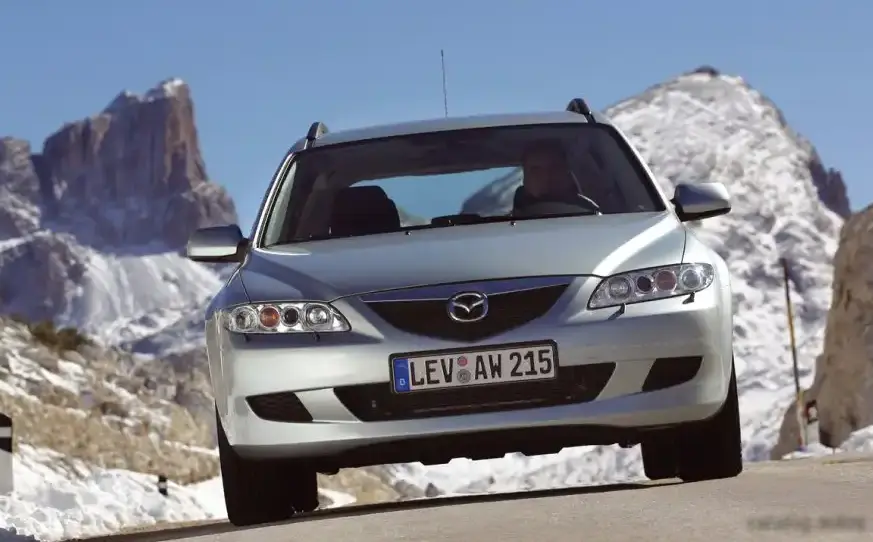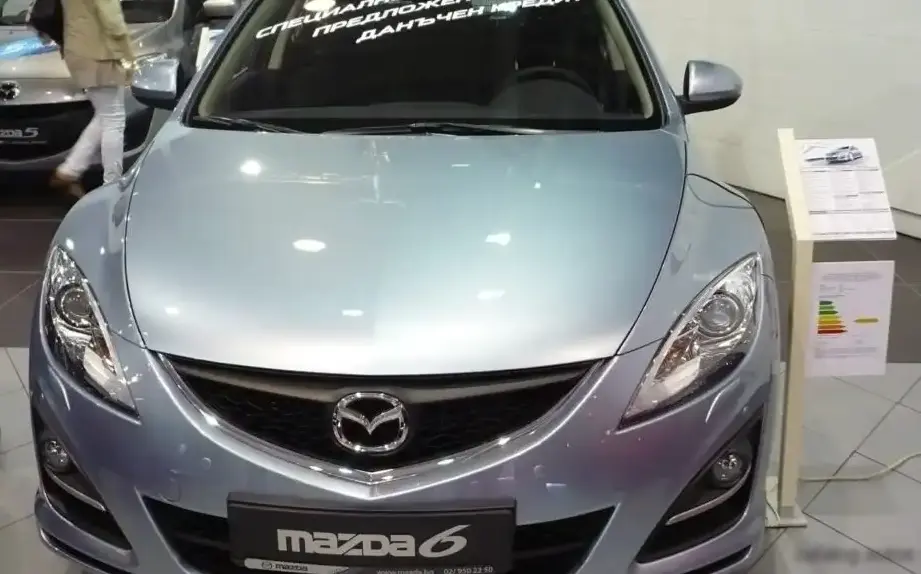
The Mazda 6 II Hatchback, specifically the 2.0i variant produced from 2010 to 2012 (following the 2008 facelift of the GH series), represented a key offering in Mazda’s lineup during this period. Positioned as a mid-range trim, it aimed to balance performance, fuel efficiency, and practicality for the European and global markets. This generation of the Mazda 6 sought to elevate the brand’s image with a more sophisticated design and improved driving dynamics, competing directly with established rivals like the Ford Mondeo, Volkswagen Passat, and Opel/Vauxhall Insignia. The hatchback body style, while less common in the North American market, was a popular choice in Europe, offering increased versatility compared to the sedan.
Technical Specifications
| Brand | Mazda |
| Model | 6 |
| Generation | 6 II Hatchback (GH, facelift 2010) |
| Type (Engine) | 2.0i (155 Hp) |
| Start of production | 2010 |
| End of production | 2012 |
| Powertrain Architecture | Internal Combustion engine |
| Body type | Hatchback |
| Seats | 5 |
| Doors | 5 |
| Fuel consumption (urban) | 9.6 l/100 km (24.5 US mpg) |
| Fuel consumption (extra urban) | 5.3 l/100 km (44.4 US mpg) |
| Fuel consumption (combined) | 6.9 l/100 km (34.1 US mpg) |
| Fuel Type | Petrol (Gasoline) |
| Acceleration 0 – 100 km/h | 10 sec |
| Acceleration 0 – 62 mph | 10 sec |
| Acceleration 0 – 60 mph | 9.5 sec |
| Maximum speed | 217 km/h (134.84 mph) |
| Emission standard | Euro 5 |
| Weight-to-power ratio | 9 kg/Hp |
| Weight-to-torque ratio | 7.3 kg/Nm |
| Power | 155 Hp @ 6200 rpm |
| Torque | 193 Nm @ 4500 rpm (142.35 lb.-ft. @ 4500 rpm) |
| Engine layout | Front, Transverse |
| Engine displacement | 1999 cm3 (121.99 cu. in.) |
| Number of cylinders | 4 |
| Engine configuration | Inline |
| Number of valves per cylinder | 4 |
| Fuel injection system | Multi-port manifold injection |
| Engine aspiration | Naturally aspirated engine |
| Engine oil capacity | 4.3 l (4.54 US qt | 3.78 UK qt) |
| Coolant capacity | 7.5 l (7.93 US qt | 6.6 UK qt) |
| Kerb Weight | 1400 kg (3086.47 lbs.) |
| Max. weight | 1915 kg (4221.85 lbs.) |
| Max load | 515 kg (1135.38 lbs.) |
| Trunk (boot) space – minimum | 510 l (18.01 cu. ft.) |
| Trunk (boot) space – maximum | 1702 l (60.11 cu. ft.) |
| Fuel tank capacity | 64 l (16.91 US gal | 14.08 UK gal) |
| Length | 4765 mm (187.6 in.) |
| Width | 1795 mm (70.67 in.) |
| Height | 1440 mm (56.69 in.) |
| Wheelbase | 2725 mm (107.28 in.) |
| Number of gears | 6 |
| Gearbox type | Manual transmission |
| Assisting systems | ABS (Anti-lock braking system) |
| Steering type | Steering rack and pinion |
Powertrain & Engine Architecture
The 2.0i variant of the Mazda 6 II Hatchback was powered by the MZR 2.0-liter inline-four cylinder engine. This engine, internally designated as LF-VE, was a naturally aspirated powerplant featuring multi-point fuel injection and a dual overhead camshaft (DOHC) valvetrain with four valves per cylinder. The engine produced 155 horsepower at 6,200 rpm and 193 Nm (142 lb-ft) of torque at 4,500 rpm. The engine’s design emphasized a balance between power and fuel efficiency, utilizing technologies like variable valve timing to optimize performance across the rev range. The six-speed manual transmission was standard, providing precise gear changes and contributing to the car’s engaging driving experience. While an automatic transmission was offered in some markets, the 2.0i was primarily sold with the manual gearbox.
Driving Characteristics
The 2.0i with the six-speed manual transmission offered a reasonably engaging driving experience. Acceleration from 0-60 mph took approximately 9.5 seconds, making it competitive within its class, but noticeably slower than the more powerful 2.5-liter variants. The gear ratios were well-matched, providing adequate acceleration in most driving situations. The engine felt responsive in the mid-range, making overtaking maneuvers manageable. Compared to the higher-output versions, the 2.0i prioritized fuel economy and a smoother, more refined ride. The manual transmission allowed for greater driver control, while the relatively lightweight construction of the hatchback body contributed to nimble handling.
Equipment & Trim Levels
The 2.0i trim typically included standard features such as air conditioning, power windows and mirrors, a CD/MP3 stereo system, and alloy wheels. Safety features included ABS brakes, electronic brakeforce distribution (EBD), and multiple airbags. Higher trim levels, often denoted by suffixes like ‘Sport’ or ‘Luxury’, added features such as climate control, leather upholstery, a sunroof, and a more advanced audio system. Optional extras included navigation systems, parking sensors, and xenon headlights. The interior design was generally considered modern and well-appointed for its time, with a focus on ergonomics and driver comfort.
Chassis & Braking
The Mazda 6 II Hatchback utilized a MacPherson strut front suspension and a multi-link rear suspension, providing a good balance between ride comfort and handling precision. The suspension was tuned to offer a relatively compliant ride, absorbing bumps and imperfections in the road surface effectively. Braking duties were handled by ventilated front disc brakes and solid rear disc brakes (some base models had rear drum brakes). ABS was standard, enhancing braking performance and stability, particularly in adverse conditions. The steering was a rack-and-pinion system, providing precise and responsive steering feel.
Market Reception & Comparison
The Mazda 6 II Hatchback 2.0i was generally well-received by automotive critics. It was praised for its stylish design, engaging driving dynamics, and comfortable interior. However, some reviewers noted that the 2.0-liter engine could feel underpowered, particularly when fully loaded or driving uphill. Compared to the 2.5-liter variants, the 2.0i offered better fuel economy but sacrificed some performance. The 2.0i also represented a more affordable entry point into the Mazda 6 range, making it attractive to budget-conscious buyers. Its fuel economy of around 34.1 US mpg combined was competitive with other vehicles in its class.
Legacy
The MZR 2.0-liter engine, while not known for any major inherent flaws, requires regular maintenance to ensure longevity. Common issues include oil leaks and occasional problems with the variable valve timing system. The six-speed manual transmission is generally considered reliable. Today, the Mazda 6 II Hatchback 2.0i represents a relatively affordable and practical used car option. Its combination of style, comfort, and fuel efficiency continues to appeal to buyers seeking a well-rounded family vehicle. Parts availability is generally good, and the car’s relatively simple mechanical design makes it accessible to independent mechanics. While not a performance icon, the 2.0i variant remains a testament to Mazda’s commitment to building enjoyable and reliable vehicles.