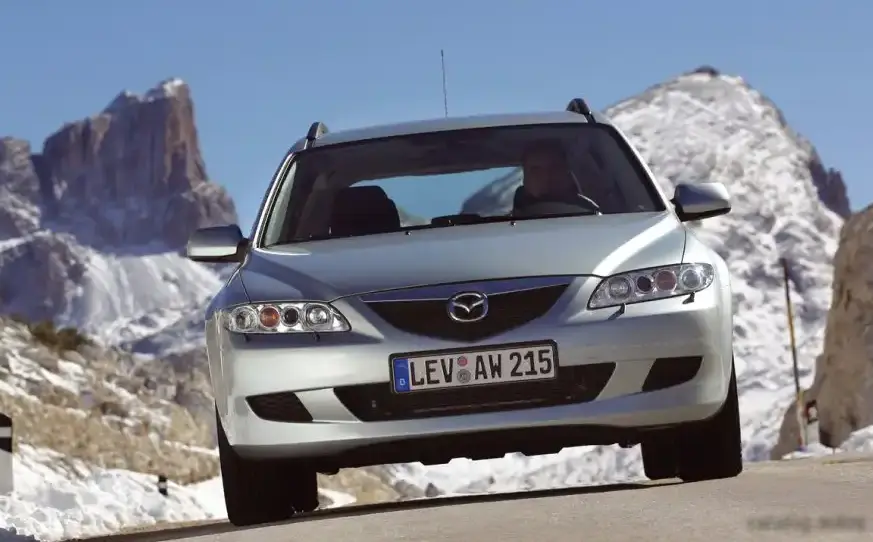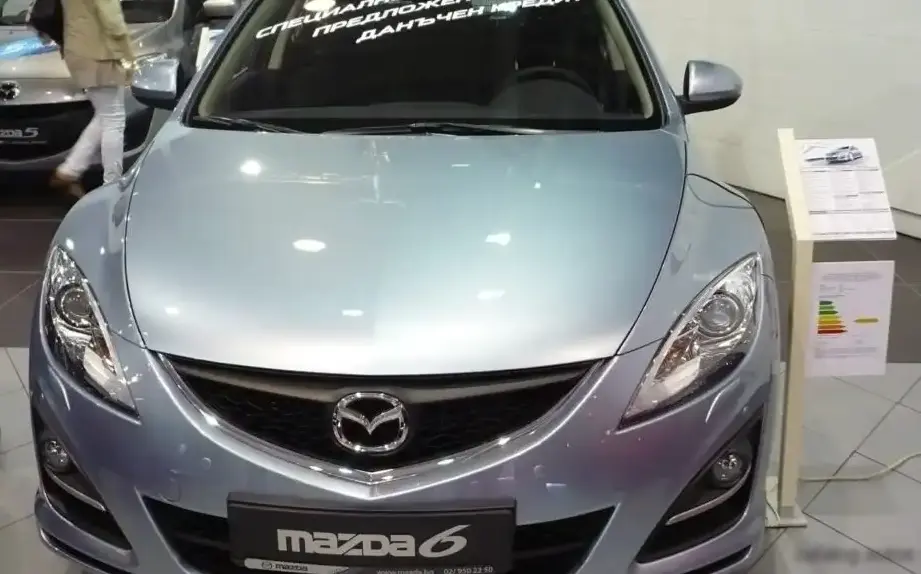
The Mazda 6 II Hatchback, specifically the 2.2 CD variant producing 180 horsepower, represents a significant offering within the second generation (GH) of Mazda’s popular mid-size family car. Introduced with the facelift in 2010 and continuing through 2012, this model aimed to balance fuel efficiency with respectable performance in the European market, where hatchbacks are favored. It sat within the broader Mazda 6 lineup, offering a diesel alternative to the gasoline engines and providing a step up in power and torque compared to the lower-spec diesel options. This variant was positioned as a practical and refined choice for drivers seeking a comfortable and economical vehicle for both daily commuting and longer journeys.
Technical Specifications
| Brand | Mazda |
| Model | 6 |
| Generation | 6 II Hatchback (GH, facelift 2010) |
| Type (Engine) | 2.2 CD (180 Hp) |
| Start of production | 2010 |
| End of production | 2012 |
| Powertrain Architecture | Internal Combustion engine |
| Body type | Hatchback |
| Seats | 5 |
| Doors | 5 |
| Fuel consumption (urban) | 6.9 l/100 km (34.1 US mpg, 40.9 UK mpg, 14.5 km/l) |
| Fuel consumption (extra urban) | 4.5 l/100 km (52.3 US mpg, 62.8 UK mpg, 22.2 km/l) |
| Fuel consumption (combined) | 5.4 l/100 km (43.6 US mpg, 52.3 UK mpg, 18.5 km/l) |
| CO2 emissions | 142 g/km |
| Fuel Type | Diesel |
| Acceleration 0 – 100 km/h | 8.7 sec |
| Acceleration 0 – 62 mph | 8.7 sec |
| Acceleration 0 – 60 mph | 8.3 sec |
| Maximum speed | 218 km/h (135.46 mph) |
| Emission standard | Euro 5 |
| Weight-to-power ratio | 8.2 kg/Hp, 121.6 Hp/tonne |
| Weight-to-torque ratio | 3.7 kg/Nm, 270.3 Nm/tonne |
| Power | 180 Hp @ 3500 rpm |
| Power per litre | 82.5 Hp/l |
| Torque | 400 Nm @ 1800 rpm (295.02 lb.-ft. @ 1800 rpm) |
| Engine layout | Front, Transverse |
| Engine displacement | 2183 cm3 (133.21 cu. in.) |
| Number of cylinders | 4 |
| Engine configuration | Inline |
| Cylinder Bore | 86 mm (3.39 in.) |
| Piston Stroke | 94 mm (3.7 in.) |
| Compression ratio | 16.3:1 |
| Number of valves per cylinder | 4 |
| Fuel injection system | Diesel Commonrail |
| Engine aspiration | Turbocharger, Intercooler |
| Valvetrain | DOHC |
| Engine oil capacity | 4.7 l (4.97 US qt | 4.14 UK qt) |
| Coolant capacity | 9 l (9.51 US qt | 7.92 UK qt) |
| Kerb Weight | 1480 kg (3262.84 lbs.) |
| Max. weight | 2110 kg (4651.75 lbs.) |
| Max load | 630 kg (1388.91 lbs.) |
| Trunk (boot) space – minimum | 510 l (18.01 cu. ft.) |
| Trunk (boot) space – maximum | 1702 l (60.11 cu. ft.) |
| Fuel tank capacity | 64 l (16.91 US gal | 14.08 UK gal) |
| Max. roof load | 100 kg (220.46 lbs.) |
| Permitted trailer load with brakes (12%) | 1600 kg (3527.4 lbs.) |
| Permitted trailer load without brakes | 550 kg (1212.54 lbs.) |
| Length | 4755 mm (187.2 in.) |
| Width | 1795 mm (70.67 in.) |
| Height | 1440 mm (56.69 in.) |
| Wheelbase | 2725 mm (107.28 in.) |
| Front track | 1550-1570 mm (61.02 – 61.81 in.) |
| Rear track | 1550-1570 mm (61.02 – 61.81 in.) |
| Ride height (ground clearance) | 165 mm (6.5 in.) |
| Minimum turning circle | 11.8 m (38.71 ft.) |
| Drivetrain | Front wheel drive |
| Number of gears | 6 |
| Gearbox type | Manual transmission |
| Front suspension | Double wishbone, Transverse stabilizer |
| Rear suspension | Independent multi-link suspension, Transverse stabilizer |
| Front brakes | Ventilated discs, 299 mm |
| Rear brakes | Disc, 280 mm |
| Assisting systems | ABS (Anti-lock braking system) |
| Steering type | Steering rack and pinion |
| Power steering | Electric Steering |
| Tires size | 205/60 R16; 215/50 R17; 225/45 R18 |
| Wheel rims size | 6.5J x 16; 7J x 17; 7.5J x 18 |
Powertrain & Engine Architecture
The heart of this Mazda 6 variant is the 2.2-liter four-cylinder diesel engine. This engine, often identified by internal codes like SHHP, utilizes a common-rail direct injection system, delivering fuel at extremely high pressure for optimized combustion. The engine features a turbocharger with an intercooler, boosting power output and improving torque across a wider rev range. The DOHC (Double Overhead Camshaft) valvetrain, with four valves per cylinder, further enhances breathing and contributes to the engine’s efficiency. The 180 horsepower peak is achieved at 3500 rpm, while the substantial 400 Nm (295 lb-ft) of torque is available from just 1800 rpm, providing strong pulling power for everyday driving and overtaking. The engine meets Euro 5 emission standards, incorporating a diesel particulate filter (DPF) to reduce harmful emissions.
Driving Characteristics
The 2.2 CD 180 hp model offers a compelling blend of performance and economy. The high torque output at low engine speeds translates to effortless acceleration in everyday driving situations. While not a sports car, the 8.7-second 0-62 mph acceleration time is respectable for a family hatchback. The six-speed manual transmission allows for precise control and helps to keep the engine within its optimal power band. Compared to the lower-powered diesel variants, this model provides a noticeably more responsive driving experience. It also offers a more relaxed cruising experience on highways, thanks to the engine’s ability to maintain speed with minimal effort.
Equipment & Trim Levels
Trim levels for the Mazda 6 II Hatchback varied by market, but generally, the 2.2 CD 180 hp model was positioned as a mid-to-high-range offering. Standard equipment typically included air conditioning, power windows, central locking, and a basic audio system. Higher trim levels added features such as alloy wheels, a more advanced audio system with Bluetooth connectivity, automatic climate control, and parking sensors. Interior upholstery was usually cloth, with leather options available as an upgrade. The dashboard layout was functional and driver-focused, with clear instrumentation and logically placed controls.
Chassis & Braking
The Mazda 6 II Hatchback features a front-wheel-drive layout with a double wishbone suspension at the front and an independent multi-link suspension at the rear. This suspension setup provides a good balance between ride comfort and handling. Stabilizer bars are fitted to both axles to reduce body roll during cornering. The braking system consists of ventilated discs at the front and solid discs at the rear, providing adequate stopping power. ABS (Anti-lock Braking System) is standard, enhancing safety in emergency braking situations.
Market Reception & Comparison
The Mazda 6 II Hatchback 2.2 CD 180 hp was generally well-received by automotive critics. It was praised for its refined engine, comfortable ride, and spacious interior. Fuel economy was also a strong point, with combined figures around 5.4 l/100 km (43.6 US mpg). Compared to other diesel hatchbacks in its class, such as the Volkswagen Golf or Ford Focus, the Mazda 6 offered a more premium feel and a more engaging driving experience. However, some critics noted that the interior design was not as modern as some of its rivals.
Legacy
The 2.2 CD engine proved to be a reliable unit when properly maintained. While diesel particulate filters can require occasional attention, the engine itself is generally robust. Today, used examples of the Mazda 6 II Hatchback 2.2 CD 180 hp represent a good value proposition for buyers seeking a practical, economical, and relatively refined family car. Its combination of performance, fuel efficiency, and comfort continues to make it a desirable option in the used car market, particularly for those who prioritize long-distance driving and appreciate a well-engineered vehicle.