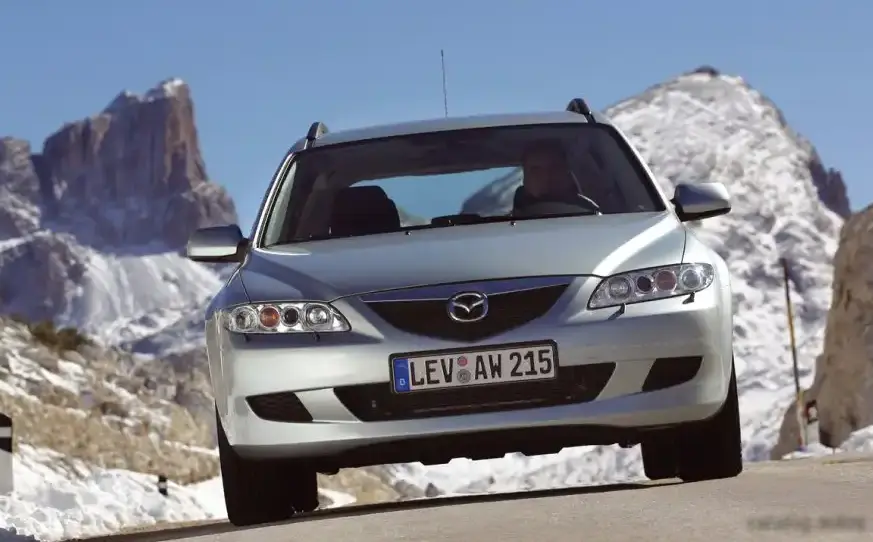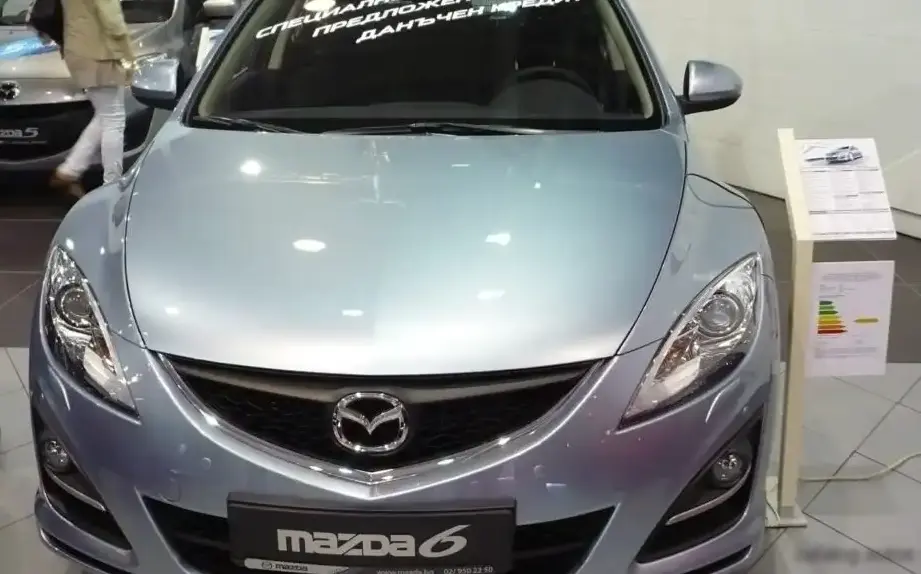
The Mazda 6 II Hatchback, specifically the 2.5-liter (170 hp) variant produced from 2010 to 2012, represents a significant iteration of Mazda’s mid-size offering. This model, designated as the GH series with a facelift introduced in 2010, aimed to blend sporty handling with practicality, targeting a broad consumer base in the European and global markets. Positioned as a mid-range trim, it offered a step up in performance from the lower-displacement engines while remaining more accessible than the potentially more expensive or performance-focused options. The 2.5-liter engine was a key component in Mazda’s strategy to provide a compelling alternative to competitors like the Ford Mondeo, Volkswagen Passat, and Opel/Vauxhall Insignia.
Technical Specifications
| Brand | Mazda |
| Model | 6 |
| Generation | 6 II Hatchback (GH, facelift 2010) |
| Type (Engine) | 2.5 (170 Hp) |
| Start of production | 2010 |
| End of production | 2012 |
| Powertrain Architecture | Internal Combustion engine |
| Body type | Hatchback |
| Seats | 5 |
| Doors | 5 |
| Fuel consumption (economy) – urban (NEDC) | 11.1 l/100 km (21.2 US mpg, 25.4 UK mpg, 9 km/l) |
| Fuel consumption (economy) – extra urban (NEDC) | 6.3 l/100 km (37.3 US mpg, 44.8 UK mpg, 15.9 km/l) |
| Fuel consumption (economy) – combined (NEDC) | 8 l/100 km (29.4 US mpg, 35.3 UK mpg, 12.5 km/l) |
| CO2 emissions (NEDC) | 186 g/km |
| Fuel Type | Petrol (Gasoline) |
| Acceleration 0 – 100 km/h | 8.4 sec |
| Acceleration 0 – 62 mph | 8.4 sec |
| Acceleration 0 – 60 mph | 8 sec |
| Maximum speed | 220 km/h (136.7 mph) |
| Emission standard | Euro 5 |
| Weight-to-power ratio | 8.1 kg/Hp, 123.2 Hp/tonne |
| Weight-to-torque ratio | 6.1 kg/Nm, 163.8 Nm/tonne |
| Power | 170 Hp @ 6000 rpm |
| Power per litre | 68.3 Hp/l |
| Torque | 226 Nm @ 4000 rpm (166.69 lb.-ft. @ 4000 rpm) |
| Engine layout | Front, Transverse |
| Engine Model/Code | L5-VE |
| Engine displacement | 2488 cm3 (151.83 cu. in.) |
| Number of cylinders | 4 |
| Engine configuration | Inline |
| Cylinder Bore | 89 mm (3.5 in.) |
| Piston Stroke | 100 mm (3.94 in.) |
| Compression ratio | 9.7:1 |
| Number of valves per cylinder | 4 |
| Fuel injection system | Multi-port manifold injection |
| Engine aspiration | Naturally aspirated engine |
| Valvetrain | DOHC |
| Engine oil capacity | 5 l (5.28 US qt | 4.4 UK qt) |
| Coolant | 7.5 l (7.93 US qt | 6.6 UK qt) |
| Kerb Weight | 1380 kg (3042.38 lbs.) |
| Max. weight | 1970 kg (4343.11 lbs.) |
| Max load | 590 kg (1300.73 lbs.) |
| Trunk (boot) space – minimum | 510 l (18.01 cu. ft.) |
| Trunk (boot) space – maximum | 1702 l (60.11 cu. ft.) |
| Fuel tank capacity | 64 l (16.91 US gal | 14.08 UK gal) |
| Max. roof load | 100 kg (220.46 lbs.) |
| Permitted trailer load with brakes (12%) | 1500 kg (3306.93 lbs.) |
| Permitted trailer load without brakes | 550 kg (1212.54 lbs.) |
| Length | 4755 mm (187.2 in.) |
| Width | 1795 mm (70.67 in.) |
| Height | 1440 mm (56.69 in.) |
| Wheelbase | 2725 mm (107.28 in.) |
| Front track | 1550-1570 mm (61.02 – 61.81 in.) |
| Rear (Back) track | 1550-1570 mm (61.02 – 61.81 in.) |
| Ride height (ground clearance) | 165 mm (6.5 in.) |
| Minimum turning circle (turning diameter) | 11.8 m (38.71 ft.) |
| Drivetrain Architecture | The Internal combustion engine (ICE) drives the front wheels of the vehicle. |
| Drive wheel | Front wheel drive |
| Number of gears and type of gearbox | 6 gears, manual transmission |
| Front suspension | Double wishbone, Transverse stabilizer |
| Rear suspension | Independent multi-link suspension, Transverse stabilizer |
| Front brakes | Ventilated discs, 299 mm |
| Rear brakes | Disc, 280 mm |
| Assisting systems | ABS (Anti-lock braking system) |
| Steering type | Steering rack and pinion |
| Power steering | Electric Steering |
| Tires size | 205/60 R16; 215/50 R17; 225/45 R18 |
| Wheel rims size | 6.5J x 16; 7J x 17; 7.5J x 18 |
INTRODUCTION
The Mazda 6 II Hatchback 2.5, introduced with the 2010 facelift, built upon the success of the second-generation 6 (GH platform). This variant aimed to provide a more engaging driving experience and increased power compared to the base 1.8 and 2.0-liter engine options. The hatchback body style, popular in Europe, offered increased practicality and cargo space compared to the sedan. The facelift brought revised styling cues, including a more aggressive front fascia and updated interior materials, enhancing the car’s overall appeal. This model year represented a refinement of the existing platform, focusing on improving efficiency and addressing customer feedback.
Powertrain & Engine Architecture
At the heart of this Mazda 6 variant lies the L5-VE 2.5-liter inline-four cylinder engine. This engine is a naturally aspirated powerplant featuring multi-port fuel injection and a double overhead camshaft (DOHC) valvetrain. The L5-VE engine is known for its relatively smooth operation and responsive power delivery. The engine’s 9.7:1 compression ratio strikes a balance between performance and fuel efficiency. Paired with this engine was a 6-speed manual transmission, providing drivers with direct control over gear selection. The transmission’s gear ratios were tuned to maximize acceleration and maintain reasonable fuel economy. The engine’s transverse mounting and front-wheel-drive configuration were standard for this class of vehicle.
Driving Characteristics
The 2.5-liter engine delivered a noticeable improvement in performance over the lower-displacement options. Acceleration from 0-60 mph was achieved in approximately 8 seconds, making it a competitive performer in its segment. The engine provided ample torque throughout the rev range, making it easy to overtake and maintain speed on the highway. While not a sports car, the Mazda 6 2.5 offered a more engaging driving experience than many of its competitors, thanks to its well-tuned suspension and responsive steering. The 6-speed manual transmission allowed for precise gear changes, enhancing driver control. Compared to the automatic transmission options available on other trims, the manual version offered a more direct connection to the engine and improved fuel economy.
Equipment & Trim Levels
The 2.5-liter variant typically came equipped with a generous level of standard features. These included air conditioning, power windows and locks, a CD/MP3 stereo system, and alloy wheels. Higher trim levels offered additional features such as leather upholstery, a sunroof, and a navigation system. Safety features included ABS brakes, airbags, and stability control. The interior design was functional and well-built, with a focus on ergonomics and driver comfort. Optional extras included a premium sound system, heated seats, and parking sensors.
Chassis & Braking
The Mazda 6 II Hatchback utilized a double wishbone front suspension and an independent multi-link rear suspension, providing a comfortable ride and precise handling. The suspension was tuned to balance ride comfort with sporty handling characteristics. Braking duties were handled by ventilated discs at the front and solid discs at the rear, providing adequate stopping power. ABS (Anti-lock Braking System) was standard, enhancing safety and control during emergency braking situations. The steering system was a rack and pinion setup with electric power assistance, offering precise and responsive steering feel.
Market Reception & Comparison
The Mazda 6 II Hatchback 2.5 received generally positive reviews from automotive critics. It was praised for its stylish design, engaging driving dynamics, and spacious interior. The 2.5-liter engine was considered a strong performer, offering a good balance of power and fuel economy. Compared to the 1.8 and 2.0-liter variants, the 2.5-liter model offered a more refined and enjoyable driving experience. However, some critics noted that the fuel economy was not as competitive as some of its rivals. In terms of reliability, the L5-VE engine proved to be generally dependable, although regular maintenance was essential to ensure long-term durability.
Legacy
The Mazda 6 II Hatchback 2.5 remains a popular choice in the used car market. Its combination of style, performance, and practicality makes it an attractive option for buyers seeking a well-rounded mid-size hatchback. The L5-VE engine is known for its durability, and with proper maintenance, it can provide many years of reliable service. While not as technologically advanced as some newer vehicles, the Mazda 6 II Hatchback 2.5 continues to offer a compelling driving experience and a comfortable interior, making it a worthy contender in the used car segment.