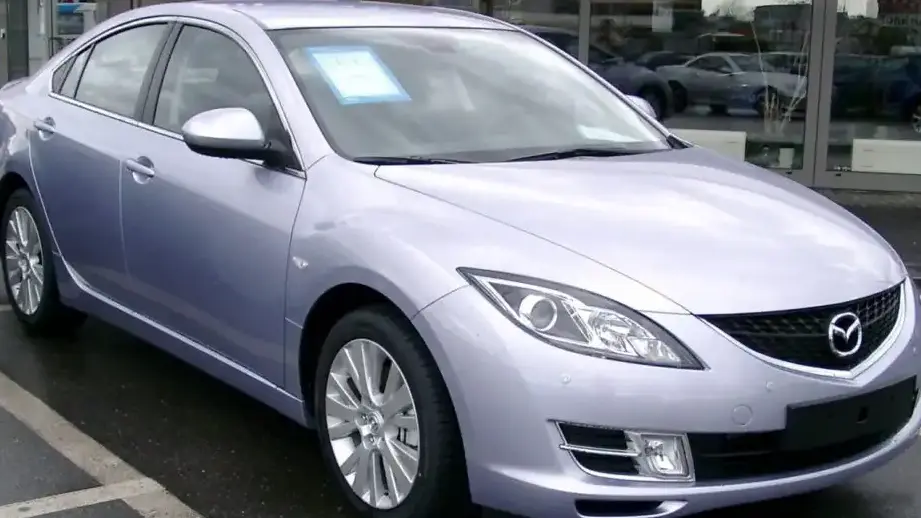
The Mazda 6 II Sedan (GH) 1.8, produced between 2007 and 2010, represented an entry point into the second generation of Mazda’s popular mid-size sedan. Positioned within the GH platform family, which also included 2.0, 2.3, and 2.5-liter engine options, the 1.8-liter variant was primarily aimed at markets where fuel efficiency and affordability were key considerations. While not the performance leader of the range, it offered a balanced package of practicality, comfort, and Mazda’s signature driving dynamics. This model was particularly significant in Europe and other regions with higher fuel costs and taxation based on engine displacement.
Technical Specifications
| Brand | Mazda |
| Model | 6 |
| Generation | 6 II Sedan (GH) |
| Type (Engine) | 1.8 (120 Hp) |
| Start of production | 2007 |
| End of production | 2010 |
| Powertrain Architecture | Internal Combustion engine |
| Body type | Sedan |
| Seats | 5 |
| Doors | 4 |
| Fuel consumption (urban) | 9.1 l/100 km (25.8 US mpg) |
| Fuel consumption (extra urban) | 4.9 l/100 km (48 US mpg) |
| Fuel consumption (combined) | 6.4 l/100 km (36.8 US mpg) |
| Fuel Type | Petrol (Gasoline) |
| Acceleration 0 – 100 km/h | 11.4 sec |
| Acceleration 0 – 62 mph | 11.4 sec |
| Acceleration 0 – 60 mph | 10.8 sec |
| Maximum speed | 196 km/h (121.79 mph) |
| Emission standard | Euro 4 |
| Weight-to-power ratio | 11.4 kg/Hp |
| Weight-to-torque ratio | 8.3 kg/Nm |
| Power | 120 Hp @ 5500 rpm |
| Torque | 165 Nm @ 4300 rpm (121.7 lb.-ft. @ 4300 rpm) |
| Engine layout | Front, Transverse |
| Engine displacement | 1798 cm3 (109.72 cu. in.) |
| Number of cylinders | 4 |
| Engine configuration | Inline |
| Cylinder Bore | 83 mm (3.27 in.) |
| Piston Stroke | 83.1 mm (3.27 in.) |
| Compression ratio | 10.8:1 |
| Number of valves per cylinder | 4 |
| Fuel injection system | Multi-port manifold injection |
| Engine aspiration | Naturally aspirated |
| Kerb Weight | 1370 kg (3020.33 lbs.) |
| Max. weight | 1885 kg (4155.71 lbs.) |
| Max load | 515 kg (1135.38 lbs.) |
| Trunk (boot) space | 519 l (18.33 cu. ft.) |
| Fuel tank capacity | 64 l (16.91 US gal) |
| Length | 4735 mm (186.42 in.) |
| Width | 1795 mm (70.67 in.) |
| Height | 1440 mm (56.69 in.) |
| Wheelbase | 2725 mm (107.28 in.) |
| Front track | 1570 mm (61.81 in.) |
| Rear track | 1570 mm (61.81 in.) |
| Drivetrain Architecture | Front wheel drive |
| Number of gears | 5 |
| Gearbox type | Manual transmission |
| Front brakes | Ventilated discs |
| Rear brakes | Ventilated discs |
Powertrain & Engine Architecture
The heart of the Mazda 6 II 1.8 was the MZR 1.8-liter inline-four cylinder engine. This engine, often referred to by its internal code F18, was a naturally aspirated unit utilizing multi-point fuel injection. The engine featured a double overhead camshaft (DOHC) valvetrain with four valves per cylinder, contributing to its relatively efficient operation. The 1.8L engine produced 120 horsepower at 5500 rpm and 165 Nm (121.7 lb-ft) of torque at 4300 rpm. This power was delivered through a five-speed manual transmission, which was the standard offering. While an automatic transmission was available in some markets, it was typically a four-speed unit and impacted performance and fuel economy. The engine’s design prioritized smooth operation and fuel economy over outright performance.
Driving Characteristics
The 1.8-liter Mazda 6 offered a comfortable and predictable driving experience. Acceleration was adequate for everyday driving, with a 0-60 mph time of around 10.8 seconds. However, it was noticeably slower than the higher-powered 2.0 or 2.3-liter variants. The five-speed manual transmission provided reasonable control, but the gear ratios were spaced to favor fuel efficiency rather than spirited driving. The engine felt somewhat strained when pushed hard, particularly when overtaking or climbing hills. The automatic transmission, when equipped, further dulled the driving experience, with noticeable delays in shifting and a tendency to hunt for gears. The steering was light and precise, typical of Mazda vehicles, and the suspension provided a good balance between comfort and handling.
Equipment & Trim Levels
The 1.8-liter Mazda 6 typically came with a respectable level of standard equipment. Base models generally included air conditioning, power windows and locks, a CD player with auxiliary input, and ABS brakes. Higher trim levels, such as the ‘Touring’ or ‘Sport’ variants, added features like alloy wheels, a multi-function steering wheel, cruise control, and upgraded interior trim. Interior upholstery was typically cloth, with options for leather in higher trims. Optional extras included a sunroof, navigation system, and premium sound system. The overall interior design was functional and well-built, reflecting Mazda’s commitment to quality.
Chassis & Braking
The Mazda 6 II utilized a front-engine, front-wheel-drive layout. The suspension consisted of MacPherson struts at the front and multi-link suspension at the rear, providing a comfortable ride and decent handling characteristics. Braking duties were handled by ventilated disc brakes on all four wheels, offering adequate stopping power for the vehicle’s weight and performance. ABS (Anti-lock Braking System) was standard equipment. The chassis was designed to provide a good balance between rigidity and weight, contributing to the car’s overall stability and handling.
Market Reception & Comparison
The Mazda 6 II 1.8 was generally well-received by automotive critics as a practical and affordable mid-size sedan. However, it was often criticized for its lack of outright performance compared to its more powerful siblings. Fuel economy was a strong point, with the 1.8-liter engine achieving around 36.8 US mpg on the combined cycle. In terms of reliability, the MZR 1.8-liter engine proved to be generally dependable, although some owners reported issues with the fuel injectors and the catalytic converter. Compared to the 2.0-liter variant, the 1.8 offered better fuel economy but significantly less power. The 2.3-liter models provided a more engaging driving experience but came at a higher price point and with increased fuel consumption.
Legacy
The Mazda 6 II 1.8 remains a relatively common sight on used car markets today. Its reputation for reliability and affordability has made it a popular choice for budget-conscious buyers. While not a collector’s item, well-maintained examples can still provide years of reliable service. The MZR 1.8-liter engine, while not particularly exciting, is known for its durability and relatively low maintenance costs. Parts availability is generally good, and the car’s simple mechanical design makes it relatively easy to repair. The 1.8L variant represents a sensible and practical choice within the second-generation Mazda 6 lineup, offering a good balance of value, efficiency, and Mazda’s inherent driving qualities.