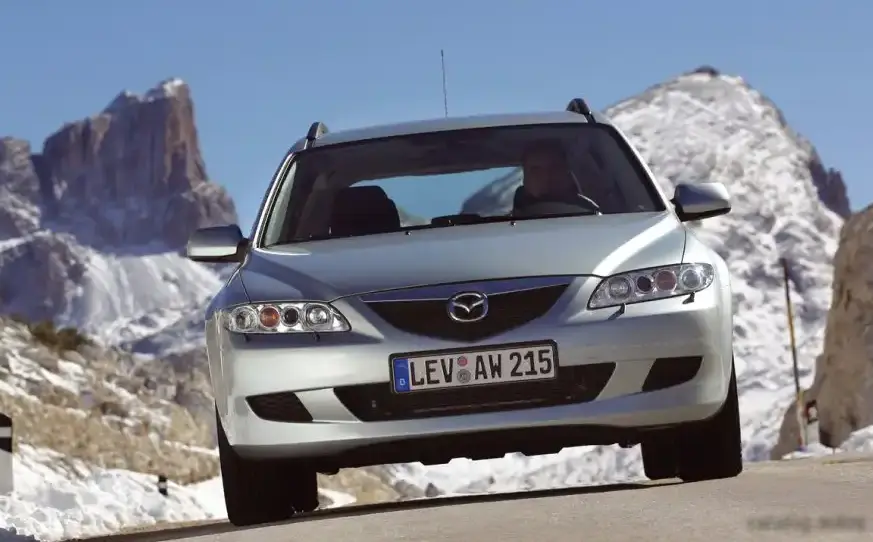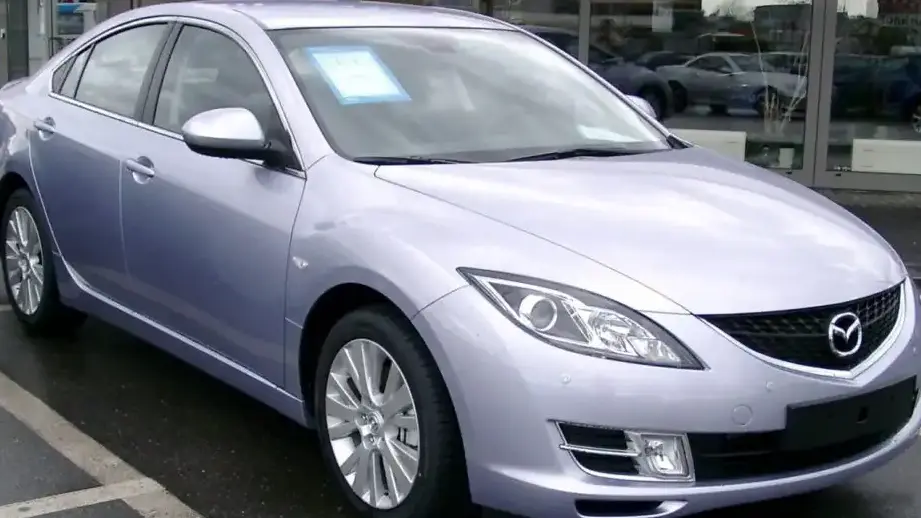
The Mazda 6 II Sedan (GH) 2.0, producing 147 horsepower, was a key variant in the second generation of Mazda’s popular mid-size sedan, manufactured from 2007 to 2010. Positioned as a mainstream offering within the GH series, it aimed to balance performance, fuel efficiency, and affordability. This model played a significant role in Mazda’s efforts to establish itself as a premium Japanese brand in the global automotive market, particularly in North America and Europe. The GH generation represented a substantial leap forward in design and engineering compared to its predecessor, and the 2.0-liter engine option provided a compelling alternative to both the more powerful V6 and the fuel-efficient diesel options available in certain markets.
Technical Specifications
| Brand | Mazda |
| Model | 6 |
| Generation | 6 II Sedan (GH) |
| Type (Engine) | 2.0 (147 Hp) |
| Start of production | 2007 |
| End of production | 2010 |
| Powertrain Architecture | Internal Combustion engine |
| Body type | Sedan |
| Seats | 5 |
| Doors | 4 |
| Fuel consumption (economy) – urban (NEDC) | 9.8 l/100 km (24 US mpg, 28.8 UK mpg, 10.2 km/l) |
| Fuel consumption (economy) – extra urban (NEDC) | 5.4 l/100 km (43.6 US mpg, 52.3 UK mpg, 18.5 km/l) |
| Fuel consumption (economy) – combined (NEDC) | 7 l/100 km (33.6 US mpg, 40.4 UK mpg, 14.3 km/l) |
| CO2 emissions (NEDC) | 166 g/km |
| Fuel Type | Petrol (Gasoline) |
| Acceleration 0 – 100 km/h | 9.9 sec |
| Acceleration 0 – 62 mph | 9.9 sec |
| Acceleration 0 – 60 mph | 9.4 sec |
| Maximum speed | 214 km/h (132.97 mph) |
| Emission standard | Euro 4 |
| Weight-to-power ratio | 8.6 kg/Hp, 115.7 Hp/tonne |
| Weight-to-torque ratio | 6.9 kg/Nm, 144.9 Nm/tonne |
| Power | 147 Hp @ 6500 rpm |
| Power per litre | 73.5 Hp/l |
| Torque | 184 Nm @ 4000 rpm (135.71 lb.-ft. @ 4000 rpm) |
| Engine layout | Front, Transverse |
| Engine Model/Code | LF-DE |
| Engine displacement | 1999 cm3 (121.99 cu. in.) |
| Number of cylinders | 4 |
| Engine configuration | Inline |
| Cylinder Bore | 87.5 mm (3.44 in.) |
| Piston Stroke | 83.1 mm (3.27 in.) |
| Compression ratio | 10:1 |
| Number of valves per cylinder | 4 |
| Fuel injection system | Multi-port manifold injection |
| Engine aspiration | Naturally aspirated engine |
| Valvetrain | DOHC |
| Engine oil capacity | 4.3 l (4.54 US qt, 3.78 UK qt) |
| Coolant | 7.5 l (7.93 US qt, 6.6 UK qt) |
| Kerb Weight | 1270 kg (2799.87 lbs.) |
| Max. weight | 1905 kg (4199.81 lbs.) |
| Max load | 635 kg (1399.94 lbs.) |
| Trunk (boot) space – minimum | 519 l (18.33 cu. ft.) |
| Fuel tank capacity | 64 l (16.91 US gal, 14.08 UK gal) |
| Max. roof load | 100 kg (220.46 lbs.) |
| Permitted trailer load with brakes (12%) | 1500 kg (3306.93 lbs.) |
| Permitted towbar download | 75 kg (165.35 lbs.) |
| Length | 4755 mm (187.2 in.) |
| Width | 1795 mm (70.67 in.) |
| Height | 1440 mm (56.69 in.) |
| Wheelbase | 2725 mm (107.28 in.) |
| Front track | 1550-1570 mm (61.02 – 61.81 in.) |
| Rear (Back) track | 1550-1570 mm (61.02 – 61.81 in.) |
| Ride height (ground clearance) | 165 mm (6.5 in.) |
| Minimum turning circle (turning diameter) | 11.4 m (37.4 ft.) |
| Drivetrain Architecture | The Internal combustion engine (ICE) drives the front wheels of the vehicle. |
| Drive wheel | Front wheel drive |
| Number of gears and type of gearbox | 6 gears, manual transmission |
| Front suspension | Double wishbone, Transverse stabilizer |
| Rear suspension | Independent multi-link suspension, Transverse stabilizer |
| Front brakes | Ventilated discs, 299 mm |
| Rear brakes | Disc, 280 mm |
| Assisting systems | ABS (Anti-lock braking system) |
| Steering type | Steering rack and pinion |
| Power steering | Electric Steering |
| Tires size | 205/60 R16; 215/50 R17; 225/45 R18 |
| Wheel rims size | 6.5J x 16; 7J x 17; 7.5J x 18 |
INTRODUCTION
The Mazda 6 II Sedan (GH) 2.0, powered by the LF-DE engine, was a cornerstone of Mazda’s lineup from 2007 to 2010. Built on the 1HX0 platform (also shared with the Ford Mondeo), this variant offered a balance between performance and economy, targeting a broad customer base. It served as a more accessible entry point into the Mazda 6 range, slotting below the more powerful 2.5-liter and V6 options available in some markets, and providing a more affordable alternative to the diesel models popular in Europe. The GH generation marked a significant design evolution for the Mazda 6, moving towards a more sophisticated and sporty aesthetic.
Powertrain & Engine Architecture
The heart of this variant is the LF-DE 2.0-liter inline-four cylinder engine. This engine utilizes a naturally aspirated configuration with multi-port fuel injection and a double overhead camshaft (DOHC) valvetrain. The LF-DE engine is known for its relatively smooth operation and decent power output for its displacement. The engine code ‘LF-DE’ signifies a specific iteration of Mazda’s L-series engine family. The engine’s 147 horsepower and 184 Nm (135.71 lb-ft) of torque are delivered at 6500 rpm and 4000 rpm respectively. The engine featured a compression ratio of 10:1. The 2.0L engine was typically paired with a six-speed manual transmission, but a five-speed automatic transmission was also offered, impacting acceleration and fuel economy. The automatic transmission was designed for smooth shifts and ease of use, prioritizing comfort over outright performance.
Driving Characteristics
The 2.0-liter Mazda 6 with the automatic transmission offered a comfortable and predictable driving experience. Acceleration from 0-60 mph took approximately 9.4 seconds, which was noticeably slower than the manual transmission version or the higher-output engine options. The automatic transmission, while smooth, did contribute to some power loss. Gear ratios were tuned for fuel efficiency and everyday drivability, rather than aggressive acceleration. The engine felt responsive enough for typical commuting and highway cruising, but lacked the punch needed for spirited driving. Compared to the manual version, the automatic offered less driver engagement but greater convenience.
Equipment & Trim Levels
The 2.0-liter Mazda 6 typically came standard with features such as air conditioning, power windows and locks, a basic audio system, and alloy wheels. Higher trim levels, such as the ‘Touring’ or ‘Grand Touring’ models, added features like a sunroof, leather upholstery, upgraded audio systems (often with MP3 compatibility), and automatic climate control. Optional extras included navigation systems, heated seats, and advanced safety features. Interior upholstery was typically cloth on the base models, with leather available on higher trims. The dashboard layout was functional and well-designed, with a focus on ergonomics.
Chassis & Braking
The Mazda 6 II Sedan (GH) featured a double wishbone front suspension and an independent multi-link rear suspension, providing a comfortable ride and good handling characteristics. Stabilizer bars were included on both axles to reduce body roll during cornering. Braking duties were handled by ventilated discs on the front wheels and solid discs on the rear. Anti-lock Braking System (ABS) was standard. The suspension was tuned to provide a balance between comfort and handling, making it suitable for a variety of driving conditions. The weight distribution was relatively balanced, contributing to predictable handling.
Market Reception & Comparison
The 2.0-liter Mazda 6 was generally well-received by automotive critics as a practical and well-rounded mid-size sedan. It was praised for its stylish design, comfortable interior, and decent fuel economy. However, some critics noted that the 2.0-liter engine could feel underpowered, especially when paired with the automatic transmission. Compared to the V6 models, the 2.0-liter offered significantly lower fuel consumption but also less performance. Against competitors like the Honda Accord and Toyota Camry, the Mazda 6 offered a more sporty driving experience and a more distinctive design. The 2.0L automatic was often seen as a good value proposition for buyers prioritizing affordability and fuel efficiency over outright performance.
Legacy
The LF-DE engine, while not known for being exceptionally groundbreaking, proved to be a reliable and durable powerplant. The Mazda 6 II Sedan (GH) 2.0 has maintained a reasonable reputation for reliability in the used car market. Common issues are generally minor, such as sensor failures or wear-and-tear on suspension components. The availability of parts is good, and maintenance costs are relatively low. Today, these vehicles represent an affordable and practical option for buyers seeking a reliable mid-size sedan with a touch of style. The GH generation Mazda 6 helped solidify Mazda’s reputation for building cars that are fun to drive and visually appealing.