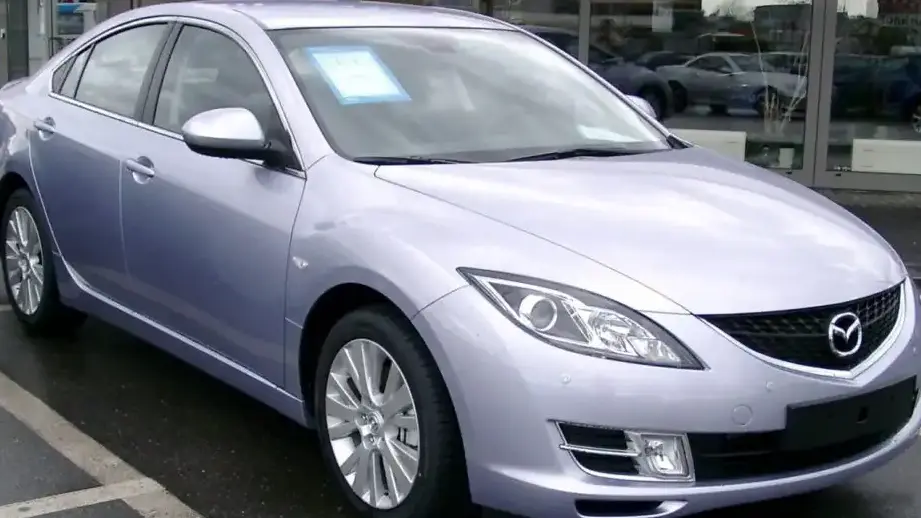
The Mazda 6 II Sedan (GH) 2.0 (147 Hp) Activematic, produced between 2007 and 2010, represented a key offering in Mazda’s mid-size sedan lineup. Positioned as a comfortable and well-equipped option, this variant aimed to balance fuel efficiency with adequate performance for everyday driving. It was part of the second generation (GH) of the Mazda 6, which debuted in 2007 and built upon the success of the original model, offering a more refined driving experience and updated styling. The 2.0-liter Activematic trim served as a popular choice for buyers prioritizing ease of use and a smoother ride over outright sportiness, slotting below the more powerful 2.5-liter variants and often above the base 2.0-liter manual transmission models.
Technical Specifications
| Brand | Mazda |
| Model | 6 |
| Generation | 6 II Sedan (GH) |
| Type (Engine) | 2.0 (147 Hp) Activematic |
| Start of production | 2007 |
| End of production | 2010 |
| Powertrain Architecture | Internal Combustion engine |
| Body type | Sedan |
| Seats | 5 |
| Doors | 4 |
| Fuel consumption (economy) – urban (NEDC) | 11.1 l/100 km (21.2 US mpg, 25.4 UK mpg, 9 km/l) |
| Fuel consumption (economy) – extra urban (NEDC) | 5.7 l/100 km (41.3 US mpg, 49.6 UK mpg, 17.5 km/l) |
| Fuel consumption (economy) – combined (NEDC) | 7.7 l/100 km (30.5 US mpg, 36.7 UK mpg, 13 km/l) |
| CO2 emissions (NEDC) | 182 g/km |
| Fuel Type | Petrol (Gasoline) |
| Acceleration 0 – 100 km/h | 10.8 sec |
| Acceleration 0 – 62 mph | 10.8 sec |
| Acceleration 0 – 60 mph | 10.3 sec |
| Maximum speed | 204 km/h (126.76 mph) |
| Emission standard | Euro 4 |
| Weight-to-power ratio | 8.8 kg/Hp, 113.5 Hp/tonne |
| Weight-to-torque ratio | 7 kg/Nm, 142.1 Nm/tonne |
| Power | 147 Hp @ 6500 rpm |
| Power per litre | 73.5 Hp/l |
| Torque | 184 Nm @ 4000 rpm (135.71 lb.-ft. @ 4000 rpm) |
| Engine layout | Front, Transverse |
| Engine Model/Code | LF-DE |
| Engine displacement | 1999 cm3 (121.99 cu. in.) |
| Number of cylinders | 4 |
| Engine configuration | Inline |
| Cylinder Bore | 87.5 mm (3.44 in.) |
| Piston Stroke | 83.1 mm (3.27 in.) |
| Compression ratio | 10:1 |
| Number of valves per cylinder | 4 |
| Fuel injection system | Multi-port manifold injection |
| Engine aspiration | Naturally aspirated engine |
| Valvetrain | DOHC |
| Engine oil capacity | 4.3 l (4.54 US qt | 3.78 UK qt) |
| Coolant | 7.5 l (7.93 US qt | 6.6 UK qt) |
| Kerb Weight | 1295 kg (2854.99 lbs.) |
| Max. weight | 1935 kg (4265.94 lbs.) |
| Max load | 640 kg (1410.96 lbs.) |
| Trunk (boot) space – minimum | 519 l (18.33 cu. ft.) |
| Fuel tank capacity | 64 l (16.91 US gal | 14.08 UK gal) |
| Max. roof load | 100 kg (220.46 lbs.) |
| Permitted trailer load with brakes (12%) | 1500 kg (3306.93 lbs.) |
| Permitted towbar download | 75 kg (165.35 lbs.) |
| Length | 4755 mm (187.2 in.) |
| Width | 1795 mm (70.67 in.) |
| Height | 1440 mm (56.69 in.) |
| Wheelbase | 2725 mm (107.28 in.) |
| Front track | 1550-1570 mm (61.02 – 61.81 in.) |
| Rear (Back) track | 1550-1570 mm (61.02 – 61.81 in.) |
| Ride height (ground clearance) | 165 mm (6.5 in.) |
| Minimum turning circle (turning diameter) | 11.4 m (37.4 ft.) |
| Drivetrain Architecture | The Internal combustion engine (ICE) drives the front wheels of the vehicle. |
| Drive wheel | Front wheel drive |
| Number of gears and type of gearbox | 5 gears, automatic transmission Activematic |
| Front suspension | Double wishbone, Transverse stabilizer |
| Rear suspension | Independent multi-link suspension, Transverse stabilizer |
| Front brakes | Ventilated discs, 299 mm |
| Rear brakes | Disc, 280 mm |
| Assisting systems | ABS (Anti-lock braking system) |
| Steering type | Steering rack and pinion |
| Power steering | Electric Steering |
| Tires size | 205/60 R16; 215/50 R17; 225/45 R18 |
| Wheel rims size | 6.5J x 16; 7J x 17; 7.5J x 18 |
Powertrain & Engine Architecture
The heart of the Mazda 6 2.0 Activematic is the LF-DE engine, a 1.999-liter inline-four cylinder gasoline engine. This engine utilizes multi-point fuel injection and a double overhead camshaft (DOHC) valvetrain, contributing to its relatively efficient operation. The LF-DE engine was a common powerplant in various Mazda vehicles of the era, known for its reliability and reasonable power output. The Activematic transmission is a 5-speed automatic gearbox, designed to provide smooth shifts and ease of driving. It’s not a traditional torque-converter automatic, but rather a continuously variable transmission (CVT) marketed under the “Activematic” name by Mazda. This CVT design aimed to offer a balance between fuel efficiency and responsive acceleration.
Driving Characteristics
The 147 hp and 184 Nm (136 lb-ft) of torque delivered by the 2.0-liter engine and Activematic transmission resulted in a comfortable, but not particularly sporty, driving experience. Acceleration from 0-60 mph took around 10.3 seconds, which was adequate for everyday commuting and highway merging. The Activematic transmission, while smooth, could sometimes feel less responsive than a traditional automatic or manual gearbox, particularly during quick acceleration maneuvers. The CVT’s programming prioritized fuel economy, which meant the engine often held a lower RPM, sometimes resulting in a slight delay before the transmission downshifted for more power. Compared to the higher-output 2.5-liter versions, the 2.0 Activematic felt noticeably less powerful, but it offered better fuel economy.
Equipment & Trim Levels
The 2.0 Activematic trim typically included standard features such as air conditioning, power windows and locks, a CD player with auxiliary input, and basic cloth upholstery. Higher trim levels, such as the Grand Touring, added features like leather seats, a sunroof, and a premium sound system. Optional extras for the 2.0 Activematic could include alloy wheels, a navigation system, and heated front seats. The interior design was generally functional and well-built, with a focus on ergonomics and ease of use.
Chassis & Braking
The Mazda 6 II Sedan featured a double wishbone front suspension and an independent multi-link rear suspension, providing a comfortable and controlled ride. The 2.0 Activematic models typically came equipped with ventilated front disc brakes and solid rear disc brakes. Anti-lock Braking System (ABS) was standard. The suspension tuning was geared towards comfort rather than outright handling prowess, making it a pleasant cruiser on the highway. Stabilizer bars were included both front and rear to reduce body roll during cornering.
Market Reception & Comparison
The Mazda 6 2.0 Activematic was generally well-received by automotive critics as a practical and comfortable mid-size sedan. It was praised for its fuel efficiency, smooth ride, and well-appointed interior. However, some reviewers noted that the engine lacked the punch of its competitors and that the Activematic transmission could feel sluggish at times. Compared to other 2.0-liter sedans of the era, such as the Honda Accord and Toyota Camry, the Mazda 6 offered a more engaging driving experience, but it didn’t quite match their reputation for long-term reliability. Fuel economy figures were competitive, averaging around 30.5 US mpg in combined driving.
Legacy
The Mazda 6 II Sedan (GH) 2.0 Activematic has proven to be a relatively reliable vehicle, with the LF-DE engine generally holding up well over time. However, like any used car, potential buyers should be aware of common issues such as oil leaks and potential transmission problems. The Activematic transmission, while innovative for its time, can be more expensive to repair than a traditional automatic. Today, these vehicles can be found on the used car market at affordable prices, making them a good option for budget-conscious buyers seeking a comfortable and practical mid-size sedan. The 2.0 Activematic variant remains a popular choice for those prioritizing fuel efficiency and ease of driving over outright performance.