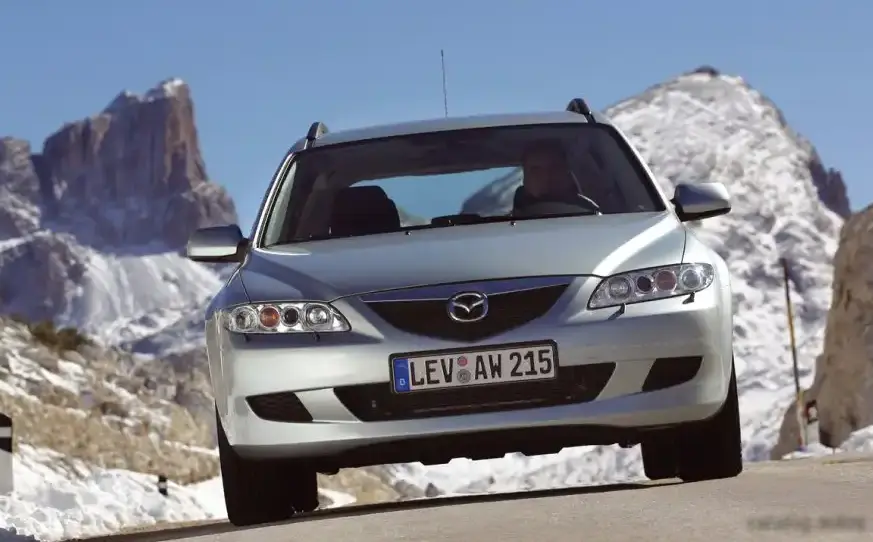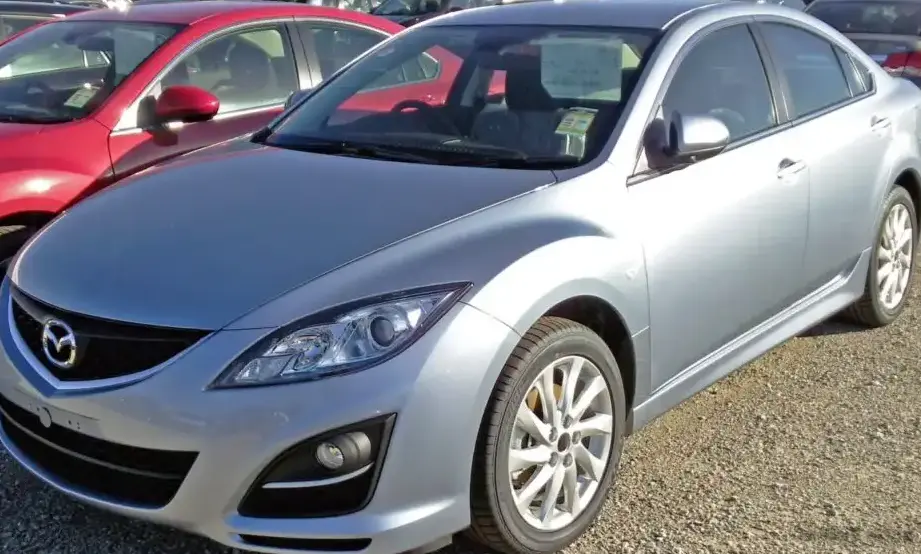
The Mazda 6 II Sedan, specifically the 1.8-liter (120 hp) variant produced from 2010 to 2012, represents a key offering within the second generation (GH) of Mazda’s popular mid-size sedan. Introduced as part of a facelift for the GH platform, this model aimed to provide an accessible entry point into the Mazda 6 range, emphasizing fuel efficiency and affordability without entirely sacrificing the brand’s reputation for driving dynamics. It primarily targeted European and Asian markets where smaller displacement engines were favored due to tax regulations and consumer preferences. This version occupied the lower end of the trim spectrum, serving as a more economical alternative to the 2.5-liter models and diesel options available.
Technical Specifications
| Brand | Mazda |
| Model | 6 |
| Generation | 6 II Sedan (GH, facelift 2010) |
| Type (Engine) | 1.8 (120 Hp) |
| Start of production | 2010 |
| End of production | 2012 |
| Powertrain Architecture | Internal Combustion engine |
| Body type | Sedan |
| Seats | 5 |
| Doors | 4 |
| Fuel consumption (economy) – urban (NEDC) | 9.1 l/100 km (25.8 US mpg, 31 UK mpg, 11 km/l) |
| Fuel consumption (economy) – extra urban (NEDC) | 4.9 l/100 km (48 US mpg, 57.6 UK mpg, 20.4 km/l) |
| Fuel consumption (economy) – combined (NEDC) | 6.4 l/100 km (36.8 US mpg, 44.1 UK mpg, 15.6 km/l) |
| CO2 emissions (NEDC) | 152 g/km |
| Fuel Type | Petrol (Gasoline) |
| Acceleration 0 – 100 km/h | 11.4 sec |
| Acceleration 0 – 62 mph | 11.4 sec |
| Acceleration 0 – 60 mph | 10.8 sec |
| Maximum speed | 196 km/h (121.79 mph) |
| Emission standard | Euro 4 |
| Weight-to-power ratio | 10.6 kg/Hp, 94.5 Hp/tonne |
| Weight-to-torque ratio | 7.7 kg/Nm, 129.9 Nm/tonne |
| Power | 120 Hp @ 5500 rpm |
| Power per litre | 66.7 Hp/l |
| Torque | 165 Nm @ 4300 rpm (121.7 lb.-ft. @ 4300 rpm) |
| Engine layout | Front, Transverse |
| Engine Model/Code | L8 |
| Engine displacement | 1798 cm3 (109.72 cu. in.) |
| Number of cylinders | 4 |
| Engine configuration | Inline |
| Cylinder Bore | 83 mm (3.27 in.) |
| Piston Stroke | 83.1 mm (3.27 in.) |
| Compression ratio | 10.8:1 |
| Number of valves per cylinder | 4 |
| Fuel injection system | Multi-port manifold injection |
| Engine aspiration | Naturally aspirated engine |
| Valvetrain | DOHC |
| Engine oil capacity | 4.3 l (4.54 US qt, 3.78 UK qt) |
| Coolant | 7.5 l (7.93 US qt, 6.6 UK qt) |
| Kerb Weight | 1270 kg (2799.87 lbs.) |
| Max. weight | 1885 kg (4155.71 lbs.) |
| Max load | 615 kg (1355.84 lbs.) |
| Trunk (boot) space – minimum | 519 l (18.33 cu. ft.) |
| Fuel tank capacity | 64 l (16.91 US gal, 14.08 UK gal) |
| Max. roof load | 100 kg (220.46 lbs.) |
| Permitted trailer load with brakes (12%) | 1300 kg (2866.01 lbs.) |
| Permitted towbar download | 75 kg (165.35 lbs.) |
| Length | 4755 mm (187.2 in.) |
| Width | 1795 mm (70.67 in.) |
| Height | 1440 mm (56.69 in.) |
| Wheelbase | 2725 mm (107.28 in.) |
| Front track | 1560-1570 mm (61.42 – 61.81 in.) |
| Rear (Back) track | 1560-1570 mm (61.42 – 61.81 in.) |
| Ride height (ground clearance) | 165 mm (6.5 in.) |
| Minimum turning circle (turning diameter) | 11.8 m (38.71 ft.) |
| Drivetrain Architecture | The Internal combustion engine (ICE) drives the front wheels of the vehicle. |
| Drive wheel | Front wheel drive |
| Number of gears and type of gearbox | 5 gears, manual transmission |
| Front suspension | Double wishbone, Transverse stabilizer |
| Rear suspension | Independent multi-link suspension, Transverse stabilizer |
| Front brakes | Ventilated discs, 299 mm |
| Rear brakes | Disc, 280 mm |
| Assisting systems | ABS (Anti-lock braking system) |
| Steering type | Steering rack and pinion |
| Power steering | Electric Steering |
| Tires size | 205/60 R16; 215/50 R17; 225/45 R18 |
| Wheel rims size | 6.5J x 16; 7J x 17; 7.5J x 18 |
INTRODUCTION
The Mazda 6 II Sedan 1.8 (120 hp) was introduced in 2010 as part of a mid-cycle refresh of the second-generation Mazda 6 (GH platform). This facelift brought revised styling, improved interior materials, and updated technology. The 1.8-liter engine option was primarily aimed at markets where fuel economy and lower purchase prices were prioritized. It served as the entry-level engine choice, positioned below the more powerful 2.5-liter gasoline and 2.2-liter diesel variants. The GH platform, shared with the Ford Mondeo, provided a solid foundation for the Mazda 6, known for its balanced handling and relatively spacious interior.
Powertrain & Engine Architecture
The heart of this variant is the Mazda L8 engine, a 1.8-liter inline-four cylinder gasoline engine. This engine utilizes a naturally aspirated configuration with multi-point fuel injection and a double overhead camshaft (DOHC) valvetrain. The L8 engine is known for its relative simplicity and reliability. It produces 120 horsepower at 5500 rpm and 165 Nm (121.7 lb-ft) of torque at 4300 rpm. The engine’s design focused on providing adequate power for everyday driving while maximizing fuel efficiency. The engine’s block is constructed from cast iron, while the cylinder head is made of aluminum. The 5-speed manual transmission was standard, offering a relatively conventional gear ratio spread designed for smooth operation and reasonable acceleration.
Driving Characteristics
The 1.8-liter engine, paired with the 5-speed manual transmission, delivers a driving experience focused on economy rather than outright performance. Acceleration from 0-60 mph takes approximately 10.8 seconds, and the top speed is around 121.79 mph. While not particularly quick, the engine provides sufficient power for typical commuting and highway cruising. The gear ratios are tuned to prioritize fuel efficiency, meaning the engine needs to be revved relatively high to achieve brisk acceleration. Compared to the higher-output 2.5-liter models, the 1.8L feels noticeably less responsive, particularly when overtaking or climbing hills. However, the Mazda 6’s well-tuned chassis and suspension contribute to a comfortable and predictable ride, even with the lower-powered engine.
Equipment & Trim Levels
The 1.8-liter Mazda 6 typically came with a base level of equipment, focusing on essential features. Standard amenities generally included air conditioning, power windows, power mirrors, a basic audio system with CD player, and ABS brakes. Interior upholstery was typically cloth. Optional extras, depending on the market and specific package, could include alloy wheels, a sunroof, upgraded audio systems, and climate control. The trim level was generally positioned as the entry point to the Mazda 6 range, making it an attractive option for budget-conscious buyers.
Chassis & Braking
The Mazda 6 II Sedan utilizes a front-engine, front-wheel-drive layout. The suspension consists of a double wishbone setup at the front and an independent multi-link suspension at the rear, providing a good balance between ride comfort and handling. Brakes are ventilated discs at the front and solid discs at the rear. ABS (Anti-lock Braking System) is standard. The chassis is designed to provide a stable and predictable driving experience, and the suspension tuning is geared towards comfort rather than sporty handling. The steering is rack and pinion with electric power assistance.
Market Reception & Comparison
The 1.8-liter Mazda 6 was generally well-received as an affordable and fuel-efficient option within the mid-size sedan segment. Critics praised its comfortable ride and spacious interior, but noted its lack of outright performance compared to rivals with larger engines. Compared to the 2.5-liter Mazda 6, the 1.8L offered significantly better fuel economy but at the cost of acceleration and overall driving excitement. The diesel variants provided a compelling alternative for those prioritizing fuel efficiency and torque. The 1.8L’s main appeal lay in its affordability and practicality, making it a popular choice for families and commuters.
Legacy
The Mazda 6 II Sedan 1.8 (120 hp) has proven to be a relatively reliable vehicle in the used car market. The L8 engine is known for its durability, and routine maintenance is generally straightforward and affordable. While not a performance icon, this variant offers a practical and economical transportation solution. Today, these models can be found at reasonable prices, making them an attractive option for buyers seeking a dependable and fuel-efficient mid-size sedan. Common issues are generally related to age and mileage, such as wear and tear on suspension components and potential oil leaks, but major engine failures are relatively rare.