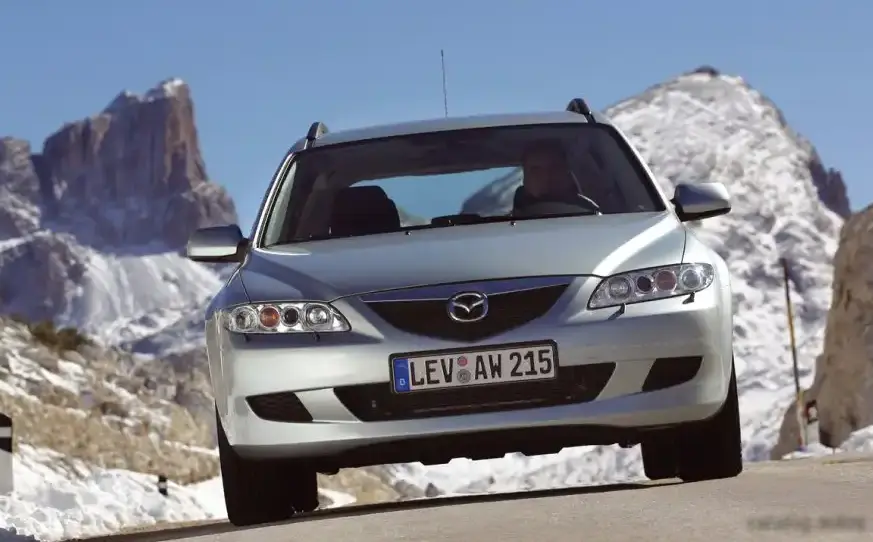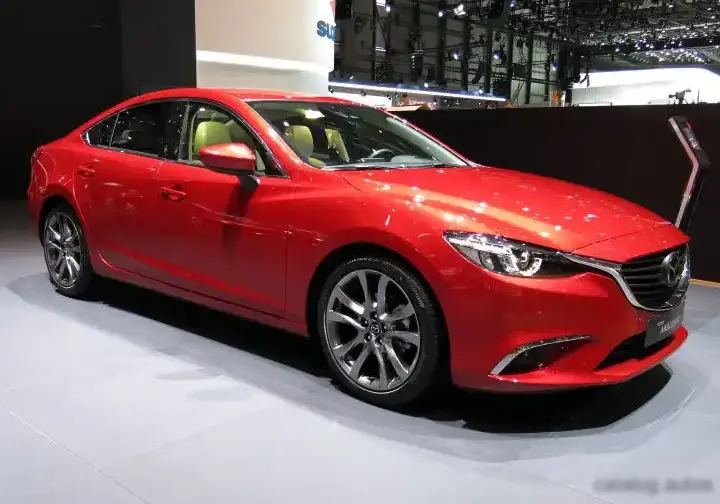
The Mazda 6 III Sedan, specifically the facelifted version produced from 2015 to 2017, represented a significant evolution of Mazda’s mid-size offering. Within the GJ generation, the 2.0 SKYACTIV-G variant, producing 165 horsepower, occupied a crucial position in the lineup, aiming to balance fuel efficiency with acceptable performance for a broad customer base. This model year saw updates to the exterior styling, interior refinement, and advancements in safety technology, building upon the already well-regarded foundation of the GJ platform. It was primarily marketed in Europe, Asia, and Australia, with the US market favoring the 2.5L engine option.
Technical Specifications
| Brand | Mazda |
| Model | 6 |
| Generation | 6 III Sedan (GJ, facelift 2015) |
| Type (Engine) | 2.0 SKYACTIV-G (165 Hp) |
| Start of production | 2015 |
| End of production | 2017 |
| Powertrain Architecture | Internal Combustion engine |
| Body type | Sedan |
| Seats | 5 |
| Doors | 4 |
| Fuel consumption (urban) | 7.7 l/100 km (30.5 US mpg) |
| Fuel consumption (extra urban) | 4.6 l/100 km (51.1 US mpg) |
| Fuel consumption (combined) | 6 l/100 km (39.2 US mpg) |
| CO2 emissions | 139 g/km |
| Fuel Type | Petrol (Gasoline) |
| Acceleration 0 – 100 km/h | 9.1 sec |
| Acceleration 0 – 62 mph | 9.1 sec |
| Acceleration 0 – 60 mph | 8.6 sec |
| Maximum speed | 216 km/h (134.22 mph) |
| Emission standard | Euro 6 |
| Weight-to-power ratio | 8.3 kg/Hp |
| Weight-to-torque ratio | 6.5 kg/Nm |
| Power | 165 Hp @ 6000 rpm |
| Torque | 210 Nm @ 4000 rpm (154.89 lb.-ft. @ 4000 rpm) |
| Engine layout | Front, Transverse |
| Engine displacement | 1998 cm3 (121.93 cu. in.) |
| Number of cylinders | 4 |
| Engine configuration | Inline |
| Cylinder Bore | 83.5 mm (3.29 in.) |
| Piston Stroke | 91.2 mm (3.59 in.) |
| Compression ratio | 14:1 |
| Number of valves per cylinder | 4 |
| Fuel injection system | Direct injection |
| Engine oil capacity | 4.2 l (4.44 US qt | 3.7 UK qt) |
| Coolant capacity | 6.6 l (6.97 US qt | 5.81 UK qt) |
| Kerb Weight | 1375-1465 kg (3031.36 – 3229.77 lbs.) |
| Max. weight | 1945 kg (4287.99 lbs.) |
| Max load | 480-570 kg (1058.22 – 1256.63 lbs.) |
| Trunk (boot) space | 480 l (16.95 cu. ft.) |
| Fuel tank capacity | 62 l (16.38 US gal | 13.64 UK gal) |
| Max. roof load | 75 kg (165.35 lbs.) |
| Permitted trailer load with brakes (8%) | 1700 kg (3747.86 lbs.) |
| Permitted trailer load with brakes (12%) | 1500 kg (3306.93 lbs.) |
| Permitted trailer load without brakes | 680 kg (1499.14 lbs.) |
| Permitted towbar download | 75 kg (165.35 lbs.) |
| Length | 4870 mm (191.73 in.) |
| Width | 1840 mm (72.44 in.) |
| Height | 1450 mm (57.09 in.) |
| Wheelbase | 2830 mm (111.42 in.) |
| Ride height (ground clearance) | 165 mm (6.5 in.) |
| Minimum turning circle | 11.2 m (36.75 ft.) |
| Drivetrain Architecture | Front wheel drive |
| Number of gears | 6 gears, manual transmission |
| Front brakes | Ventilated discs |
| Rear brakes | Disc |
| Assisting systems | ABS (Anti-lock braking system) |
| Steering type | Steering rack and pinion |
| Power steering | Electric Steering |
Powertrain & Engine Architecture
The heart of this Mazda 6 variant is the 2.0-liter SKYACTIV-G engine, designated as a naturally aspirated inline-four cylinder. This engine family was a cornerstone of Mazda’s engineering philosophy, prioritizing efficiency and responsiveness. The engine boasts a high compression ratio of 14:1, achieved through careful design and manufacturing tolerances, allowing for improved thermal efficiency. Direct injection is employed, precisely metering fuel into the combustion chamber for optimal combustion. The engine utilizes a dual overhead camshaft (DOHC) valvetrain with four valves per cylinder, enhancing breathing and contributing to the engine’s power output. The 6-speed manual transmission was standard, offering precise gear changes and a direct connection to the engine. While an automatic transmission was available in some markets, this specific configuration was primarily sold with the manual gearbox.
Driving Characteristics
The 165 hp 2.0-liter engine, paired with the 6-speed manual transmission, provided a balanced driving experience. Acceleration from 0-60 mph took approximately 8.6 seconds, making it competitive within its class, but noticeably slower than the 2.5L variants. The SKYACTIV-G engine delivered a relatively flat torque curve, providing usable power throughout the rev range. The manual transmission’s gear ratios were well-matched to the engine’s characteristics, allowing for confident overtaking maneuvers. Compared to the more powerful 2.5L engine, this variant prioritized fuel economy and a more relaxed driving style. The manual transmission also offered a more engaging driving experience than the optional automatic.
Equipment & Trim Levels
The 2.0 SKYACTIV-G typically represented a mid-range trim level in the Mazda 6 lineup. Standard equipment generally included air conditioning, power windows and locks, a basic audio system with USB connectivity, and alloy wheels. Safety features such as ABS, stability control, and multiple airbags were also standard. Higher trim levels offered upgrades such as leather upholstery, a more advanced infotainment system with navigation, a sunroof, and automatic climate control. Optional extras included a premium sound system, parking sensors, and adaptive headlights.
Chassis & Braking
The Mazda 6 GJ utilized a front-wheel-drive platform with MacPherson strut suspension in the front and a multi-link suspension in the rear. This setup provided a good balance between ride comfort and handling precision. The 2.0-liter models typically featured ventilated disc brakes in the front and solid disc brakes in the rear. The braking system was assisted by ABS and electronic brakeforce distribution (EBD). Stabilizer bars were fitted to both the front and rear axles to reduce body roll during cornering.
Market Reception & Comparison
The 2.0 SKYACTIV-G variant of the Mazda 6 was generally well-received by automotive critics. It was praised for its fuel efficiency, comfortable ride, and engaging handling. However, some reviewers noted that the engine lacked the outright power of its larger displacement counterparts. Compared to the 2.5L models, the 2.0L offered better fuel economy but slower acceleration. Against competitors like the Ford Mondeo, Volkswagen Passat, and Toyota Camry, the Mazda 6 stood out for its stylish design and driver-focused dynamics. The 2.0L engine offered a compelling value proposition for buyers prioritizing efficiency and affordability.
Legacy
The 2.0 SKYACTIV-G engine proved to be a reliable and durable powertrain. While not as sought-after as the 2.5L variants, the 2.0L models remain a popular choice in the used car market, particularly for buyers seeking a fuel-efficient and well-equipped mid-size sedan. The SKYACTIV technology introduced with this engine generation helped establish Mazda as a leader in automotive efficiency and innovation. Properly maintained examples of this powertrain continue to provide years of reliable service, making them a sensible and enjoyable option for budget-conscious car buyers.