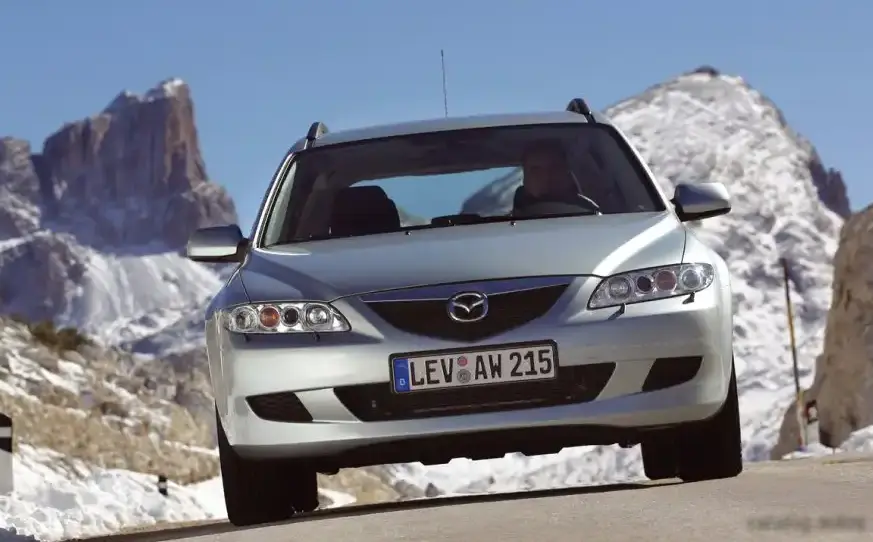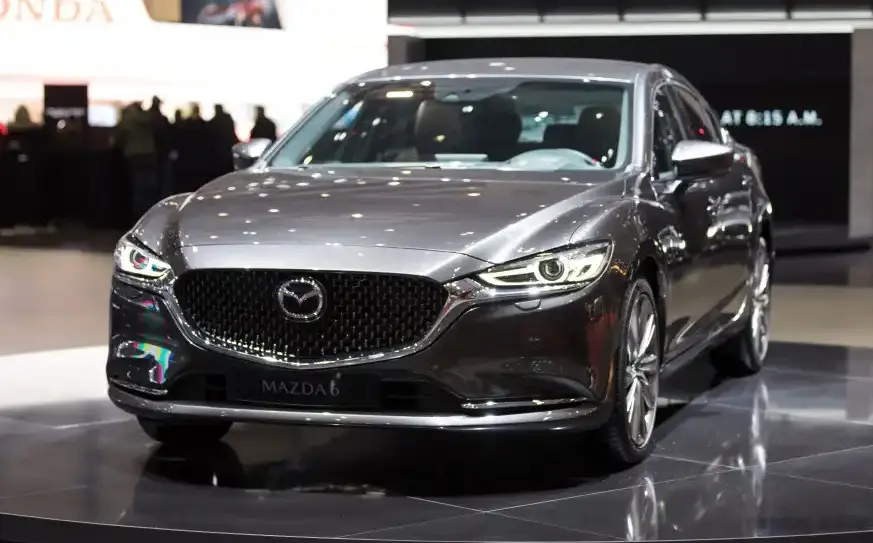
The Mazda 6 III Sedan (GJ series), particularly the facelifted version introduced in 2018, represented a significant evolution of Mazda’s mid-size offering. Within the GJ lineup, the 2.2 SKYACTIV-D variant, producing 184 horsepower, occupied a position as a premium, fuel-efficient option geared towards drivers prioritizing torque and long-distance comfort. Production of this specific configuration spanned from 2018 onwards, building upon the foundation of the GJ platform first launched in 2012. This model aimed to balance performance with Mazda’s signature driving dynamics and refined interior.
Technical Specifications
| Brand | Mazda |
| Model | 6 |
| Generation | 6 III Sedan (GJ, facelift 2018) |
| Type (Engine) | 2.2 SKYACTIV-D (184 Hp) |
| Start of production | 2018 |
| Powertrain Architecture | Internal Combustion engine |
| Body type | Sedan |
| Seats | 5 |
| Doors | 4 |
| Fuel consumption (urban) | 5.5 l/100 km (42.8 US mpg, 51.4 UK mpg, 18.2 km/l) |
| Fuel consumption (extra urban) | 4.1 l/100 km (57.4 US mpg, 68.9 UK mpg, 24.4 km/l) |
| Fuel consumption (combined) | 4.7 l/100 km (50 US mpg, 60.1 UK mpg, 21.3 km/l) |
| CO2 emissions | 124 g/km |
| Fuel Type | Diesel |
| Acceleration 0 – 100 km/h | 8.5 sec |
| Acceleration 0 – 62 mph | 8.5 sec |
| Acceleration 0 – 60 mph | 8.1 sec |
| Maximum speed | 227 km/h (141.05 mph) |
| Emission standard | Euro 6 |
| Weight-to-power ratio | 8.4 kg/Hp, 119 Hp/tonne |
| Weight-to-torque ratio | 3.5 kg/Nm, 287.8 Nm/tonne |
| Power | 184 Hp @ 4000 rpm |
| Power per litre | 84 Hp/l |
| Torque | 445 Nm @ 2000 rpm (328.22 lb.-ft. @ 2000 rpm) |
| Engine layout | Front, Transverse |
| Engine Model/Code | SHY8 |
| Engine displacement | 2191 cm3 (133.7 cu. in.) |
| Number of cylinders | 4 |
| Engine configuration | Inline |
| Cylinder Bore | 86 mm (3.39 in.) |
| Piston Stroke | 94.3 mm (3.71 in.) |
| Compression ratio | 14.4:1 |
| Number of valves per cylinder | 4 |
| Fuel injection system | Diesel Commonrail |
| Engine aspiration | BiTurbo, Intercooler |
| Engine oil capacity | 5.1 l (5.39 US qt | 4.49 UK qt) |
| Coolant | 8.3 l (8.77 US qt | 7.3 UK qt) |
| Kerb Weight | 1546-1613 kg (3408.35 – 3556.06 lbs.) |
| Max. weight | 2182 kg (4810.49 lbs.) |
| Max load | 569-636 kg (1254.43 – 1402.14 lbs.) |
| Trunk (boot) space – minimum | 480 l (16.95 cu. ft.) |
| Fuel tank capacity | 62 l (16.38 US gal | 13.64 UK gal) |
| Max. roof load | 75 kg (165.35 lbs.) |
| Permitted trailer load with brakes (8%) | 1800 kg (3968.32 lbs.) |
| Permitted trailer load with brakes (12%) | 1600 kg (3527.4 lbs.) |
| Permitted trailer load without brakes | 730 kg (1609.37 lbs.) |
| Length | 4870 mm (191.73 in.) |
| Width | 1840 mm (72.44 in.) |
| Height | 1450 mm (57.09 in.) |
| Wheelbase | 2830 mm (111.42 in.) |
| Front track | 1585-1595 mm (62.4 – 62.8 in.) |
| Rear (Back) track | 1575-1585 mm (62.01 – 62.4 in.) |
| Ride height (ground clearance) | 165 mm (6.5 in.) |
| Minimum turning circle (turning diameter) | 11.2 m (36.75 ft.) |
| Drivetrain Architecture | The Internal combustion engine (ICE) drives the front wheels of the vehicle. |
| Drive wheel | Front wheel drive |
| Number of gears and type of gearbox | 6 gears, manual transmission |
| Front brakes | Ventilated discs |
| Rear brakes | Disc |
| Assisting systems | ABS (Anti-lock braking system) |
| Steering type | Steering rack and pinion |
| Power steering | Electric Steering |
Powertrain & Engine Architecture
The heart of this Mazda 6 variant is the SHY8 2.2-liter SKYACTIV-D four-cylinder diesel engine. This engine is characterized by its high compression ratio of 14.4:1, a key element in achieving both power and efficiency. The engine utilizes a sophisticated common-rail direct injection system, delivering fuel at extremely high pressures for optimized combustion. Crucially, this version employs a twin-turbocharger setup (BiTurbo) with an intercooler. The sequential turbocharging system minimizes turbo lag and provides a broad, flat torque curve. The engine’s design prioritizes thermal efficiency, reducing pumping losses and maximizing energy recovery. The 6-speed manual transmission was standard, chosen for its driver engagement and efficiency, although an automatic transmission was available as an option in some markets.
Driving Characteristics
The 184 hp and 445 Nm (328 lb-ft) of torque delivered by the 2.2 SKYACTIV-D engine provided a confident and relaxed driving experience. Acceleration from 0-60 mph took approximately 8.1 seconds, making it competitive within its class. The twin-turbo setup ensured strong pulling power across a wide rev range, making overtaking maneuvers effortless. Compared to lower-powered engine options, this variant offered significantly more responsiveness. While not as sporty as some gasoline-powered rivals, the diesel engine’s torque advantage made it well-suited for highway cruising and carrying passengers or cargo. The manual transmission, while engaging, had relatively long gearing, prioritizing fuel economy over outright acceleration.
Equipment & Trim Levels
The 2.2 SKYACTIV-D typically came in higher trim levels, such as ‘Sport’ or ‘Touring’ depending on the market. Standard features often included alloy wheels, automatic climate control, a touchscreen infotainment system with navigation, and a suite of safety technologies like lane departure warning and adaptive cruise control. Interior upholstery was typically cloth or leather, with higher trims offering premium leather options. Optional extras included a sunroof, premium sound system, and advanced driver-assistance systems. The overall interior design emphasized a minimalist aesthetic with high-quality materials.
Chassis & Braking
The Mazda 6 GJ series utilized a front-engine, front-wheel-drive layout. The suspension consisted of MacPherson struts at the front and multi-link suspension at the rear, tuned for a balance of comfort and handling. Braking duties were handled by ventilated discs at the front and solid discs at the rear, equipped with ABS and electronic brakeforce distribution. Steering was provided by an electric power steering system, offering light and precise control. Stabilizer bars were fitted front and rear to reduce body roll during cornering.
Market Reception & Comparison
The 2.2 SKYACTIV-D variant of the Mazda 6 was generally well-received by automotive critics. It was praised for its fuel efficiency, refined engine, and comfortable ride. Compared to the 2.0-liter gasoline engine options, the diesel offered superior torque and fuel economy, making it a popular choice for long-distance drivers. However, some critics noted that the diesel engine was slightly noisier than the gasoline alternatives. Against competitors like the Ford Mondeo and Volkswagen Passat, the Mazda 6 stood out for its stylish design and engaging driving dynamics.
Legacy
The SHY8 2.2 SKYACTIV-D engine has proven to be a relatively reliable powertrain, although, like all diesel engines, it requires regular maintenance, including oil changes and diesel particulate filter (DPF) regeneration. On the used car market, Mazda 6 models equipped with this engine are sought after for their fuel efficiency and longevity. The SKYACTIV technology introduced with this generation of Mazda vehicles helped establish the brand as a leader in fuel efficiency and driving dynamics. The 2.2 SKYACTIV-D remains a viable option for buyers seeking a comfortable, efficient, and reliable mid-size sedan.