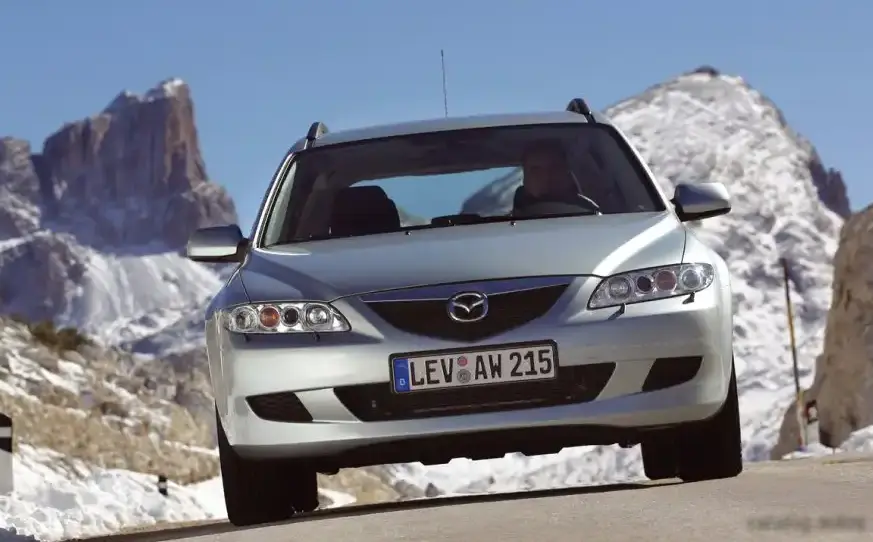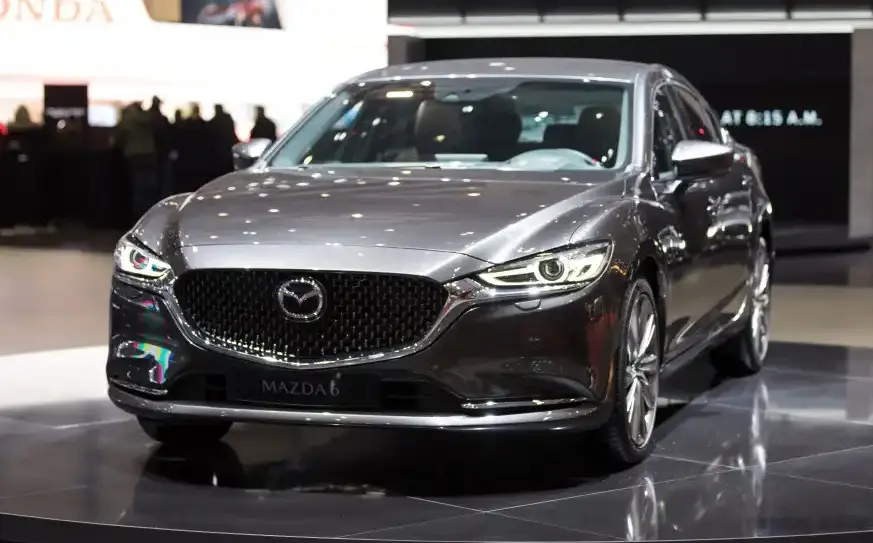
The Mazda 6 III Sedan (GJ), particularly the facelifted version introduced in 2018, represented a significant evolution of Mazda’s mid-size offering. This generation, produced from 2012-2021, aimed to blend sporty driving dynamics with premium interior appointments. The 2.5-liter SKYACTIV-G variant, producing 187 horsepower, was a key engine option in the North American market, positioned as a step up from the base 2.5-liter engine and offering a balance between performance and fuel efficiency. It served as a compelling alternative to competitors like the Honda Accord, Toyota Camry, and Ford Fusion.
Technical Specifications
| Brand | Mazda |
| Model | 6 |
| Generation | 6 III Sedan (GJ, facelift 2018) |
| Type (Engine) | 2.5 SKYACTIV-G (187 Hp) |
| Start of production | 2018 |
| Powertrain Architecture | Internal Combustion engine |
| Body type | Sedan |
| Seats | 5 |
| Doors | 4 |
| Fuel consumption (urban) | 9.8 l/100 km (24 US mpg) |
| Fuel consumption (extra urban) | 7.1 l/100 km (33.1 US mpg) |
| Fuel consumption (combined) | 8.7 l/100 km (27 US mpg) |
| Fuel Type | Petrol (Gasoline) |
| Weight-to-power ratio | 8.1 kg/Hp |
| Weight-to-torque ratio | 6 kg/Nm |
| Power | 187 Hp @ 6000 rpm |
| Power per litre | 75.2 Hp/l |
| Torque | 252 Nm @ 4000 rpm (185.87 lb.-ft. @ 4000 rpm) |
| Maximum engine speed | 6500 rpm |
| Engine layout | Front, Transverse |
| Engine Model/Code | PYY1 |
| Engine displacement | 2488 cm3 (151.83 cu. in.) |
| Number of cylinders | 4 |
| Engine configuration | Inline |
| Cylinder Bore | 89 mm (3.5 in.) |
| Piston Stroke | 100 mm (3.94 in.) |
| Compression ratio | 13:1 |
| Number of valves per cylinder | 4 |
| Fuel injection system | Direct injection |
| Engine aspiration | Naturally aspirated engine |
| Valvetrain | DOHC-VVT |
| Engine oil capacity | 4.5 l (4.76 US qt | 3.96 UK qt) |
| Coolant capacity | 7.2 l (7.61 US qt | 6.34 UK qt) |
| Kerb Weight | 1509 kg (3326.78 lbs.) |
| Trunk (boot) space (minimum) | 416 l (14.69 cu. ft.) |
| Fuel tank capacity | 62 l (16.38 US gal | 13.64 UK gal) |
| Length | 4895 mm (192.72 in.) |
| Width | 1839 mm (72.4 in.) |
| Height | 1450 mm (57.09 in.) |
| Wheelbase | 2830 mm (111.42 in.) |
| Front track | 1585-1595 mm (62.4 – 62.8 in.) |
| Rear track | 1575-1585 mm (62.01 – 62.4 in.) |
| Ride height (ground clearance) | 165 mm (6.5 in.) |
| Drivetrain Architecture | Front wheel drive |
| Number of gears and type of gearbox | 6 gears, manual transmission |
| Front suspension | Independent, type McPherson with coil spring and anti-roll bar |
| Rear suspension | Independent multi-link spring suspension with stabilizer |
| Front brakes | Ventilated discs |
| Rear brakes | Disc |
| Assisting systems | ABS (Anti-lock braking system) |
| Steering type | Steering rack and pinion |
| Power steering | Electric Steering |
| Tires size | 225/55 R17; 225/45 R19 |
| Wheel rims size | 7.5J x 17; 7.5J x 19 |
INTRODUCTION
The 2018 Mazda 6 facelift, equipped with the 2.5-liter SKYACTIV-G engine producing 187 horsepower, represented a refinement of the GJ generation. Introduced as part of a mid-cycle refresh, this variant aimed to enhance the driving experience and appeal to a broader customer base. It built upon the foundation of the 1HX0/A3 platform, shared with other Mazda models, but distinguished itself through Mazda’s focus on driver engagement and sophisticated design. This engine option was primarily targeted at buyers seeking a balance between fuel economy and responsive performance, making it a popular choice in the North American market.
Powertrain & Engine Architecture
The heart of this Mazda 6 variant is the PYY1 engine code, a 2.5-liter inline-four cylinder gasoline engine utilizing Mazda’s SKYACTIV technology. This technology encompasses a high compression ratio of 13:1, achieved through precise fuel injection and combustion control, resulting in improved thermal efficiency. The engine employs direct injection, delivering fuel directly into the combustion chamber for optimized fuel atomization and reduced emissions. The valvetrain features a Dual Overhead Camshaft (DOHC) configuration with Variable Valve Timing (VVT) on both intake and exhaust valves, allowing for optimized engine performance across a wider RPM range. The 6-speed manual transmission was standard, offering precise shifts and a direct connection to the engine. This transmission was chosen to complement the engine’s character and provide a more engaging driving experience.
Driving Characteristics
The 187 horsepower and 185.87 lb-ft of torque delivered by the 2.5-liter SKYACTIV-G engine, coupled with the 6-speed manual transmission, provided a noticeably more spirited driving experience compared to the base engine. Acceleration was brisk, and the engine felt responsive throughout the rev range. The manual transmission’s gear ratios were well-matched to the engine’s powerband, allowing for confident passing maneuvers and enjoyable driving on winding roads. While not a performance-oriented vehicle, this variant offered a satisfying level of performance for everyday driving. Compared to higher-output versions available in other markets, this configuration prioritized fuel efficiency and a more refined driving experience over outright speed.
Equipment & Trim Levels
The 2.5-liter SKYACTIV-G variant was typically offered in mid-range trim levels, such as the Touring and Grand Touring. Standard features generally included automatic headlights, a rearview camera, Mazda Connect infotainment system with a 7-inch touchscreen display, Bluetooth connectivity, and a suite of safety features like ABS and stability control. Higher trims added features like leather upholstery, a premium sound system, a power moonroof, and advanced safety technologies such as blind-spot monitoring and rear cross-traffic alert. Optional extras included navigation, adaptive cruise control, and automatic emergency braking.
Chassis & Braking
The Mazda 6 GJ utilized a front-engine, front-wheel-drive layout. The front suspension employed an independent McPherson strut design with coil springs and an anti-roll bar, providing a comfortable ride and responsive handling. The rear suspension featured an independent multi-link setup with a stabilizer bar, further enhancing ride quality and stability. Braking duties were handled by ventilated discs at the front and solid discs at the rear, providing adequate stopping power for the vehicle’s weight. The electric power steering system offered precise and responsive steering feel.
Market Reception & Comparison
The 2018 Mazda 6 2.5 SKYACTIV-G received generally positive reviews from automotive critics. It was praised for its stylish design, engaging driving dynamics, and well-appointed interior. The 187-horsepower engine was considered a good balance between performance and fuel economy, although some reviewers noted that it wasn’t as powerful as some of its competitors. Fuel economy figures were competitive, averaging around 27 mpg combined. Compared to the base engine, the 2.5-liter variant offered a significant improvement in performance, making it a worthwhile upgrade for drivers who prioritized responsiveness. Compared to the turbocharged options available in some markets, this naturally aspirated engine offered a more linear power delivery and potentially lower long-term maintenance costs.
Legacy
The 2.5-liter SKYACTIV-G engine has proven to be a reliable and durable powertrain. The GJ generation Mazda 6, including this variant, has maintained a relatively good reputation for reliability in the used car market. Common maintenance items include routine oil changes, spark plug replacements, and occasional sensor replacements. The engine’s direct injection system requires periodic cleaning to prevent carbon buildup. Overall, the 2018 Mazda 6 2.5 SKYACTIV-G remains a compelling option for buyers seeking a stylish, reliable, and engaging mid-size sedan.