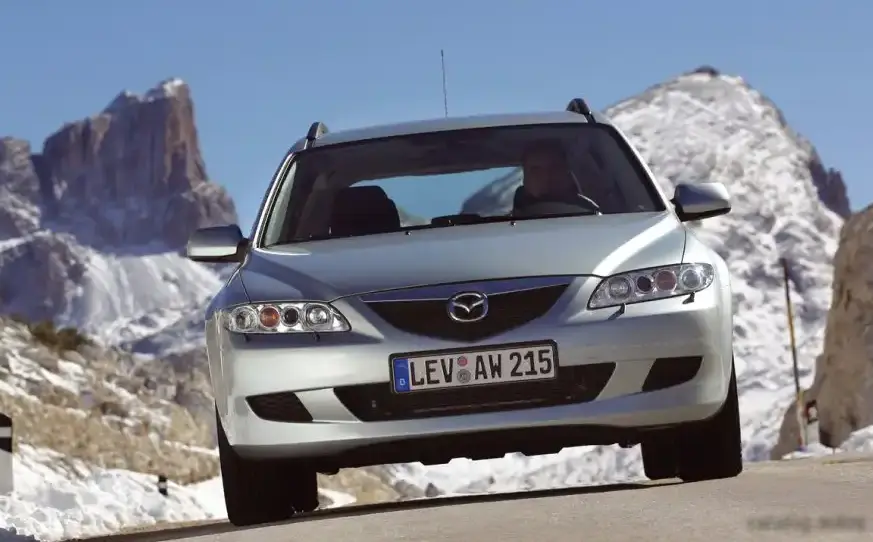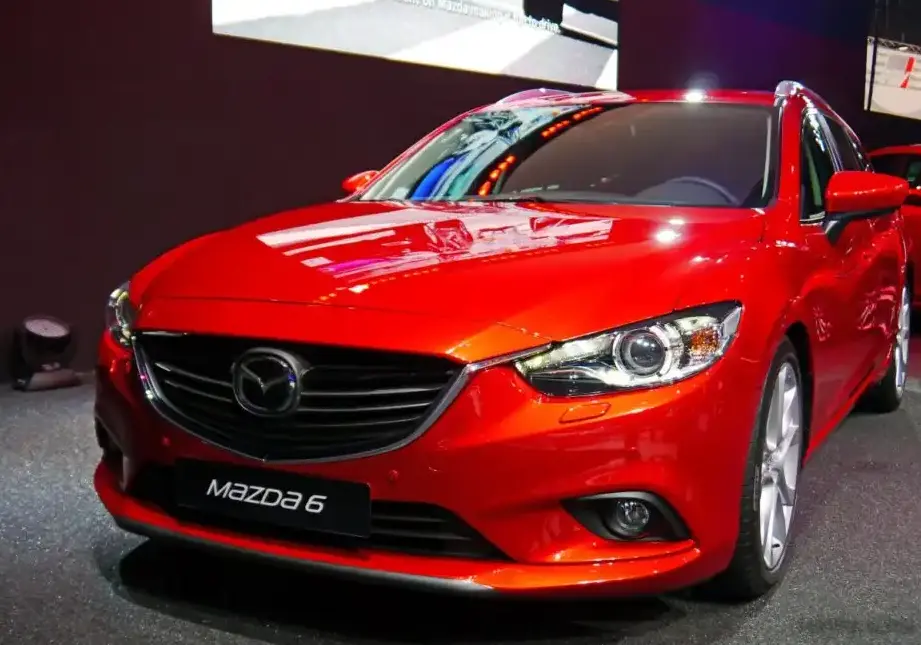
The Mazda 6 III Sport Combi (GJ) 2.0 SKYACTIV-G (165 Hp) i-ELOOP, produced from 2012 to 2015, represents a significant iteration in Mazda’s mid-size family car lineup. This variant, a station wagon (estate) body style, was a key offering within the GJ generation, which aimed to blend stylish design with Mazda’s fuel-efficient SKYACTIV technology. Positioned as a mid-range option, it offered a balance between performance, economy, and features, appealing to buyers seeking a practical yet engaging driving experience. The “i-ELOOP” designation signifies the inclusion of Mazda’s intelligent energy loop system, a regenerative braking technology designed to further enhance fuel efficiency.
Technical Specifications
| Brand | Mazda |
| Model | 6 |
| Generation | 6 III Sport Combi (GJ) |
| Type (Engine) | 2.0 SKYACTIV-G (165 Hp) i-ELOOP |
| Start of production | 2012 |
| End of production | 2015 |
| Powertrain Architecture | Internal Combustion engine |
| Body type | Station wagon (estate) |
| Seats | 5 |
| Doors | 5 |
| Fuel consumption (urban) | 7.5 l/100 km (31.4 US mpg) |
| Fuel consumption (extra urban) | 4.9 l/100 km (48 US mpg) |
| Fuel consumption (combined) | 5.9 l/100 km (39.9 US mpg) |
| Fuel Type | Petrol (Gasoline) |
| Acceleration 0 – 100 km/h | 9.1 sec |
| Acceleration 0 – 62 mph | 9.1 sec |
| Acceleration 0 – 60 mph | 8.6 sec |
| Maximum speed | 214 km/h (132.97 mph) |
| Emission standard | Euro 5 |
| Weight-to-power ratio | 8 kg/Hp |
| Weight-to-torque ratio | 6.3 kg/Nm |
| Power | 165 Hp @ 6000 rpm |
| Torque | 210 Nm @ 4000 rpm (154.89 lb.-ft. @ 4000 rpm) |
| Engine layout | Front, Transverse |
| Engine displacement | 1998 cm3 (121.93 cu. in.) |
| Number of cylinders | 4 |
| Engine configuration | Inline |
| Compression ratio | 14:1 |
| Number of valves per cylinder | 4 |
| Fuel injection system | Direct injection |
| Engine oil capacity | 4.2 l (4.44 US qt | 3.7 UK qt) |
| Coolant capacity | 6.6 l (6.97 US qt | 5.81 UK qt) |
| Kerb Weight | 1320 kg (2910.1 lbs) |
| Trunk (boot) space – minimum | 502 l (17.73 cu. ft) |
| Fuel tank capacity | 62 l (16.38 US gal | 13.64 UK gal) |
| Length | 4800 mm (188.98 in) |
| Width | 1840 mm (72.44 in) |
| Height | 1480 mm (58.27 in) |
| Wheelbase | 2750 mm (108.27 in) |
| Drivetrain Architecture | Front wheel drive |
| Number of gears and type of gearbox | 6 gears, manual transmission |
| Assisting systems | ABS (Anti-lock braking system) |
| Steering type | Steering rack and pinion |
Powertrain & Engine Architecture
At the heart of the Mazda 6 Sport Combi 2.0 SKYACTIV-G i-ELOOP lies the PE-VPH engine, a 1998cc inline-four cylinder gasoline engine. This engine is a cornerstone of Mazda’s SKYACTIV technology, designed to maximize efficiency without sacrificing performance. The high 14:1 compression ratio is a key element, achieved through precise combustion control and optimized piston design. Direct injection is employed, delivering fuel directly into the combustion chamber for improved atomization and efficiency. The engine utilizes a dual overhead camshaft (DOHC) valvetrain with four valves per cylinder, enhancing breathing and contributing to the engine’s power output. The i-ELOOP system, a capacitor-based regenerative braking system, recovers kinetic energy during deceleration and stores it to power electrical components, reducing the load on the alternator and improving fuel economy. This particular variant was exclusively offered with a six-speed manual transmission, prioritizing driver engagement and efficiency over the convenience of an automatic.
Driving Characteristics
The 165 horsepower and 154.89 lb-ft of torque produced by the 2.0-liter SKYACTIV-G engine provide adequate performance for everyday driving. Acceleration from 0-60 mph takes approximately 8.6 seconds, making it competitive within its class. The six-speed manual transmission allows for precise control and encourages spirited driving. Compared to the more powerful 2.5-liter SKYACTIV-G engine offered in other Mazda 6 trims, this variant feels less urgent in acceleration, particularly when fully loaded. However, the lower engine weight contributes to a more balanced feel and improved handling. The gear ratios are well-matched, providing sufficient torque in each gear for comfortable cruising and overtaking. The i-ELOOP system is largely transparent to the driver, subtly enhancing fuel economy without noticeably affecting braking performance.
Equipment & Trim Levels
The 2.0 SKYACTIV-G i-ELOOP trim typically included a respectable level of standard equipment. Interior features generally included cloth upholstery, a leather-wrapped steering wheel, and a basic infotainment system with a touchscreen display. Air conditioning, power windows, and power door locks were standard. Optional extras included a sunroof, navigation system, premium sound system, and leather upholstery. Safety features such as ABS, traction control, and multiple airbags were standard across the range. The Sport Combi body style offered a generous amount of cargo space, making it a practical choice for families and those needing to transport larger items.
Chassis & Braking
The Mazda 6 Sport Combi utilizes a front-wheel-drive layout with a MacPherson strut front suspension and a multi-link rear suspension. This suspension setup provides a good balance between ride comfort and handling precision. The chassis is relatively lightweight, contributing to the car’s agility. Braking duties are handled by ventilated front disc brakes and solid rear disc brakes. ABS (Anti-lock Braking System) is standard, enhancing braking performance and stability, especially in adverse conditions. Stabilizer bars are fitted to both the front and rear axles to reduce body roll during cornering.
Market Reception & Comparison
The Mazda 6 III Sport Combi 2.0 SKYACTIV-G i-ELOOP was generally well-received by automotive critics. It was praised for its stylish design, engaging driving dynamics, and impressive fuel economy. The SKYACTIV technology was seen as a significant step forward in engine efficiency. Compared to other trims in the Mazda 6 lineup, this variant offered a more affordable entry point while still providing a satisfying driving experience. The 2.5-liter engine offered more power, but at the expense of fuel economy. The 2.2-liter diesel variants provided even better fuel economy but were generally more expensive and offered a different driving character. The manual transmission was favored by enthusiasts, but some buyers preferred the convenience of an automatic.
Legacy
The Mazda 6 III generation, and specifically the 2.0 SKYACTIV-G i-ELOOP variant, has proven to be a reliable and durable vehicle. The SKYACTIV engines are known for their longevity, and the i-ELOOP system has demonstrated a good track record of reliability. In the used car market, these models continue to be sought after for their blend of practicality, efficiency, and driving enjoyment. Maintenance costs are generally reasonable, and parts availability is good. While not as common as some of the higher-powered trims, the 2.0-liter variant remains a compelling option for buyers seeking a well-rounded and fuel-efficient family car.