Technical Specifications
| Brand | Mazda |
| Model | 6 |
| Generation | 6 III Sport Combi (GJ) |
| Type (Engine) | 2.0 SKYACTIV-G (165 Hp) i-ELOOP Automatic |
| Start of production | 2012 |
| End of production | 2015 |
| Powertrain Architecture | Internal Combustion engine |
| Body type | Station wagon (estate) |
| Seats | 5 |
| Doors | 5 |
| Fuel consumption (urban) | 7.7 l/100 km (30.5 US mpg) |
| Fuel consumption (extra urban) | 5 l/100 km (47 US mpg) |
| Fuel consumption (combined) | 6 l/100 km (39.2 US mpg) |
| Fuel Type | Petrol (Gasoline) |
| Acceleration 0 – 100 km/h | 10.2 sec |
| Acceleration 0 – 62 mph | 10.2 sec |
| Acceleration 0 – 60 mph | 9.7 sec |
| Maximum speed | 206 km/h (128 mph) |
| Emission standard | Euro 5 |
| Weight-to-power ratio | 8.1 kg/Hp |
| Weight-to-torque ratio | 6.4 kg/Nm |
| Power | 165 Hp @ 6000 rpm |
| Torque | 210 Nm @ 4000 rpm (154.89 lb.-ft. @ 4000 rpm) |
| Engine layout | Front, Transverse |
| Engine displacement | 1998 cm3 (121.93 cu. in.) |
| Number of cylinders | 4 |
| Engine configuration | Inline |
| Compression ratio | 14:1 |
| Number of valves per cylinder | 4 |
| Fuel injection system | Direct injection |
| Engine oil capacity | 4.2 l (4.44 US qt | 3.7 UK qt) |
| Coolant capacity | 6.9 l (7.29 US qt | 6.07 UK qt) |
| Kerb Weight | 1340 kg (2954.19 lbs.) |
| Trunk (boot) space – minimum | 502 l (17.73 cu. ft.) |
| Fuel tank capacity | 62 l (16.38 US gal | 13.64 UK gal) |
| Length | 4800 mm (188.98 in.) |
| Width | 1840 mm (72.44 in.) |
| Height | 1480 mm (58.27 in.) |
| Wheelbase | 2750 mm (108.27 in.) |
| Drivetrain Architecture | Front wheel drive, Internal Combustion engine |
| Number of gears and type of gearbox | 6 gears, automatic transmission |
| Assisting systems | ABS (Anti-lock braking system) |
| Steering type | Steering rack and pinion |
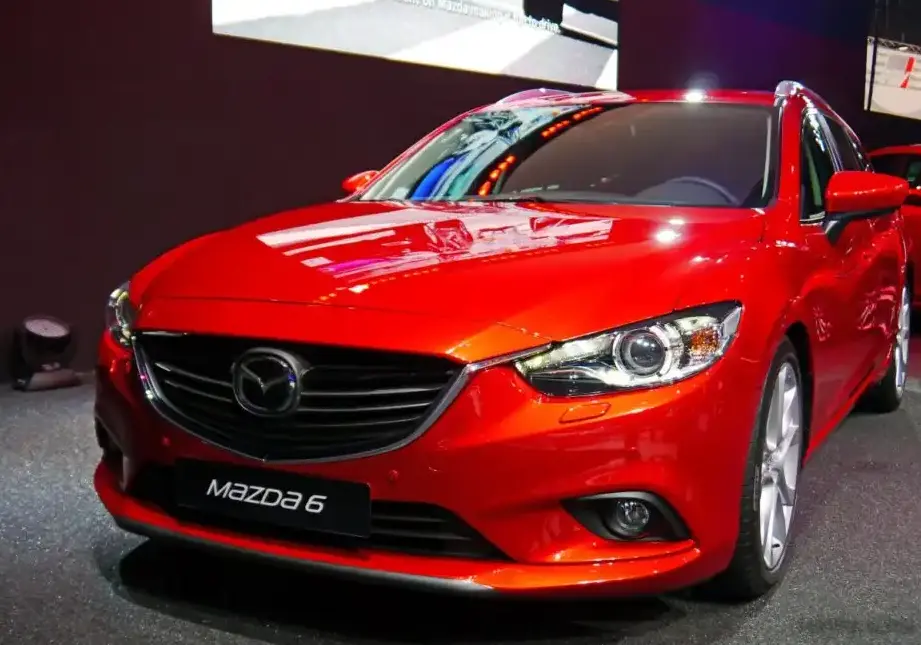
The Mazda 6 III Sport Combi (GJ) 2.0 SKYACTIV-G (165 Hp) i-ELOOP Automatic, produced from 2012 to 2015, represents a significant iteration of Mazda’s popular mid-size wagon. Positioned as a mainstream offering within the GJ series, this variant aimed to balance fuel efficiency, practicality, and a reasonably engaging driving experience. It was a key model in Mazda’s lineup during a period of significant technological advancement, particularly with the introduction of their SKYACTIV technologies. The “Combi” designation denotes the wagon (estate) body style, offering increased cargo capacity compared to the sedan version. This model was primarily sold in European and Asian markets, where the demand for wagons remained strong.
Powertrain & Engine Architecture
At the heart of the Mazda 6 Combi 2.0 SKYACTIV-G i-ELOOP Automatic lies the PE-VPH engine, a 1998cc inline-four cylinder gasoline engine. This engine is a cornerstone of Mazda’s SKYACTIV technology, designed to maximize efficiency without sacrificing performance. The high 14:1 compression ratio is a key element, achieved through precise fuel injection and combustion control. Direct injection is employed, delivering fuel directly into the combustion chamber for improved atomization and efficiency. The engine utilizes a dual overhead camshaft (DOHC) valvetrain with four valves per cylinder, optimizing airflow for increased power output. The ‘i-ELOOP’ system is Mazda’s mild hybrid technology, utilizing a capacitor to store energy recovered during braking, which is then used to power electrical components, reducing the load on the engine and improving fuel economy. The six-speed automatic transmission, specifically designed for the SKYACTIV engines, features a quick-shifting design and a wide gear ratio spread to optimize both acceleration and fuel efficiency. It’s not a traditional torque-converter automatic; Mazda implemented a more direct feel with quicker response times.
Driving Characteristics
The 165 hp and 154.89 lb-ft of torque delivered by this powertrain configuration resulted in a comfortable and capable driving experience, though not particularly sporty. Acceleration from 0-60 mph in around 9.7 seconds is respectable for a family wagon. The automatic transmission, while smooth, prioritizes fuel economy over aggressive shifting. Compared to the manual transmission version, the automatic offers slightly reduced responsiveness. The higher-output 2.5-liter SKYACTIV-G engine, available in some markets, provided significantly more power and a more engaging driving experience, but at the cost of increased fuel consumption. The 2.2-liter SKYACTIV-D diesel variants offered even better fuel economy and strong low-end torque, appealing to drivers prioritizing efficiency and long-distance cruising. The gear ratios in the six-speed automatic were tuned for relaxed highway cruising, with a focus on minimizing engine RPM at typical speeds.
Equipment & Trim Levels
The 2.0 SKYACTIV-G i-ELOOP Automatic trim typically included a generous level of standard equipment. Interior features generally included cloth upholstery, a leather-wrapped steering wheel, and a basic infotainment system with a touchscreen display. Air conditioning, power windows, and power door locks were standard. Higher trim levels, such as the ‘Touring’ or ‘Grand Touring’ variants, added features like leather seats, a premium sound system, navigation, and advanced safety technologies like blind-spot monitoring and lane departure warning. Optional extras included a sunroof, heated seats, and a rear-view camera. The dashboard layout was generally clean and functional, with a focus on ergonomics.
Chassis & Braking
The Mazda 6 Combi’s chassis featured a MacPherson strut front suspension and a multi-link rear suspension, providing a good balance of ride comfort and handling. Stabilizer bars were fitted to both the front and rear axles to reduce body roll during cornering. Braking systems varied depending on the specific trim level and market. Lower trims typically featured disc brakes on the front wheels and drum brakes on the rear, while higher trims often included disc brakes all around. ABS (Anti-lock Braking System) was standard across the range. The suspension tuning was geared towards providing a comfortable ride for passengers, rather than outright sporty handling.
Market Reception & Comparison
The Mazda 6 III Sport Combi 2.0 SKYACTIV-G i-ELOOP Automatic was generally well-received by automotive critics. It was praised for its fuel efficiency, comfortable ride, and spacious interior. However, some reviewers noted that the engine lacked the punch of some of its competitors, and the automatic transmission could feel somewhat sluggish. Compared to rivals like the Ford Mondeo, Volkswagen Passat, and Opel/Vauxhall Insignia, the Mazda 6 offered a more engaging driving experience and a more stylish interior. Fuel economy figures were competitive, typically ranging from 39.2 US mpg on the combined cycle. Reliability was generally good, with the SKYACTIV engines proving to be durable and long-lasting.
Legacy
The Mazda 6 III Sport Combi 2.0 SKYACTIV-G i-ELOOP Automatic has proven to be a reliable and relatively trouble-free vehicle in the used car market. The SKYACTIV engine has a reputation for longevity, and the automatic transmission is generally robust. Common maintenance items include regular oil changes, coolant flushes, and brake pad replacements. The i-ELOOP system has also proven to be durable, with few reported issues. Today, these vehicles represent a good value for buyers seeking a practical, fuel-efficient, and well-equipped family wagon. The introduction of SKYACTIV technology in this generation of the Mazda 6 helped to establish Mazda as a leader in fuel efficiency and driving dynamics.