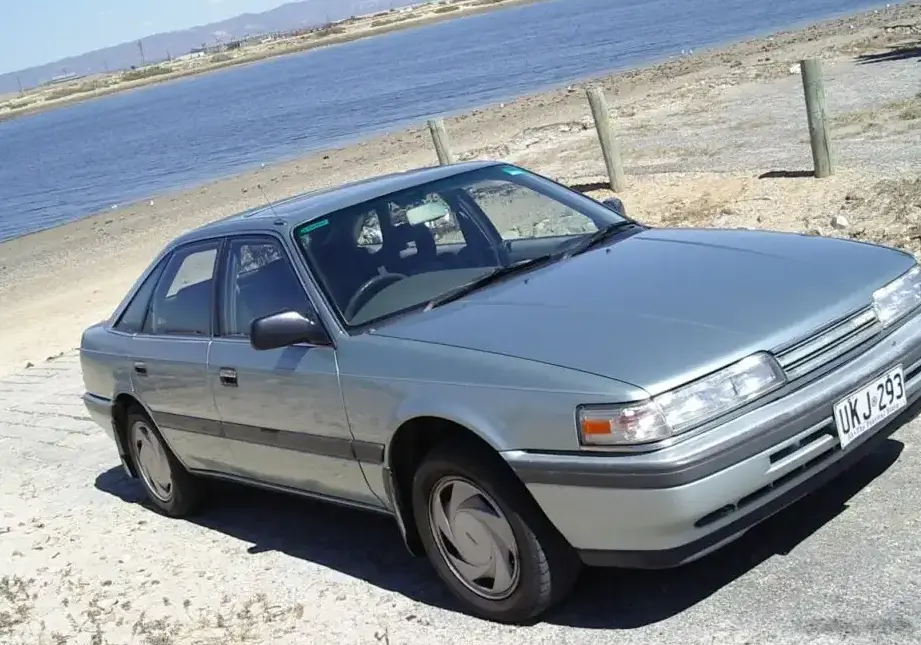
The Mazda 626 III Hatchback, specifically the 2.0-liter 12V variant producing 107 horsepower, was a key model in Mazda’s lineup from 1987 to 1992. Representing the third generation of the 626, the GD series aimed to offer a practical and reliable family car with a focus on fuel efficiency and affordability. This hatchback body style, while less common in the North American market than the sedan, provided increased cargo versatility. The 2.0-liter engine, paired with a five-speed manual transmission, positioned this trim as a mid-range offering within the 626 family, slotting below the more powerful and often better-equipped higher-displacement models.
Technical Specifications
| Brand | Mazda |
| Model | 626 |
| Generation | 626 III Hatchback (GD) |
| Type (Engine) | 2.0 12V (107 Hp) |
| Start of production | 1987 |
| End of production | 1992 |
| Powertrain Architecture | Internal Combustion engine |
| Body type | Hatchback |
| Seats | 5 |
| Fuel Type | Petrol (Gasoline) |
| Power | 107 Hp |
| Power per litre | 53.5 Hp/l |
| Engine layout | Front, Transverse |
| Engine displacement | 2000 cm3 |
| Engine displacement (US) | 122.05 cu. in. |
| Number of cylinders | 4 |
| Engine configuration | Inline |
| Fuel injection system | Carburettor |
| Engine aspiration | Naturally aspirated engine |
| Number of gears and type of gearbox | 5 gears, manual transmission |
| Power steering | Hydraulic Steering |
Powertrain & Engine Architecture
The heart of the 626 III 2.0-liter variant was the F2 engine, an inline four-cylinder powerplant. This engine, designated as the F2, featured a 12-valve cylinder head – two valves per cylinder (intake and exhaust). Unlike later Mazda engines that embraced fuel injection, the F2 relied on a carburetor for fuel delivery, a common practice for vehicles of this era. This carburetor system, while simpler and less expensive, resulted in slightly lower fuel efficiency and potentially higher emissions compared to fuel-injected counterparts. The engine’s block was cast iron, providing durability, while the cylinder head was aluminum, contributing to weight reduction. The 1998cc displacement offered a reasonable balance between power and economy for the time. The five-speed manual transmission was a standard feature, providing drivers with control over gear selection and contributing to the car’s relatively engaging driving experience.
Driving Characteristics
The 107 horsepower and approximately 135 lb-ft of torque produced by the 2.0-liter engine provided adequate, though not exhilarating, performance. Acceleration from 0 to 60 mph was estimated to be around 11-12 seconds, making it competitive with other family cars of the late 1980s and early 1990s. The five-speed manual transmission allowed drivers to keep the engine in its optimal power band, improving responsiveness. Gear ratios were fairly conventional for the period, prioritizing fuel economy during highway cruising. Compared to the larger 2.2-liter engine offered in some 626 models, the 2.0-liter felt less powerful, particularly when fully loaded with passengers and cargo. However, the lighter weight of the 2.0-liter engine, combined with the manual transmission, resulted in slightly better handling and fuel economy. The steering, aided by hydraulic power assistance, was light and responsive, making the car easy to maneuver in urban environments.
Equipment & Trim Levels
The 626 III 2.0-liter Hatchback typically came with a reasonable level of standard equipment. Interior features generally included cloth upholstery, a basic AM/FM radio, and manual windows and door locks. Air conditioning was often an optional extra, as were power windows and a more advanced sound system. The dashboard layout was functional and straightforward, prioritizing ease of use over stylistic flair. Trim levels varied depending on the market, but generally, the 2.0-liter model represented a mid-range offering. Higher trim levels often included features such as upgraded upholstery, alloy wheels, and a sunroof. The hatchback configuration provided a significant advantage in terms of cargo space compared to the sedan, making it a practical choice for families or individuals who frequently needed to transport larger items.
Chassis & Braking
The Mazda 626 III utilized a front-engine, front-wheel-drive layout. The suspension consisted of MacPherson struts at the front and a twist-beam rear axle. This suspension setup provided a comfortable ride quality, although it wasn’t particularly sporty. Braking duties were handled by disc brakes at the front and drum brakes at the rear. While adequate for normal driving conditions, the rear drum brakes were less effective than disc brakes, particularly during hard braking. The steering system employed a hydraulic power steering rack, providing light and responsive steering feel. Stabilizer bars were typically fitted to both the front and rear axles, helping to reduce body roll during cornering. The chassis was relatively lightweight, contributing to the car’s nimble handling characteristics.
Market Reception & Comparison
The Mazda 626 III Hatchback was generally well-received by automotive critics as a practical and reliable family car. The 2.0-liter engine was praised for its fuel efficiency, but some reviewers noted that it lacked the power of larger engines offered in competing models. The hatchback body style was appreciated for its versatility, although it wasn’t as popular as the sedan in some markets. Compared to other cars in its class, such as the Toyota Camry and Honda Accord, the 626 offered a more engaging driving experience and a slightly more affordable price point. Fuel economy was competitive, averaging around 25-30 mpg in mixed driving conditions. Reliability was generally good, although some owners reported issues with the carburetor and cooling system.
Legacy
The Mazda 626 III, including the 2.0-liter 12V Hatchback, holds a respectable position among enthusiasts of 1980s and 1990s Japanese cars. While not a high-performance model, its simplicity, reliability, and affordability have made it a popular choice for restoration projects and classic car enthusiasts. The F2 engine, while carbureted, is known for its durability and relatively easy maintenance. Today, finding a well-maintained example can be challenging, but these cars offer a nostalgic glimpse into a bygone era of automotive design. The 626 III laid the groundwork for Mazda’s continued success in the family car segment, and its legacy can be seen in subsequent generations of the 626 and the later Mazda6.