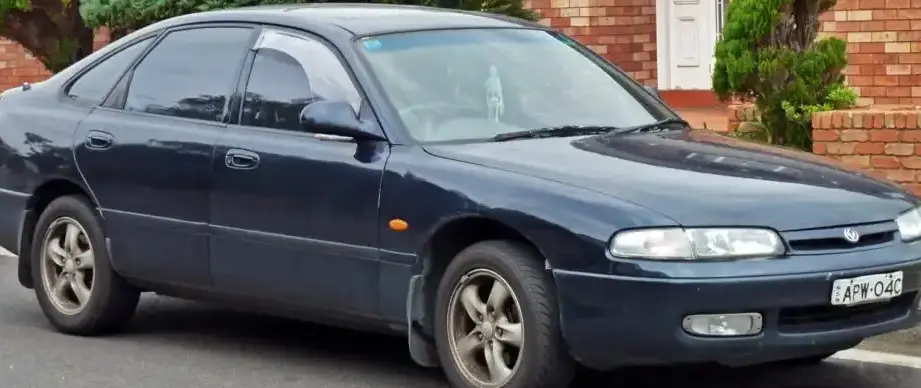
The Mazda 626 IV, produced between 1991 and 1997, represented a significant evolution for Mazda’s mid-size offering. The “GE” designation refers specifically to the hatchback body style, a popular configuration in European and Asian markets where practicality was highly valued. Within the 626 IV range, the 2.0i variant, producing 115 horsepower, occupied a middle ground, offering a balance between performance and affordability. It served as a step up from the base 1.6L models, while remaining more accessible than the higher-specification V6 options. This model was primarily aimed at families and individuals seeking a reliable and spacious vehicle for everyday use.
Technical Specifications
| Brand | Mazda |
| Model | 626 |
| Generation | 626 IV Hatchback (GE) |
| Type (Engine) | 2.0i (115 Hp) |
| Start of production | 1991 |
| End of production | 1997 |
| Powertrain Architecture | Internal Combustion engine |
| Body type | Hatchback |
| Seats | 5 |
| Doors | 5 |
| Fuel consumption (combined) | 7.9 l/100 km (29.8 US mpg, 35.8 UK mpg, 12.7 km/l) |
| Fuel Type | Petrol (Gasoline) |
| Acceleration 0 – 100 km/h | 9.7 sec |
| Acceleration 0 – 62 mph | 9.7 sec |
| Acceleration 0 – 60 mph | 9.2 sec |
| Maximum speed | 200 km/h (124.27 mph) |
| Weight-to-power ratio | 10.3 kg/Hp, 97 Hp/tonne |
| Weight-to-torque ratio | 7 kg/Nm, 143.5 Nm/tonne |
| Power | 115 Hp @ 5500 rpm |
| Power per litre | 57.8 Hp/l |
| Torque | 170 Nm @ 4500 rpm (125.39 lb.-ft. @ 4500 rpm) |
| Engine layout | Front, Transverse |
| Engine Model/Code | FS |
| Engine displacement | 1991 cm3 (121.5 cu. in.) |
| Number of cylinders | 4 |
| Engine configuration | Inline |
| Cylinder Bore | 83 mm (3.27 in.) |
| Piston Stroke | 92 mm (3.62 in.) |
| Compression ratio | 9:1 |
| Number of valves per cylinder | 4 |
| Fuel injection system | Multi-port manifold injection |
| Engine aspiration | Naturally aspirated engine |
| Valvetrain | DOHC |
| Engine oil capacity | 3.5 l (3.7 US qt | 3.08 UK qt) |
| Coolant | 7.5 l (7.93 US qt | 6.6 UK qt) |
| Kerb Weight | 1185 kg (2612.48 lbs.) |
| Max. weight | 1675 kg (3692.74 lbs.) |
| Max load | 490 kg (1080.27 lbs.) |
| Trunk (boot) space – minimum | 455 l (16.07 cu. ft.) |
| Trunk (boot) space – maximum | 747 l (26.38 cu. ft.) |
| Fuel tank capacity | 60 l (15.85 US gal | 13.2 UK gal) |
| Length | 4695 mm (184.84 in.) |
| Width | 1750 mm (68.9 in.) |
| Height | 1390 mm (54.72 in.) |
| Wheelbase | 2610 mm (102.76 in.) |
| Front track | 1500 mm (59.06 in.) |
| Rear (Back) track | 1500 mm (59.06 in.) |
| Drivetrain Architecture | The Internal combustion engine (ICE) drives the front wheels of the vehicle. |
| Drive wheel | Front wheel drive |
| Number of gears and type of gearbox | 5 gears, manual transmission |
| Front suspension | Wishbone |
| Rear suspension | Trailing arm |
| Front brakes | Ventilated discs |
| Rear brakes | Disc |
| Assisting systems | ABS (Anti-lock braking system) |
| Steering type | Steering rack and pinion |
| Power steering | Hydraulic Steering |
| Tires size | 195/60 R15 88 H |
| Wheel rims size | 6J x 15 ET 50 |
Powertrain & Engine Architecture
The heart of the 626 2.0i was the FS engine, a 1.991-liter inline-four cylinder gasoline engine. This engine utilized a multi-port fuel injection system, a significant advancement over earlier carburetor-based systems, contributing to improved fuel efficiency and smoother operation. The engine featured a double overhead camshaft (DOHC) valvetrain, operating four valves per cylinder. This configuration enhanced volumetric efficiency, allowing for increased power output. The FS engine was known for its relatively robust design and acceptable reliability. The 5-speed manual transmission was the standard offering, providing drivers with a direct connection to the engine. Gear ratios were tuned for a balance of acceleration and fuel economy, with a relatively tall fifth gear for comfortable highway cruising.
Driving Characteristics
The 115 horsepower and 125 lb-ft of torque delivered by the 2.0i engine provided adequate, though not exhilarating, performance. Acceleration from 0-60 mph took approximately 9.2 seconds, making it competitive with other vehicles in its class. The manual transmission allowed for precise control, and the engine felt responsive within its optimal power band. Compared to the base 1.6L models, the 2.0i offered noticeably improved acceleration and passing power. However, it lacked the punch of the optional V6 engines. The 626’s front-wheel-drive configuration provided predictable handling, although it wasn’t particularly sporty. The suspension was tuned for comfort, absorbing bumps and providing a relatively smooth ride.
Equipment & Trim Levels
The 626 2.0i typically came equipped with features considered standard for a mid-size family car in the early 1990s. These included power steering, central locking, electric windows, and an AM/FM radio. Interior upholstery was typically cloth, with a relatively simple and functional dashboard layout. Optional extras included air conditioning, a sunroof, and upgraded audio systems. Higher trim levels might have featured alloy wheels and more luxurious interior appointments. The hatchback body style offered increased practicality compared to the sedan, with a spacious cargo area that could be expanded by folding down the rear seats.
Chassis & Braking
The 626 IV utilized a front-wheel-drive chassis with independent wishbone suspension at the front and a trailing arm suspension at the rear. This setup provided a good balance of ride comfort and handling. The braking system consisted of ventilated discs at the front and solid discs at the rear. Anti-lock braking system (ABS) was available, enhancing safety by preventing wheel lockup during hard braking. The steering was rack and pinion, providing precise and responsive control. The 626’s suspension was generally well-regarded for its ability to absorb bumps and provide a comfortable ride, even on less-than-perfect road surfaces.
Market Reception & Comparison
The Mazda 626 IV 2.0i was generally well-received by automotive critics. It was praised for its spacious interior, comfortable ride, and reasonable fuel economy. However, some critics noted that its performance was not particularly exciting. Compared to other vehicles in its class, such as the Honda Accord and Toyota Camry, the 626 offered a good value proposition, with a competitive price and a generous list of standard features. The 2.0i variant struck a good balance between performance and affordability, making it a popular choice for families and individuals seeking a practical and reliable vehicle.
Legacy
The Mazda 626 IV 2.0i has proven to be a relatively reliable vehicle over the long term. The FS engine is known for its durability, and with proper maintenance, it can provide many years of service. However, like any older vehicle, it is susceptible to age-related issues such as rust and wear and tear on suspension components. In the used car market today, the 626 IV 2.0i is often sought after by enthusiasts and collectors who appreciate its classic styling and straightforward mechanical design. Parts availability can be a challenge, but many components are still available through aftermarket suppliers. The 626 IV represents a significant chapter in Mazda’s history, showcasing the company’s commitment to building practical, reliable, and affordable vehicles.