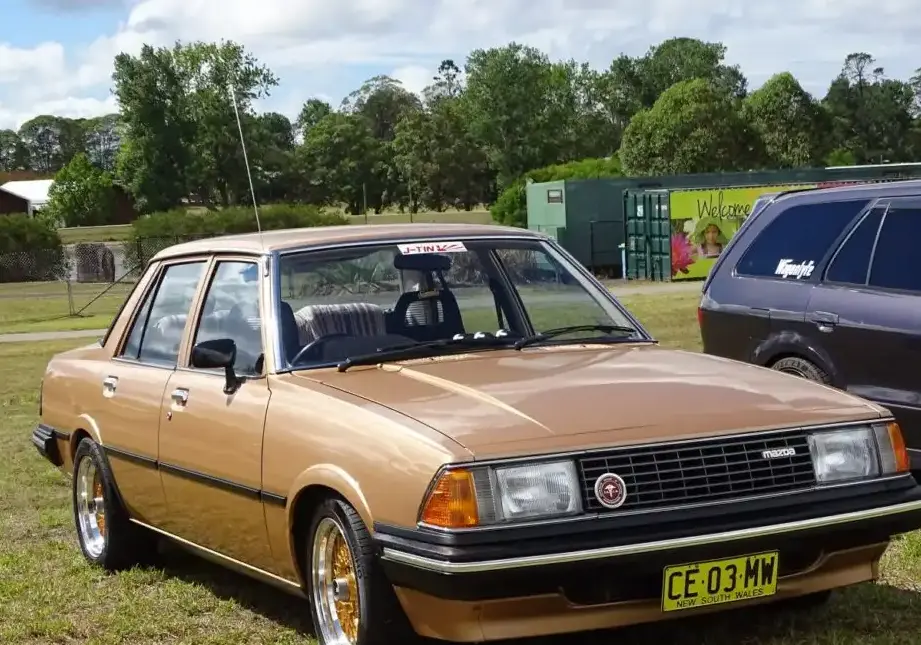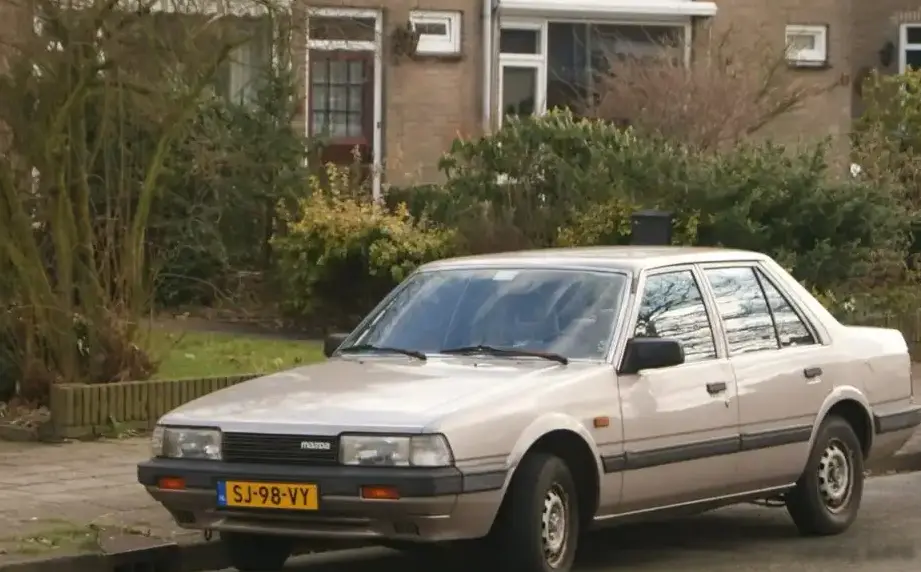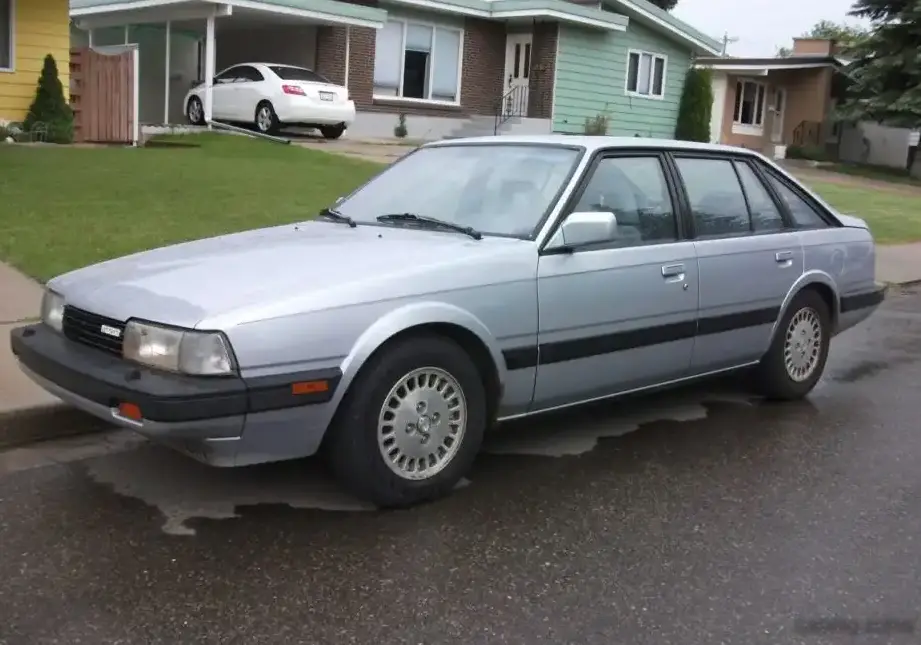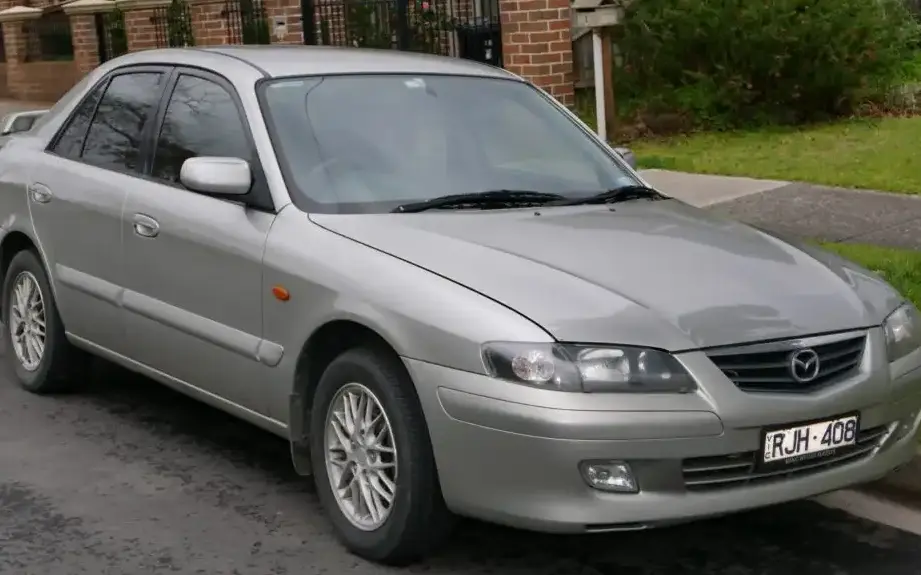
The Mazda 626 V (GF) 1.9, produced between 1999 and 2002, represented a significant iteration of Mazda’s long-running 626 family sedan. Falling within the GF generation (1997-2002), this variant was positioned as a mainstream offering, providing a balance of affordability, practicality, and reasonable performance. It primarily served the North American and European markets, competing with vehicles like the Honda Accord, Toyota Camry, and Ford Mondeo. The 1.9-liter engine and five-speed manual transmission combination aimed to deliver a fuel-efficient and accessible option within the 626 lineup.
Technical Specifications
| Brand | Mazda |
| Model | 626 |
| Generation | 626 V (GF) |
| Type (Engine) | 1.9 (100 Hp) |
| Start of production | 1999 |
| End of production | 2002 |
| Powertrain Architecture | Internal Combustion engine |
| Body type | Sedan |
| Seats | 5 |
| Doors | 4 |
| Fuel consumption (urban) | 10.1 l/100 km (23.3 US mpg) |
| Fuel consumption (extra urban) | 6.2 l/100 km (37.9 US mpg) |
| Fuel Type | Petrol (Gasoline) |
| Acceleration 0 – 100 km/h | 12.6 sec |
| Acceleration 0 – 62 mph | 12.6 sec |
| Acceleration 0 – 60 mph | 12 sec |
| Maximum speed | 182 km/h (113.09 mph) |
| Weight-to-power ratio | 11.8 kg/Hp |
| Weight-to-torque ratio | 7.8 kg/Nm |
| Power | 100 Hp @ 5500 rpm |
| Torque | 152 Nm @ 4000 rpm (112.11 lb.-ft. @ 4000 rpm) |
| Engine layout | Front, Transverse |
| Engine Model/Code | FP |
| Engine displacement | 1840 cm3 (112.28 cu. in.) |
| Number of cylinders | 4 |
| Engine configuration | Inline |
| Cylinder Bore | 83 mm (3.27 in.) |
| Piston Stroke | 85 mm (3.35 in.) |
| Compression ratio | 9.7:1 |
| Number of valves per cylinder | 4 |
| Fuel injection system | Multi-port manifold injection |
| Engine aspiration | Naturally aspirated engine |
| Valvetrain | DOHC |
| Engine oil capacity | 3.5 l (3.7 US qt | 3.08 UK qt) |
| Coolant capacity | 7.5 l (7.93 US qt | 6.6 UK qt) |
| Kerb Weight | 1180 kg (2601.45 lbs.) |
| Max. weight | 1685 kg (3714.79 lbs.) |
| Max load | 505 kg (1113.33 lbs.) |
| Trunk (boot) space – minimum | 502 l (17.73 cu. ft.) |
| Fuel tank capacity | 64 l (16.91 US gal | 14.08 UK gal) |
| Length | 4575 mm (180.12 in.) |
| Width | 1710 mm (67.32 in.) |
| Height | 1430 mm (56.3 in.) |
| Wheelbase | 2610 mm (102.76 in.) |
| Front track | 1465 mm (57.68 in.) |
| Rear (Back) track | 1470 mm (57.87 in.) |
| Drivetrain Architecture | Front wheel drive |
| Number of gears and type of gearbox | 5 gears, manual transmission |
| Front suspension | Spring Strut |
| Rear suspension | Wishbone |
| Front brakes | Ventilated discs |
| Rear brakes | Disc |
| Assisting systems | ABS (Anti-lock braking system) |
| Steering type | Steering rack and pinion |
| Power steering | Hydraulic Steering |
| Tires size | 185/65 R15 88H |
| Wheel rims size | 6J x 15 ET 50 |
Powertrain & Engine Architecture
The heart of the 626 V 1.9 was the FP engine, a 1.893-liter (1840 cc) inline-four cylinder gasoline engine. This engine utilized a multi-port fuel injection system, delivering fuel directly into the intake ports just before the intake valves. The engine featured a double overhead camshaft (DOHC) valvetrain, operating four valves per cylinder, which contributed to improved breathing and efficiency. The compression ratio was set at 9.7:1. The five-speed manual transmission was a standard offering, providing drivers with a degree of control over gear selection and engine speed. This transmission was chosen for its balance of cost-effectiveness and durability.
Driving Characteristics
The 1.9-liter engine, producing 100 horsepower and 152 Nm (112 lb-ft) of torque, delivered adequate, but not exhilarating, performance. Acceleration from 0 to 60 mph took approximately 12 seconds, and the top speed was around 113 mph. The five-speed manual transmission allowed drivers to keep the engine in its optimal power band, but the car wasn’t designed for rapid acceleration. Compared to the higher-output 2.0-liter or V6 variants, the 1.9 felt noticeably less powerful, particularly when fully loaded or climbing hills. However, the 1.9 offered a more responsive driving experience than the available automatic transmission options, which often felt sluggish and hampered the engine’s performance.
Equipment & Trim Levels
The 1.9-liter model typically represented the entry-level trim in the 626 V range. Standard equipment generally included power windows, power locks, and air conditioning. Interior upholstery was typically cloth, and the dashboard featured a straightforward layout with basic instrumentation. Optional extras, depending on the market, could include an upgraded audio system, alloy wheels, and a sunroof. The focus was on providing essential features at an affordable price point.
Chassis & Braking
The 626 V utilized a front-engine, front-wheel-drive layout. The front suspension employed a MacPherson strut design, while the rear suspension featured a multi-link setup. This combination aimed to provide a comfortable ride and reasonable handling characteristics. Braking duties were handled by ventilated discs at the front and solid discs at the rear. Anti-lock Braking System (ABS) was standard, enhancing safety by preventing wheel lockup during hard braking. The chassis was tuned for comfort rather than sporty handling, prioritizing a smooth ride over aggressive cornering.
Market Reception & Comparison
The Mazda 626 V 1.9 was generally well-received as a practical and reliable family sedan. Critics praised its fuel efficiency and comfortable ride, but noted its lack of outright performance compared to some competitors. The 1.9-liter engine offered better fuel economy than the larger 2.0-liter and V6 options, making it an attractive choice for budget-conscious buyers. However, the manual transmission was often preferred over the automatic due to its more responsive feel. Compared to rivals like the Honda Accord and Toyota Camry, the 626 V 1.9 offered a competitive price point but lacked the same level of brand recognition.
Legacy
The Mazda 626 V 1.9, while not the most powerful or prestigious variant of the 626 lineup, proved to be a durable and dependable vehicle. The FP engine, when properly maintained, is known for its longevity. In the used car market, these models are often sought after for their affordability and simplicity. While finding parts may become increasingly challenging as the car ages, the 626 V 1.9 remains a viable option for those seeking a reliable and economical used sedan. Its straightforward mechanical design makes it relatively easy to maintain for DIY mechanics, contributing to its continued appeal.