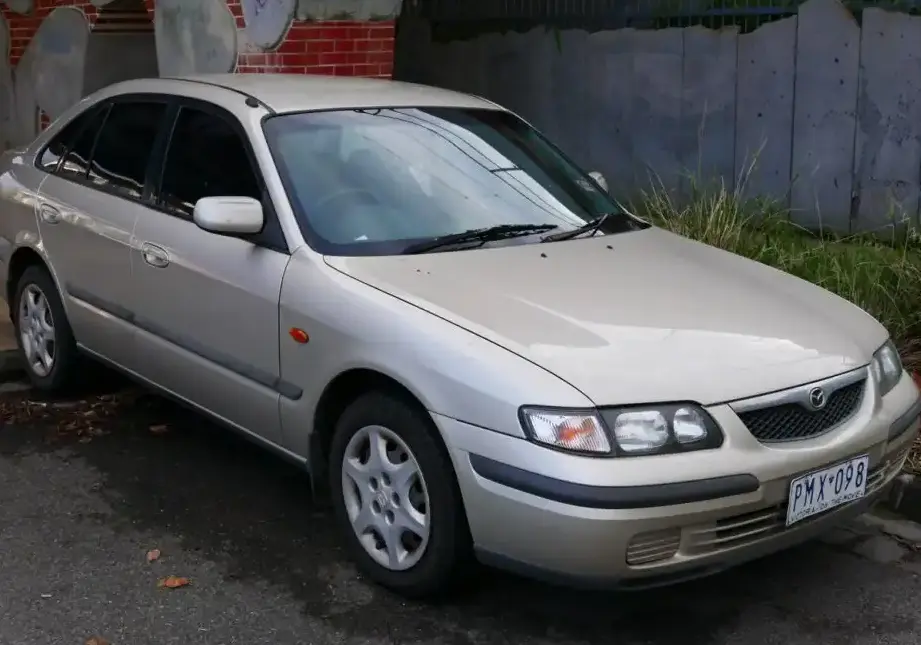
The Mazda 626 V Hatchback (GF) 2.0, produced between 1997 and 2001, represented a significant evolution in Mazda’s mid-size offerings. Part of the GF generation, this variant occupied a middle ground within the 626 lineup, offering a balance between affordability and performance. It was primarily marketed in Europe and Asia, where the hatchback body style was particularly popular. The GF series aimed to provide a more modern and refined experience compared to its predecessors, focusing on improved comfort, safety, and a more contemporary design. This 2.0-liter, 115 horsepower version was a common sight on roads, appealing to buyers seeking a practical and reliable family vehicle.
Technical Specifications
| Brand | Mazda |
| Model | 626 |
| Generation | 626 V Hatchback (GF) |
| Type (Engine) | 2.0 (115 Hp) |
| Start of production | 1997 |
| End of production | 2001 |
| Powertrain Architecture | Internal Combustion engine |
| Body type | Hatchback |
| Seats | 5 |
| Doors | 5 |
| Fuel consumption (urban) | 10.6 l/100 km (22.2 US mpg) |
| Fuel consumption (extra urban) | 6.4 l/100 km (36.8 US mpg) |
| Fuel Type | Petrol (Gasoline) |
| Acceleration 0 – 100 km/h | 9.9 sec |
| Acceleration 0 – 62 mph | 9.9 sec |
| Acceleration 0 – 60 mph | 9.4 sec |
| Maximum speed | 198 km/h (123.03 mph) |
| Weight-to-power ratio | 10.3 kg/Hp |
| Weight-to-torque ratio | 7 kg/Nm |
| Power | 115 Hp @ 5500 rpm |
| Torque | 170 Nm @ 4500 rpm (125.39 lb.-ft. @ 4500 rpm) |
| Engine layout | Front, Transverse |
| Engine Model/Code | FS |
| Engine displacement | 1991 cm3 (121.5 cu. in.) |
| Number of cylinders | 4 |
| Engine configuration | Inline |
| Cylinder Bore | 83 mm (3.27 in.) |
| Piston Stroke | 92 mm (3.62 in.) |
| Compression ratio | 9:1 |
| Number of valves per cylinder | 4 |
| Fuel injection system | Multi-port manifold injection |
| Engine aspiration | Naturally aspirated engine |
| Valvetrain | DOHC |
| Engine oil capacity | 3.5 l (3.7 US qt | 3.08 UK qt) |
| Coolant capacity | 7.5 l (7.93 US qt | 6.6 UK qt) |
| Kerb Weight | 1185 kg (2612.48 lbs.) |
| Max. weight | 1685 kg (3714.79 lbs.) |
| Max load | 500 kg (1102.31 lbs.) |
| Trunk (boot) space – minimum | 502 l (17.73 cu. ft.) |
| Fuel tank capacity | 64 l (16.91 US gal | 14.08 UK gal) |
| Length | 4574 mm (180.08 in.) |
| Width | 1710 mm (67.32 in.) |
| Height | 1430 mm (56.3 in.) |
| Wheelbase | 2610 mm (102.76 in.) |
| Front track | 1480 mm (58.27 in.) |
| Rear (Back) track | 1470 mm (57.87 in.) |
| Drivetrain Architecture | The Internal combustion engine (ICE) drives the front wheels of the vehicle. |
| Drive wheel | Front wheel drive |
| Number of gears and type of gearbox | 5 gears, manual transmission |
| Front suspension | Spring Strut |
| Rear suspension | Wishbone |
| Front brakes | Ventilated discs |
| Rear brakes | Disc |
| Assisting systems | ABS (Anti-lock braking system) |
| Steering type | Steering rack and pinion |
| Power steering | Hydraulic Steering |
| Tires size | 185/65 R15 |
| Wheel rims size | 6J x 15 |
Powertrain & Engine Architecture
The heart of the 626 V 2.0 was the FS engine, a 1.991-liter inline-four cylinder gasoline engine. This engine utilized a multi-port fuel injection system, delivering fuel directly to each intake port for improved efficiency and responsiveness. The engine featured a double overhead camshaft (DOHC) valvetrain, optimizing airflow into and out of the cylinders. With a compression ratio of 9:1, the FS engine produced 115 horsepower at 5500 rpm and 170 Nm (125 lb-ft) of torque at 4500 rpm. The engine’s transverse mounting and front-wheel-drive configuration were typical for vehicles in this class during the late 1990s. The standard transmission was a five-speed manual, providing drivers with good control over the engine’s power band.
Driving Characteristics
The 626 V 2.0 with the five-speed manual transmission offered a reasonably engaging driving experience. Acceleration from 0 to 60 mph took approximately 9.4 seconds, and it could reach a top speed of 198 km/h (123 mph). While not a sports car, the engine provided adequate power for everyday driving and highway cruising. The five-speed gearbox allowed drivers to keep the engine in its optimal power range, providing decent responsiveness. Compared to the more powerful V6 variants, the 2.0-liter engine prioritized fuel economy and affordability. The handling was generally considered safe and predictable, though not particularly sporty.
Equipment & Trim Levels
The 626 V 2.0 typically came equipped with a respectable level of standard features for its time. These included power windows and door locks, central locking, and an AM/FM radio. Higher trim levels offered options such as air conditioning, a sunroof, and upgraded upholstery. Interior materials were generally durable and functional, though not luxurious. The hatchback body style provided a generous amount of cargo space, making it a practical choice for families. Safety features included ABS brakes, which were becoming increasingly common on vehicles in this segment.
Chassis & Braking
The 626 V 2.0 utilized a front strut and rear wishbone suspension system, providing a comfortable ride quality. The front brakes were ventilated discs, offering good stopping power, while the rear brakes were solid discs. The steering was rack and pinion with hydraulic power assistance, providing a reasonably precise and responsive feel. The car rode on 185/65 R15 tires, which offered a good balance of grip and comfort. The chassis was designed to provide a stable and predictable driving experience, prioritizing safety and comfort over outright performance.
Market Reception & Comparison
The Mazda 626 V 2.0 was generally well-received by automotive critics as a practical and reliable family car. It offered a good balance of features, performance, and fuel economy. Compared to other vehicles in its class, such as the Ford Mondeo and Volkswagen Passat, the 626 V 2.0 was often praised for its stylish design and comfortable interior. However, some critics noted that the engine lacked the refinement and power of some of its competitors. Fuel economy was respectable, averaging around 36.8 US mpg on the highway. Reliability was generally good, though some owners reported minor issues with the electrical system.
Legacy
The Mazda 626 V 2.0 has proven to be a relatively durable and reliable vehicle over the long term. Many examples are still on the road today, testament to the quality of its engineering. The FS engine is known for its longevity, provided it is properly maintained. In the used car market, the 626 V 2.0 represents an affordable and practical option for buyers seeking a reliable family vehicle. While it may not offer the latest technology or features, it remains a capable and comfortable car for everyday use. Its simple design and readily available parts make it relatively easy and inexpensive to maintain.