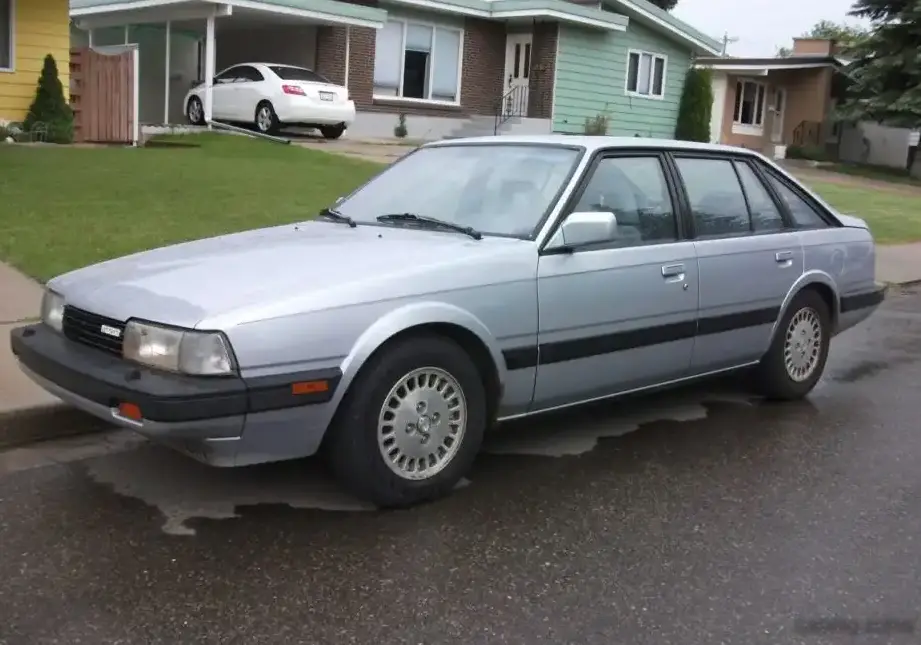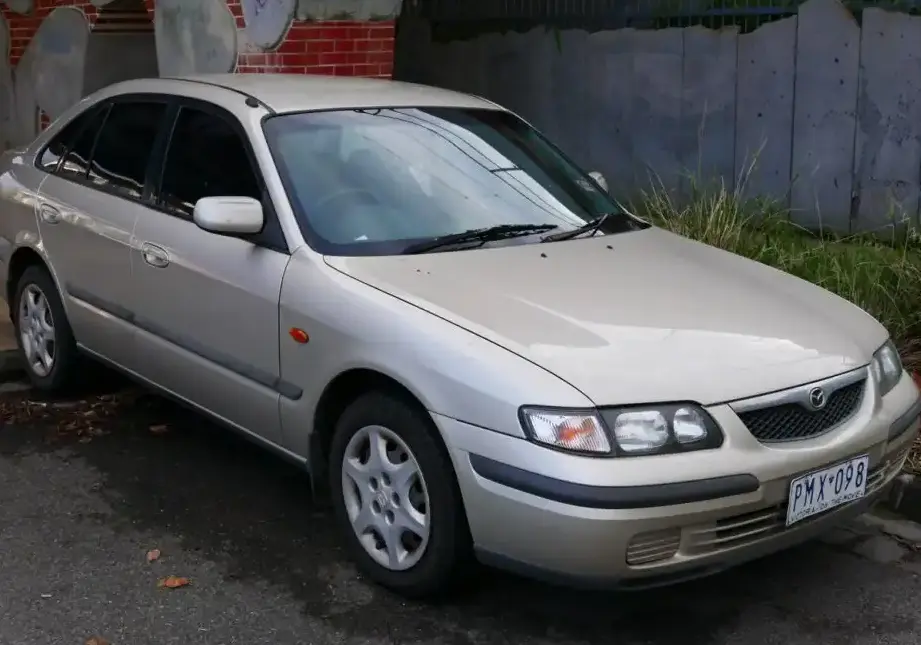
The Mazda 626 V Hatchback (GF) 2.0 Turbo DI, produced between 1998 and 2001, represented a significant offering in Mazda’s lineup during that period. Part of the GF generation of the 626, this variant combined a turbocharged diesel engine with a five-speed manual transmission, aiming to provide a balance of fuel efficiency and reasonable performance for the European and Asian markets. It occupied a mid-range position within the 626 family, slotting above the naturally aspirated gasoline engines and below the higher-specification petrol models. The “V” designation denoted the hatchback body style, differentiating it from the sedan versions also available.
Technical Specifications
| Brand | Mazda |
| Model | 626 |
| Generation | 626 V Hatchback (GF) |
| Type (Engine) | 2.0 Turbo DI (101 Hp) |
| Start of production | 1998 |
| End of production | 2001 |
| Powertrain Architecture | Internal Combustion engine |
| Body type | Hatchback |
| Seats | 5 |
| Doors | 5 |
| Fuel consumption (urban) | 6.4 l/100 km (36.8 US mpg, 44.1 UK mpg, 15.6 km/l) |
| Fuel consumption (extra urban) | 4.5 l/100 km (52.3 US mpg, 62.8 UK mpg, 22.2 km/l) |
| Fuel consumption (combined) | 5.5 l/100 km (42.8 US mpg, 51.4 UK mpg, 18.2 km/l) |
| Fuel Type | Diesel |
| Acceleration 0 – 100 km/h | 11.5 sec |
| Acceleration 0 – 62 mph | 11.5 sec |
| Acceleration 0 – 60 mph | 10.9 sec |
| Maximum speed | 185 km/h (114.95 mph) |
| Emission standard | EURO 3 |
| Weight-to-power ratio | 12.6 kg/Hp |
| Weight-to-torque ratio | 5.5 kg/Nm |
| Power | 101 Hp @ 4000 rpm |
| Power per litre | 50.6 Hp/l |
| Torque | 230 Nm @ 2000 rpm (169.64 lb.-ft. @ 2000 rpm) |
| Engine layout | Front, Transverse |
| Engine Model/Code | RF4F |
| Engine displacement | 1998 cm3 (121.93 cu. in.) |
| Number of cylinders | 4 |
| Engine configuration | Inline |
| Cylinder Bore | 86 mm (3.39 in.) |
| Piston Stroke | 86 mm (3.39 in.) |
| Compression ratio | 18.8:1 |
| Number of valves per cylinder | 4 |
| Fuel injection system | Direct injection |
| Engine aspiration | Turbocharger |
| Valvetrain | SOHC |
| Engine oil capacity | 4.7 l (4.97 US qt | 4.14 UK qt) |
| Coolant capacity | 9 l (9.51 US qt | 7.92 UK qt) |
| Kerb Weight | 1275 kg (2810.89 lbs.) |
| Max. weight | 1770 kg (3902.18 lbs.) |
| Max load | 495 kg (1091.29 lbs.) |
| Trunk (boot) space – minimum | 502 l (17.73 cu. ft.) |
| Fuel tank capacity | 64 l (16.91 US gal | 14.08 UK gal) |
| Length | 4575 mm (180.12 in.) |
| Width | 1710 mm (67.32 in.) |
| Height | 1430 mm (56.3 in.) |
| Wheelbase | 2610 mm (102.76 in.) |
| Front track | 1465 mm (57.68 in.) |
| Rear track | 1470 mm (57.87 in.) |
| Drivetrain Architecture | Front wheel drive |
| Number of gears | 5 |
| Gearbox type | Manual transmission |
| Front suspension | Spring Strut |
| Rear suspension | Wishbone |
| Front brakes | Ventilated discs |
| Rear brakes | Disc |
| Assisting systems | ABS (Anti-lock braking system) |
| Steering type | Steering rack and pinion |
| Power steering | Hydraulic Steering |
| Tires size | 195/60 R15 |
| Wheel rims size | 6J x 15 |
Powertrain & Engine Architecture
The heart of the 626 V 2.0 Turbo DI was the RF4F engine, a 1998cc inline-four cylinder diesel. This engine utilized direct injection technology, a relatively advanced feature for diesel engines of the late 1990s, contributing to improved fuel efficiency and reduced emissions. The turbocharger, a key component, boosted power output to 101 horsepower at 4000 rpm and 230 Nm (169.64 lb-ft) of torque at 2000 rpm. The engine featured a single overhead camshaft (SOHC) valvetrain, operating four valves per cylinder. The five-speed manual transmission was chosen to handle the engine’s torque and provide drivers with a more engaging driving experience. This transmission was a standard setup for this engine variant, offering precise gear changes and contributing to the car’s overall responsiveness.
Driving Characteristics
The 2.0 Turbo DI offered a noticeable step up in performance compared to the naturally aspirated gasoline versions of the 626. While not a sports car, the turbocharger provided a useful boost of power for overtaking and highway cruising. Acceleration from 0 to 60 mph took around 10.9 seconds, and the car could reach a top speed of 185 km/h (114.95 mph). The manual transmission allowed drivers to exploit the engine’s torque, providing good acceleration in everyday driving situations. Compared to the automatic transmission options available on other 626 models, the manual version felt more responsive and engaging. However, the diesel engine’s characteristics meant that peak power was available higher in the rev range, requiring drivers to shift gears more frequently to maintain optimal performance.
Equipment & Trim Levels
The 2.0 Turbo DI typically came with a reasonable level of standard equipment. This included power steering, ABS brakes, central locking, and electric windows. Interior upholstery was usually cloth, with a functional and durable design. Optional extras could include air conditioning, a sunroof, and upgraded audio systems. The trim level generally positioned this variant as a mid-range offering, appealing to buyers who wanted a balance of performance, fuel economy, and features. It wasn’t as lavishly equipped as the top-of-the-line petrol models, but it offered more than the basic entry-level trims.
Chassis & Braking
The 626 V Hatchback featured a conventional suspension setup, with MacPherson strut front suspension and a wishbone rear suspension. This provided a comfortable ride quality, suitable for everyday driving. The front brakes were ventilated discs, offering good stopping power, while the rear brakes were solid discs. The ABS system helped to prevent wheel lock-up during hard braking, enhancing safety. The car’s weight of 1275 kg (2810.89 lbs) was relatively moderate, contributing to its decent handling characteristics.
Market Reception & Comparison
The Mazda 626 V 2.0 Turbo DI was generally well-received by automotive critics. It was praised for its fuel efficiency, reasonable performance, and comfortable ride. However, some reviewers noted that the diesel engine was somewhat noisy and lacked the refinement of its gasoline counterparts. Compared to other trims in the 626 lineup, the 2.0 Turbo DI offered a compelling alternative for drivers who prioritized fuel economy and torque. It was a particularly attractive option for those who frequently drove long distances or needed to tow trailers. The fuel economy figures of 5.5 l/100 km (42.8 US mpg) combined were competitive for its time.
Legacy
The RF4F engine, while generally reliable, is now showing its age. Common issues with older diesel engines, such as turbocharger wear and injector problems, can arise. However, with proper maintenance, these engines can still provide years of service. The 626 V 2.0 Turbo DI has become a relatively rare sight on the roads today, but it remains a popular choice among enthusiasts who appreciate its unique combination of fuel efficiency, performance, and practicality. In the used car market, well-maintained examples can command a reasonable price, particularly those with a full service history.