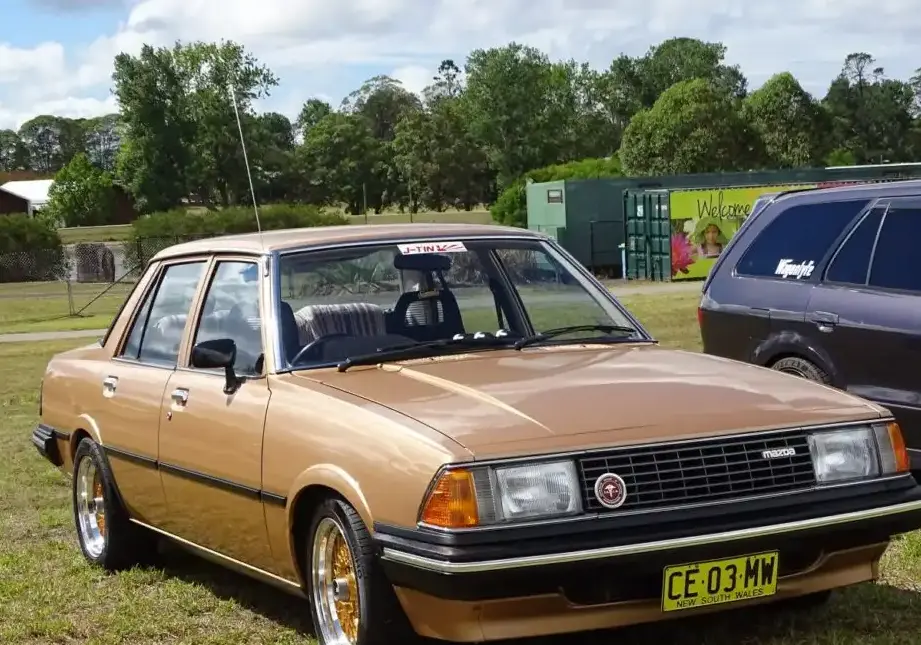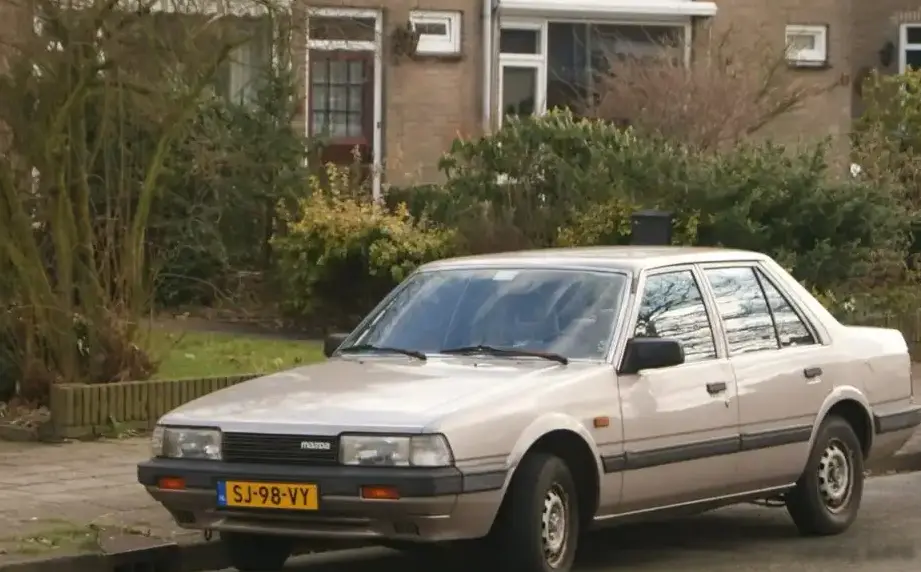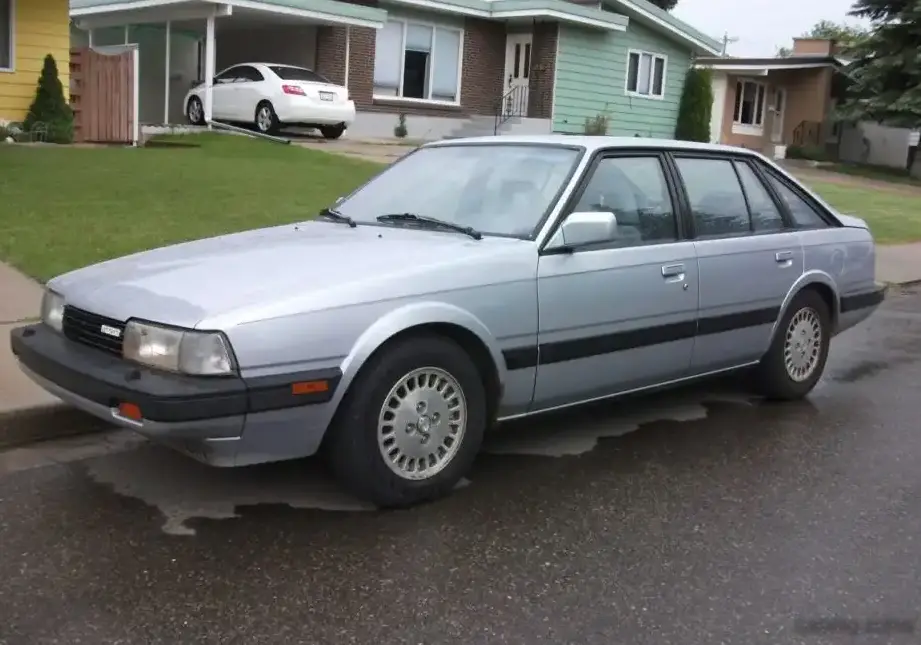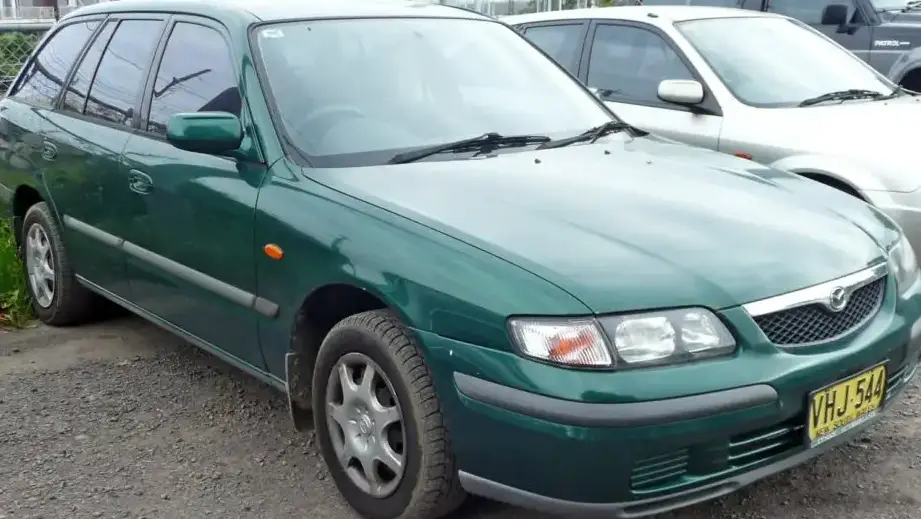
The Mazda 626 V Station Wagon, specifically the GF/GW generation produced between 2000 and 2002, represented Mazda’s offering in the competitive mid-size wagon segment. This variant, equipped with the 1.9-liter (1840 cc) FP engine producing 100 horsepower, was positioned as an entry-level to mid-range option within the 626 lineup. It aimed to provide practicality and affordability for families and individuals needing a versatile vehicle with ample cargo space. The GF/GW series was a significant update to the 626, incorporating revised styling and improved interior appointments compared to previous generations, while maintaining the model’s reputation for reliability.
Technical Specifications
| Brand | Mazda |
| Model | 626 |
| Generation | 626 V Station Wagon (GF,GW) |
| Type (Engine) | 1.9 (100 Hp) |
| Start of production | 2000 year |
| End of production | 2002 year |
| Powertrain Architecture | Internal Combustion engine |
| Body type | Station wagon (estate) |
| Seats | 5 |
| Doors | 5 |
| Fuel consumption (urban) | 10.4 l/100 km (22.6 US mpg) |
| Fuel consumption (extra urban) | 6.6 l/100 km (35.6 US mpg) |
| Fuel Type | Petrol (Gasoline) |
| Acceleration 0 – 100 km/h | 12.9 sec |
| Acceleration 0 – 62 mph | 12.9 sec |
| Acceleration 0 – 60 mph | 12.3 sec |
| Maximum speed | 180 km/h (111.85 mph) |
| Weight-to-power ratio | 12.8 kg/Hp |
| Weight-to-torque ratio | 8.4 kg/Nm |
| Power | 100 Hp @ 5500 rpm |
| Torque | 152 Nm @ 4000 rpm (112.11 lb.-ft. @ 4000 rpm) |
| Engine layout | Front, Transverse |
| Engine Model/Code | FP |
| Engine displacement | 1840 cm3 (112.28 cu. in.) |
| Number of cylinders | 4 |
| Engine configuration | Inline |
| Cylinder Bore | 83 mm (3.27 in.) |
| Piston Stroke | 85 mm (3.35 in.) |
| Compression ratio | 9.7:1 |
| Number of valves per cylinder | 4 |
| Fuel injection system | Multi-port manifold injection |
| Engine aspiration | Naturally aspirated engine |
| Valvetrain | DOHC |
| Engine oil capacity | 3.5 l (3.7 US qt | 3.08 UK qt) |
| Coolant capacity | 7.5 l (7.93 US qt | 6.6 UK qt) |
| Kerb Weight | 1280 kg (2821.92 lbs.) |
| Max. weight | 1840 kg (4056.51 lbs.) |
| Max load | 560 kg (1234.59 lbs.) |
| Trunk (boot) space – minimum | 485 l (17.13 cu. ft.) |
| Trunk (boot) space – maximum | 1677 l (59.22 cu. ft.) |
| Fuel tank capacity | 64 l (16.91 US gal | 14.08 UK gal) |
| Length | 4670 mm (183.86 in.) |
| Width | 1710 mm (67.32 in.) |
| Height | 1515 mm (59.65 in.) |
| Wheelbase | 2670 mm (105.12 in.) |
| Front track | 1465 mm (57.68 in.) |
| Rear (Back) track | 1470 mm (57.87 in.) |
| Drivetrain Architecture | Front wheel drive |
| Number of gears | 5 gears, manual transmission |
| Front suspension | Spring Strut |
| Rear suspension | Wishbone |
| Front brakes | Ventilated discs |
| Rear brakes | Disc |
| Assisting systems | ABS (Anti-lock braking system) |
| Steering type | Steering rack and pinion |
| Power steering | Hydraulic Steering |
| Tires size | 185/65 R15 |
| Wheel rims size | 6J x 15 |
Powertrain & Engine Architecture
The heart of this 626 variant is the Mazda FP engine, a 1.9-liter inline-four cylinder gasoline engine. This engine utilized a multi-port fuel injection system, delivering fuel directly into the intake ports, optimizing combustion efficiency. The engine featured a double overhead camshaft (DOHC) valvetrain, enhancing valve control and contributing to improved power delivery across the rev range. The FP engine, while not known for outright performance, was praised for its smoothness and relative refinement. The 5-speed manual transmission was the standard offering, providing adequate gear ratios for everyday driving. The transmission was designed for durability and ease of use, though it lacked the sophistication of more modern automatic gearboxes.
Driving Characteristics
The 1.9-liter, 100 horsepower engine in the 626 V Station Wagon delivered adequate, but not exhilarating, performance. Acceleration from 0-60 mph took around 12.3 seconds, making it suitable for commuting and highway cruising, but less ideal for spirited driving. The engine’s torque peak of 112 lb-ft at 4000 rpm provided sufficient pulling power for most situations, but required downshifting for overtaking maneuvers. Compared to the higher-output 2.0-liter variants, this engine felt noticeably less responsive. The manual transmission offered precise shifts, but the gear ratios were spaced to prioritize fuel economy over outright acceleration. The overall driving experience was comfortable and predictable, emphasizing practicality over sportiness.
Equipment & Trim Levels
The 1.9-liter 626 V Station Wagon typically came with a reasonable level of standard equipment. This included power windows, power door locks, and an AM/FM radio with cassette player. Air conditioning was often standard, but could be optional depending on the specific package. Interior upholstery was typically cloth, with a durable and practical design. Optional extras included alloy wheels, a sunroof, and upgraded audio systems. The trim level was generally considered entry-level to mid-range, offering a good balance of features and affordability. Safety features included ABS (Anti-lock Braking System) as standard, a notable inclusion for the time.
Chassis & Braking
The 626 V Station Wagon utilized a front-engine, front-wheel-drive layout. The suspension consisted of a MacPherson strut setup at the front and a wishbone configuration at the rear, providing a comfortable ride quality. The braking system featured ventilated discs at the front and solid discs at the rear, offering adequate stopping power for the vehicle’s weight and performance. The steering was rack-and-pinion with hydraulic power assistance, providing light and precise steering feel. The chassis was designed to prioritize comfort and stability, rather than sporty handling.
Market Reception & Comparison
The 1.9-liter 626 V Station Wagon was generally well-received as a practical and affordable family vehicle. Critics praised its spacious interior, ample cargo capacity, and comfortable ride. However, the engine’s lack of power was often cited as a drawback, particularly when compared to competitors offering more powerful engine options. Fuel economy was considered good for its class, making it an attractive option for budget-conscious buyers. Compared to the higher-trim 626 models with larger engines, this variant offered a more economical entry point into the 626 range, appealing to a different segment of the market.
Legacy
The Mazda 626 V Station Wagon, particularly the 1.9-liter variant, has developed a reputation for reliability and durability. The FP engine, while not a powerhouse, proved to be relatively trouble-free with proper maintenance. Today, these vehicles are increasingly sought after by enthusiasts and collectors looking for affordable and practical classic cars. Parts availability is generally good, and the relatively simple mechanical design makes them relatively easy to maintain. While not a performance icon, the 626 V Station Wagon remains a testament to Mazda’s commitment to building reliable and well-rounded vehicles.