
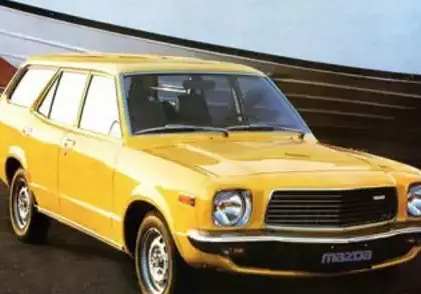
The Mazda 818 Combi 1.3, produced between 1974 and 1978, represents a practical and economical offering from Mazda during a period of increasing fuel costs and a growing demand for versatile family vehicles. This variant, a station wagon (estate) based on the 818 platform, was positioned as the entry-level model within the 818 Combi range, prioritizing affordability and fuel efficiency over outright performance. It served as a workhorse for families and small businesses, offering a spacious interior and reliable transportation. While not known for its speed, the 1.3-liter engine provided adequate power for everyday driving, and the Combi body style significantly enhanced its practicality compared to the coupe and sedan versions of the 818.
Technical Specifications
| Brand | Mazda |
| Model | 818 Combi |
| Generation | 818 Combi |
| Type (Engine) | 1.3 (60 Hp) |
| Start of production | 1974 |
| End of production | 1978 |
| Powertrain Architecture | Internal Combustion engine |
| Body type | Station wagon (estate) |
| Fuel Type | Petrol (Gasoline) |
| Power | 60 Hp |
| Engine aspiration | Naturally aspirated engine |
Powertrain & Engine Architecture
The heart of the Mazda 818 Combi 1.3 is a 1.3-liter, naturally aspirated inline-four cylinder engine. This engine, while relatively simple in design, was known for its durability and ease of maintenance. The engine code is often referenced as WA, though variations existed depending on the specific market. It featured a single overhead camshaft (SOHC) valvetrain, operating two valves per cylinder. Fuel delivery was managed by a carburetor, a common feature for vehicles of this era, rather than fuel injection. This carburetor system, while less precise than modern fuel injection, contributed to the engine’s simplicity and lower production cost. The engine produced 60 horsepower at approximately 6,000 rpm and around 73 lb-ft of torque at 3,000 rpm. The engine was typically paired with a four-speed manual transmission, although a three-speed automatic transmission was also available, albeit less common. The automatic transmission, while offering convenience, noticeably impacted the vehicle’s acceleration and fuel economy.
Driving Characteristics
The driving experience in the 818 Combi 1.3 was characterized by its modest performance. With only 60 horsepower propelling a relatively heavy station wagon, acceleration was slow, particularly when equipped with the automatic transmission. The engine required frequent downshifting to maintain momentum on inclines or when overtaking. The four-speed manual transmission allowed for better control and slightly improved acceleration, but still didn’t transform the 818 Combi into a sporty vehicle. The gear ratios were geared towards fuel efficiency rather than performance. Steering was relatively light, making it easy to maneuver in urban environments, but lacked the precision found in more modern vehicles. The suspension, while adequate for everyday driving, was not particularly sophisticated, resulting in a somewhat bouncy ride on uneven surfaces. Overall, the 818 Combi 1.3 prioritized practicality and comfort over dynamic driving characteristics.
Equipment & Trim Levels
The 818 Combi 1.3 was typically offered with a fairly basic level of equipment, reflecting its position as the entry-level model. Standard features generally included cloth upholstery, vinyl floor covering, and basic instrumentation consisting of a speedometer, fuel gauge, and temperature gauge. The dashboard was constructed from durable plastic and featured a functional, if somewhat spartan, design. Optional extras were limited but could include a radio, heater, and upgraded seat upholstery. The exterior trim was also relatively simple, with chrome bumpers and basic hubcaps. The interior space was a key selling point, offering ample room for passengers and cargo. The rear seats could be folded down to create a larger cargo area, further enhancing its practicality.
Chassis & Braking
The Mazda 818 Combi 1.3 utilized a body-on-frame construction, a common practice for vehicles of this era. The suspension consisted of independent front suspension with coil springs and a live rear axle with leaf springs. This setup provided a reasonable level of ride comfort, but was not particularly sophisticated. The braking system featured drum brakes on all four wheels, which were adequate for normal driving conditions but lacked the stopping power of disc brakes. The steering was a recirculating ball system, providing light steering effort but limited feedback. The chassis was designed for durability and reliability, rather than sporty handling. Stabilizer bars were not typically fitted to the base 1.3-liter model, further contributing to its softer handling characteristics.
Market Reception & Comparison
The Mazda 818 Combi 1.3 was generally well-received in its target market as a practical and affordable family vehicle. Critics praised its spacious interior, fuel efficiency, and reliability. However, its modest performance was often noted as a drawback, particularly when compared to larger-engined versions of the 818 or competing models from other manufacturers. Compared to the 818 Coupe or Sedan with larger engines, the 1.3 Combi offered significantly less power and acceleration. Within the 818 Combi range, the 1.3-liter engine was the entry point, with larger 1.5 and 1.6-liter engines offering improved performance at a higher price point. Fuel economy was a key advantage of the 1.3-liter engine, making it an attractive option for budget-conscious buyers. Reliability was generally good, with the engine proving to be durable and relatively easy to maintain.
Legacy
The Mazda 818 Combi 1.3, while not a particularly groundbreaking vehicle, holds a significant place in Mazda’s history as a practical and affordable family car. Today, surviving examples are relatively rare, and well-maintained models are sought after by collectors and enthusiasts. The 1.3-liter engine, while not known for its power, is generally considered to be reliable and relatively easy to repair. Parts availability can be a challenge, but many components are still available through specialist suppliers. The 818 Combi 1.3 represents a simpler era of automotive engineering, prioritizing durability and practicality over technological sophistication. Its enduring appeal lies in its honest design, spacious interior, and affordable running costs, making it a charming and practical classic for those seeking a taste of 1970s motoring.
