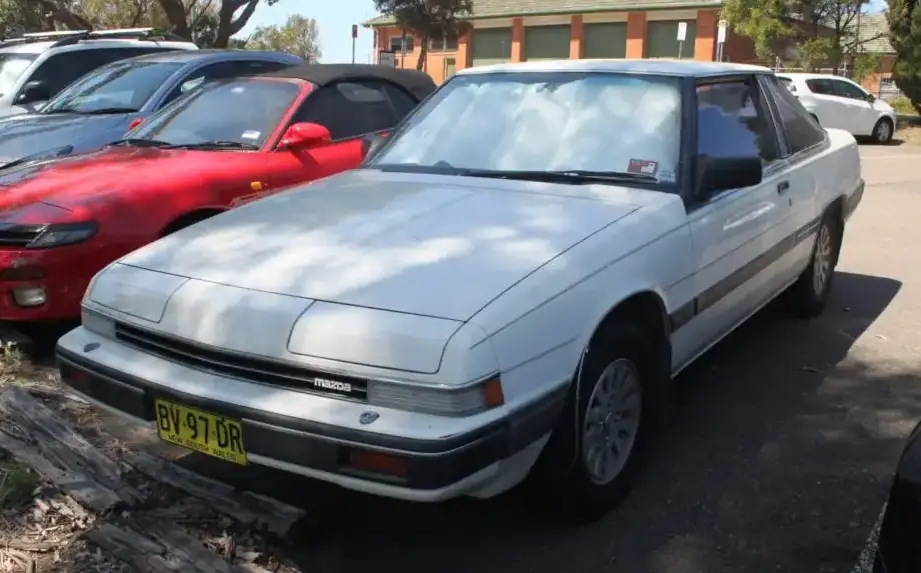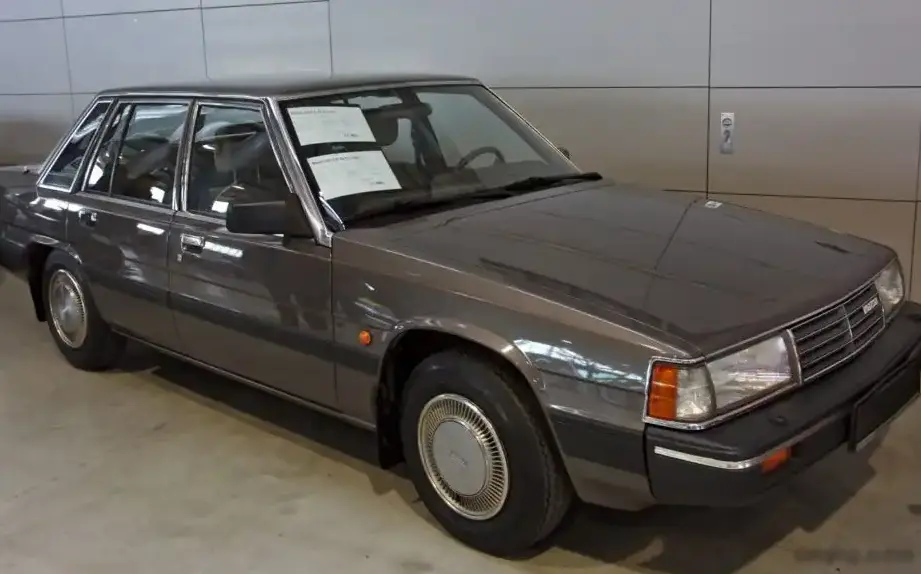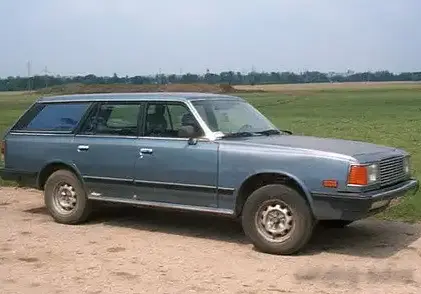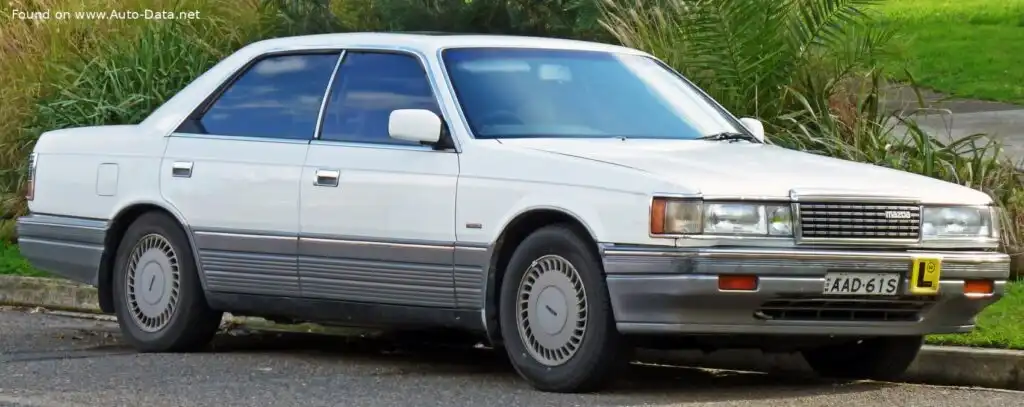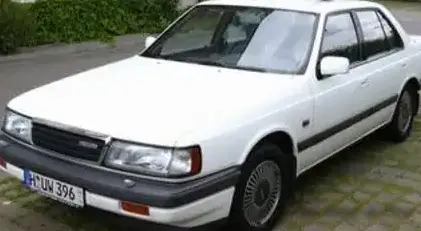
The Mazda 929, known as the Luce in Japan, represented Mazda’s entry into the full-size luxury sedan segment. The first generation, designated the LA series, was produced from 1978 to 1981, with the 2.0-liter (90 hp) variant being a significant offering within the lineup during its production run. This model aimed to compete with established Japanese and American luxury cars, offering a blend of comfort, features, and Mazda’s reputation for engineering. The LA series 929 was a pivotal model for Mazda, showcasing their ambition to move beyond economy cars and establish a presence in the premium market. It was sold primarily in Japan, Australia, and select European markets, with limited imports to the United States.
Technical Specifications
| Brand | Mazda |
| Model | 929 |
| Generation | 929 I (LA) |
| Type (Engine) | 2.0 (90 Hp) |
| Start of production | 1979 |
| End of production | 1981 |
| Powertrain Architecture | Internal Combustion Engine |
| Body type | Sedan |
| Fuel Type | Petrol (Gasoline) |
| Power | 90 Hp |
| Engine Aspiration | Naturally Aspirated |
| Engine Displacement | 1998 cc (2.0 Liters) |
| Cylinders | 4 |
| Valves per Cylinder | 2 |
| Transmission | 3-Speed Automatic |
| Drive Type | Rear-Wheel Drive |
| Weight (approx.) | 2700 – 2900 lbs (1225 – 1315 kg) |
Powertrain & Engine Architecture
The 2.0-liter engine, internally designated as the FE, was a naturally aspirated, inline-four cylinder engine. It featured a cast iron block and an aluminum cylinder head, a common configuration for engines of the era. The engine utilized a single overhead camshaft (SOHC) design, operating two valves per cylinder. Fuel delivery was managed by a Hitachi carburetor, typical for the late 1970s and early 1980s. While not particularly advanced by modern standards, the FE engine was known for its reliability and smooth operation. The 90 horsepower output was achieved at approximately 5,200 rpm, with peak torque of around 118 lb-ft at 3,000 rpm. This engine was paired exclusively with a three-speed automatic transmission, designed to provide comfortable and effortless cruising. The transmission was a conventional hydraulic automatic, lacking the electronic controls found in later models. The rear-wheel drive layout was standard for this class of vehicle at the time, contributing to balanced handling characteristics.
Driving Characteristics
The 929 2.0 Automatic offered a comfortable, rather than sporty, driving experience. The three-speed automatic transmission provided smooth shifts, but the relatively low horsepower and torque figures meant acceleration was modest. 0-60 mph times were estimated to be around 12-14 seconds. The gear ratios were optimized for cruising, making it well-suited for highway driving. Compared to the potential for a manual transmission version (though rarely seen), the automatic reduced driver involvement but increased ease of use. The suspension, consisting of independent front suspension with MacPherson struts and a live axle with leaf springs in the rear, provided a reasonably comfortable ride, absorbing bumps and imperfections in the road surface effectively. However, the leaf-sprung rear end could exhibit some bounce over larger irregularities. The steering was power-assisted, making maneuvering easy, but lacked the precision of more modern systems.
Equipment & Trim Levels
The Mazda 929 2.0 Automatic was positioned as a mid-range trim level within the 929 lineup. Standard equipment included cloth upholstery, power steering, and an AM/FM radio. Air conditioning was often included, but sometimes offered as an optional extra. The interior design was relatively conservative, featuring woodgrain trim and a functional dashboard layout. Higher trim levels, if available in specific markets, offered features such as leather upholstery, electric windows, and a more sophisticated sound system. The exterior featured chrome trim, a relatively large greenhouse for good visibility, and a generally understated design. The focus was on providing a comfortable and refined interior, rather than flashy styling.
Chassis & Braking
The 929 I (LA) utilized a body-on-frame construction, a common practice for larger sedans of the era. The chassis was designed to provide a comfortable ride and good structural rigidity. The front suspension employed MacPherson struts, coil springs, and an anti-roll bar. The rear suspension featured a live axle with leaf springs and shock absorbers. Braking was accomplished via disc brakes on the front wheels and drum brakes on the rear wheels. Power assist was standard. While adequate for the vehicle’s weight and performance, the braking system lacked the sophistication of more modern setups. The tires were typically 185/80R14, providing a balance of comfort and grip.
Market Reception & Comparison
The Mazda 929 2.0 Automatic received generally positive reviews for its comfort, build quality, and value for money. Critics praised its spacious interior and smooth ride. However, the engine’s performance was often cited as a weakness, particularly when compared to competitors offering larger displacement engines. Compared to other Japanese luxury sedans of the time, such as the Toyota Crown and Nissan Cedric, the 929 offered a more modern design and a slightly more engaging driving experience. Fuel economy was reasonable for the era, averaging around 18-22 mpg in mixed driving conditions. Reliability was generally good, although carburetor maintenance could be required periodically. The automatic transmission was considered reliable, but lacked the efficiency of more modern automatic gearboxes.
Legacy
The first-generation Mazda 929 laid the foundation for Mazda’s future success in the luxury sedan market. While the 2.0-liter automatic variant wasn’t the most powerful or technologically advanced version of the 929, it represented a solid and reliable option for buyers seeking a comfortable and well-equipped sedan. Today, the LA series 929 is a relatively rare sight, particularly in well-preserved condition. The FE engine is known for its durability, and with proper maintenance, can provide many years of reliable service. The car has gained a following among classic car enthusiasts who appreciate its understated styling and comfortable driving experience. Parts availability can be a challenge, but many components are still available through specialist suppliers or can be sourced from other Mazda models of the era. The 929 I (LA) remains a testament to Mazda’s ambition and engineering prowess during the late 1970s and early 1980s.