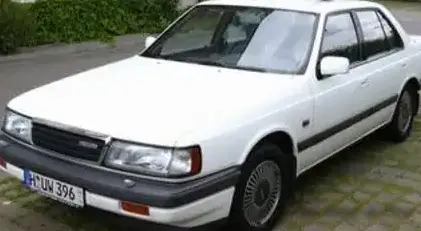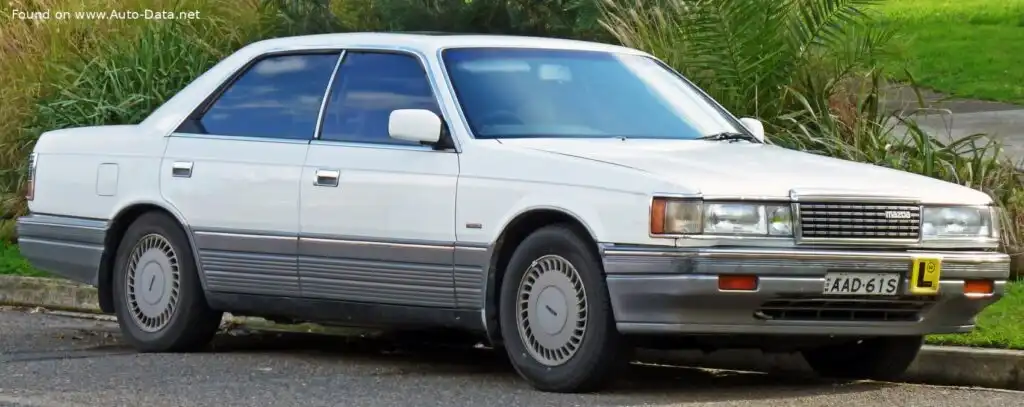
The Mazda 929 III (HC), produced between 1989 and 1993, represented Mazda’s flagship luxury sedan during this period. Positioned above the Mazda 626, the 929 aimed to compete with established European and American luxury cars. The “HC” designation refers to the third generation of the 929, and it was a significant departure from its predecessors, featuring a more modern design and improved refinement. This generation was primarily sold in Japan, Europe, and Australia, with limited sales in the North American market. The 2.0 i V6 (145 Hp) variant occupied a mid-range position within the 929 lineup, offering a balance between performance and fuel efficiency. It served as an alternative to the larger displacement engines available, appealing to buyers seeking a more economical yet still luxurious experience.
Technical Specifications
| Brand | Mazda |
| Model | 929 |
| Generation | 929 III (HC) |
| Type (Engine) | 2.0 i V6 (145 Hp) |
| Start of production | 1989 |
| End of production | 1993 |
| Powertrain Architecture | Internal Combustion engine |
| Body type | Sedan |
| Seats | 5 |
| Doors | 4 |
| Fuel Type | Petrol (Gasoline) |
| Weight-to-power ratio | 9.8 kg/Hp, 102.1 Hp/tonne |
| Weight-to-torque ratio | 6.1 kg/Nm, 162.7 Nm/tonne |
| Power | 145 Hp @ 5000 rpm |
| Power per litre | 72.6 Hp/l |
| Torque | 231 Nm @ 2500 rpm (170.38 lb.-ft. @ 2500 rpm) |
| Engine layout | Front, Longitudinal |
| Engine displacement | 1997 cm3 (121.86 cu. in.) |
| Number of cylinders | 6 |
| Engine configuration | V-engine |
| Cylinder Bore | 74 mm (2.91 in.) |
| Piston Stroke | 77.4 mm (3.05 in.) |
| Compression ratio | 8:1 |
| Number of valves per cylinder | 2 |
| Fuel injection system | Single-point injection |
| Engine aspiration | Naturally aspirated engine |
| Kerb Weight | 1420 kg (3130.56 lbs.) |
| Trunk (boot) space – minimum | 427 l (15.08 cu. ft.) |
| Fuel tank capacity | 70 l (18.49 US gal | 15.4 UK gal) |
| Length | 4690 mm (184.65 in.) |
| Width | 1695 mm (66.73 in.) |
| Height | 1425 mm (56.1 in.) |
| Wheelbase | 2710 mm (106.69 in.) |
| Front track | 1440 mm (56.69 in.) |
| Rear (Back) track | 1450 mm (57.09 in.) |
| Drivetrain Architecture | The Internal combustion engine (ICE) drives the rear wheels of the vehicle. |
| Drive wheel | Rear wheel drive |
| Number of gears and type of gearbox | 5 gears, manual transmission |
| Front suspension | Coil spring |
| Rear suspension | Coil spring |
| Front brakes | Ventilated discs |
| Rear brakes | Disc |
| Assisting systems | ABS (Anti-lock braking system) |
| Power steering | Hydraulic Steering |
| Tires size | 195/65 R15 91 H |
| Wheel rims size | 6J x 15 ET 50 |
Powertrain & Engine Architecture
The 2.0 i V6 engine, designated as the JE series, was a naturally aspirated, 60-degree V6. It featured a cast iron block and aluminum cylinder heads. The single-point fuel injection system, while common for the era, was less efficient than multi-point injection systems found in some competitors. This engine produced 145 horsepower at 5000 rpm and 231 Nm (170.38 lb-ft) of torque at 2500 rpm. The engine’s longitudinal mounting and rear-wheel-drive configuration were a deliberate choice, aiming to provide a more balanced driving experience and a premium feel. The 5-speed manual transmission was the standard offering for this variant, providing drivers with full control over the engine’s power. The transmission was known for its smooth shifting, but its ratios were geared towards fuel efficiency rather than outright performance.
Driving Characteristics
The 929 2.0 i V6 with the manual transmission offered a comfortable and refined driving experience. Acceleration was adequate for everyday driving, but it wasn’t particularly sporty. The engine delivered its peak torque at a relatively low 2500 rpm, making it responsive in city traffic. However, the single-point fuel injection and relatively low compression ratio (8:1) limited its high-end power. Compared to the larger 2.2-liter or V8 engines available in other 929 models, the 2.0 i V6 felt less powerful, especially when fully loaded or tackling steep inclines. The rear-wheel-drive layout provided good handling balance, but the suspension was tuned for comfort rather than aggressive cornering. The steering was light and precise, making it easy to maneuver in urban environments.
Equipment & Trim Levels
The 2.0 i V6 variant of the 929 typically came equipped with a respectable level of standard features. These included power windows, central locking, power steering, and an anti-lock braking system (ABS). Interior upholstery was typically cloth, although leather options were available as an upgrade. The dashboard featured a woodgrain trim and analog gauges. Optional extras included a sunroof, upgraded audio system, and automatic climate control. The trim level was generally considered mid-range, offering a good balance of features and affordability. It was positioned above the base models but below the fully-equipped luxury trims.
Chassis & Braking
The 929 III (HC) utilized a traditional body-on-frame construction, which contributed to its robust feel. The suspension consisted of coil springs and shock absorbers all around. The front suspension featured independent double wishbones, while the rear suspension employed a solid axle with coil springs. The braking system consisted of ventilated discs on the front wheels and solid discs on the rear. The ABS system helped to improve braking performance and stability, especially on slippery surfaces. The tires were typically 195/65 R15, providing a good compromise between comfort and grip.
Market Reception & Comparison
The Mazda 929 2.0 i V6 was generally well-received by automotive critics. It was praised for its comfortable ride, refined interior, and good value for money. However, some critics noted that the engine lacked the power and sophistication of its competitors. Compared to other trims in the 929 lineup, the 2.0 i V6 offered better fuel economy but less performance. The larger displacement engines provided more exhilarating acceleration, while the V8 models offered a more luxurious experience. In terms of reliability, the 2.0 i V6 engine proved to be relatively durable, although the single-point fuel injection system could require more frequent maintenance than more modern systems.
Legacy
The Mazda 929 III (HC) 2.0 i V6, while not the most powerful or prestigious variant of the 929, remains a respected classic among Mazda enthusiasts. The JE series V6 engine, while not groundbreaking, was a reliable and durable powerplant. Today, well-maintained examples of the 929 2.0 i V6 are becoming increasingly collectible. The car’s combination of classic styling, comfortable ride, and relatively simple mechanicals makes it an appealing option for those seeking a unique and affordable classic sedan. Parts availability can be a challenge, but a dedicated community of Mazda enthusiasts helps to keep these cars on the road. The 929, in general, represents a high point in Mazda’s history, showcasing the company’s commitment to building high-quality, refined automobiles.