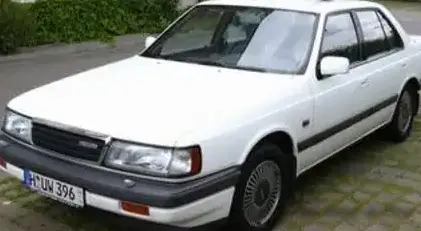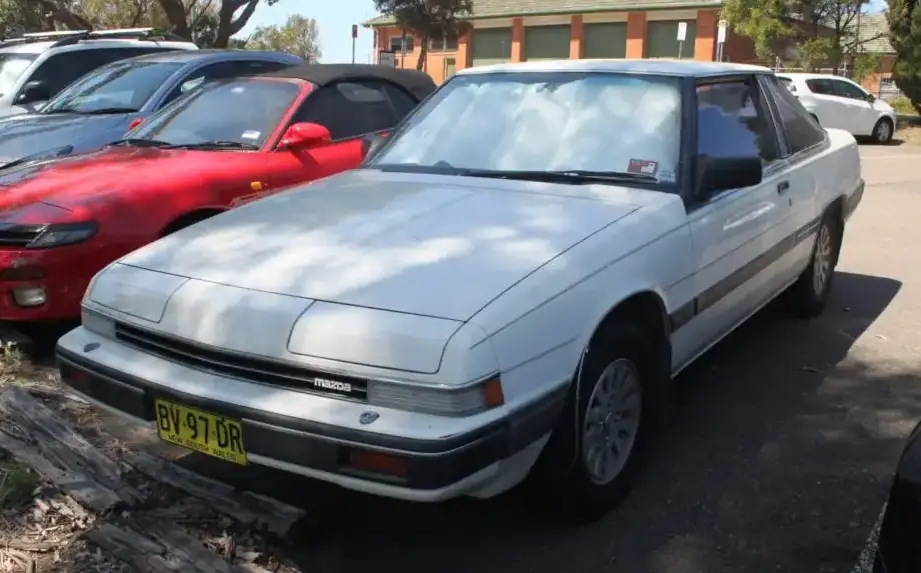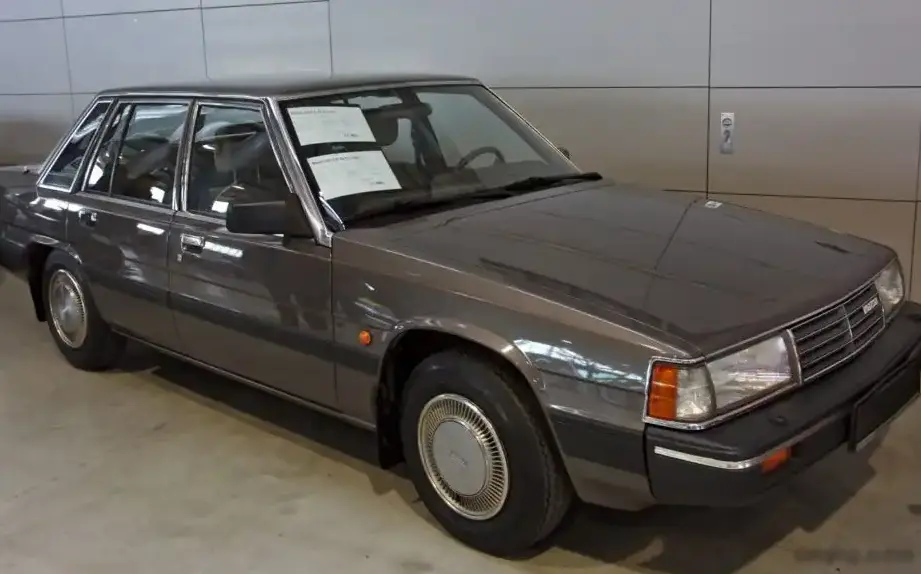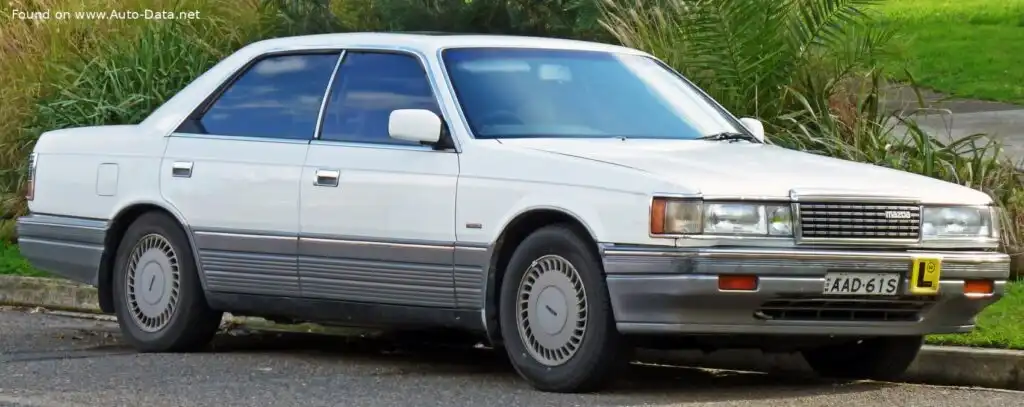
The Mazda 929 III (HC) 3.0 i V6, produced from 1990 to 1991, represented the third generation of Mazda’s flagship luxury sedan. Positioned as a competitor to vehicles like the Toyota Crown and Nissan Cedric, the 929 aimed to offer a blend of sophisticated styling, comfortable accommodations, and robust engineering. This iteration, designated the HC series, was primarily sold in Japan and select export markets, and was built on the HC platform. The 3.0 i V6 variant, equipped with a 3.0-liter V6 engine producing 170 horsepower, served as the top-of-the-line offering within the 929 range during its brief production run.
Technical Specifications
| Brand | Mazda |
| Model | 929 |
| Generation | 929 III (HC) |
| Type (Engine) | 3.0 i V6 (170 Hp) |
| Start of production | 1990 |
| End of production | 1991 |
| Powertrain Architecture | Internal Combustion engine |
| Body type | Sedan |
| Seats | 6 |
| Doors | 4 |
| Fuel consumption (urban) | 14.1 l/100 km (16.7 US mpg, 20 UK mpg, 7.1 km/l) |
| Fuel consumption (extra urban) | 8 l/100 km (29.4 US mpg, 35.3 UK mpg, 12.5 km/l) |
| Fuel consumption (combined) | 10 l/100 km (23.5 US mpg, 28.2 UK mpg, 10 km/l) |
| Fuel Type | Petrol (Gasoline) |
| Acceleration 0 – 100 km/h | 8.6 sec |
| Acceleration 0 – 62 mph | 8.6 sec |
| Acceleration 0 – 60 mph | 8.2 sec |
| Maximum speed | 205 km/h (127.38 mph) |
| Weight-to-power ratio | 8.6 kg/Hp, 116.4 Hp/tonne |
| Weight-to-torque ratio | 6.1 kg/Nm, 164.4 Nm/tonne |
| Power | 170 Hp @ 5300 rpm |
| Power per litre | 57.5 Hp/l |
| Torque | 240 Nm @ 4000 rpm (177.01 lb.-ft. @ 4000 rpm) |
| Engine layout | Front, Longitudinal |
| Engine displacement | 2954 cm3 (180.26 cu. in.) |
| Number of cylinders | 6 |
| Engine configuration | V-engine |
| Cylinder Bore | 90 mm (3.54 in.) |
| Piston Stroke | 77.4 mm (3.05 in.) |
| Compression ratio | 9.2:1 |
| Number of valves per cylinder | 2 |
| Fuel injection system | Multi-port manifold injection |
| Engine aspiration | Naturally aspirated engine |
| Kerb Weight | 1460 kg (3218.75 lbs.) |
| Trunk (boot) space – minimum | 427 l (15.08 cu. ft.) |
| Fuel tank capacity | 70 l (18.49 US gal | 15.4 UK gal) |
| Length | 4690 mm (184.65 in.) |
| Width | 1695 mm (66.73 in.) |
| Height | 1425 mm (56.1 in.) |
| Wheelbase | 2710 mm (106.69 in.) |
| Front track | 1440 mm (56.69 in.) |
| Rear (Back) track | 1450 mm (57.09 in.) |
| Drivetrain Architecture | The Internal combustion engine (ICE) drives the rear wheels of the vehicle. |
| Drive wheel | Rear wheel drive |
| Number of gears and type of gearbox | 5 gears, manual transmission |
| Front suspension | Coil spring |
| Rear suspension | Coil spring |
| Front brakes | Ventilated discs |
| Rear brakes | Disc |
| Assisting systems | ABS (Anti-lock braking system), Hydraulic Steering |
| Tires size | 205/65 R15 93 H |
| Wheel rims size | 6.5J x 15 ET 55 |
Powertrain & Engine Architecture
The heart of the 929 3.0 i V6 was the JE series 3.0-liter (2954 cc) V6 engine. This engine, internally designated as the JE-ZE, featured a 90-degree V-angle, providing inherent balance and smoothness. It utilized a cast-iron block with an aluminum cylinder head, incorporating two valves per cylinder and a multi-port fuel injection system. The engine produced 170 horsepower at 5300 rpm and 240 Nm (177 lb-ft) of torque at 4000 rpm. The engine’s longitudinal mounting and rear-wheel-drive configuration were a deliberate choice, aligning with the traditional layout favored for luxury sedans of the era. The 5-speed manual transmission was the only transmission option available for this variant.
Driving Characteristics
The 929 3.0 i V6 offered a refined driving experience, prioritizing comfort and stability over outright sportiness. The 170 hp engine provided adequate power for effortless cruising and confident acceleration. While not a particularly quick car by modern standards – achieving 0-60 mph in around 8.2 seconds – the V6 delivered a smooth and linear power delivery. The rear-wheel-drive layout contributed to balanced handling, although the car’s weight (approximately 3219 lbs) was noticeable in cornering. The 5-speed manual transmission allowed for precise control, but the gear ratios were tuned for relaxed highway driving rather than aggressive performance.
Equipment & Trim Levels
The 929 3.0 i V6 was well-equipped for its time, reflecting its positioning as a luxury vehicle. Standard features typically included power windows, power locks, air conditioning, and a high-quality audio system. Interior appointments featured comfortable cloth or leather upholstery, woodgrain trim, and a well-designed dashboard layout. Optional extras could include a sunroof, upgraded audio systems, and more advanced climate control features. The overall interior ambiance was one of understated elegance and refinement.
Chassis & Braking
The 929 III (HC) utilized a traditional body-on-frame construction, providing a robust and durable chassis. Suspension consisted of coil springs all around, with independent front suspension and a solid rear axle. The braking system featured ventilated discs on the front wheels and solid discs on the rear, supplemented by an Anti-lock Braking System (ABS) to enhance safety. Steering was hydraulically assisted, providing a light and responsive feel. The suspension tuning prioritized ride comfort, absorbing bumps and imperfections in the road surface effectively.
Market Reception & Comparison
The Mazda 929 III (HC) 3.0 i V6 received generally positive reviews from automotive critics. It was praised for its comfortable ride, refined interior, and smooth engine. However, some critics noted that its styling was somewhat conservative compared to its European and American rivals. Fuel economy, at around 23.5 mpg combined, was typical for a V6-powered sedan of that era. Compared to other trims in the 929 lineup, the 3.0 i V6 offered a significant performance advantage over the smaller-displacement engines, but at a higher price point. It was positioned as the premium offering, appealing to buyers who prioritized luxury and refinement.
Legacy
The Mazda 929 III (HC) 3.0 i V6, while not a high-volume seller, remains a respected example of Japanese luxury car engineering from the early 1990s. The JE-ZE V6 engine proved to be a reliable and durable powerplant, and well-maintained examples continue to be found on the used car market today. While parts availability can be a challenge, the 929’s robust construction and relatively simple mechanicals make it a viable option for enthusiasts seeking a classic Japanese sedan. The car represents a period when Mazda was actively striving to establish itself as a premium automotive brand, and the 929 3.0 i V6 embodies that ambition.