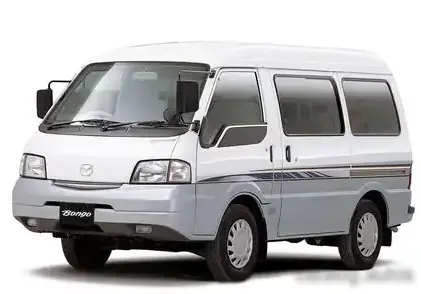
Technical Specifications
| Brand | Mazda |
| Model | Bongo |
| Generation | Bongo Friendee |
| Type (Engine) | 2.5DT (125 Hp) |
| Start of Production | 1995 |
| End of Production | 1999 |
| Powertrain Architecture | Internal Combustion Engine |
| Body Type | Minivan |
| Fuel Type | Diesel |
| Engine Specs (Power) | 125 Hp |
| Engine Aspiration | Naturally Aspirated |
The Mazda Bongo Friendee 2.5DT, produced between 1995 and 1999, represents a significant iteration of Mazda’s popular Bongo van, specifically tailored for the Japanese domestic market (JDM) and export to select regions. This variant, equipped with a 2.5-liter naturally aspirated diesel engine producing 125 horsepower, occupied a middle ground within the Friendee lineup, offering a balance between utility, fuel efficiency, and affordability. The Bongo Friendee, known for its spacious interior and versatile seating configurations, was primarily designed for family use, leisure activities, and light commercial applications. It’s part of the broader Bongo lineage, which has spanned several generations, but the Friendee designation specifically refers to the more passenger-focused versions with enhanced trim and features.
Powertrain & Engine Architecture
The heart of the Bongo Friendee 2.5DT is Mazda’s naturally aspirated 2.5-liter diesel engine. While specific engine codes varied depending on the export market, it generally falls within the RF series of engines. This engine is a four-cylinder, indirect injection diesel, utilizing a Bosch rotary injection pump. Indirect injection, common for diesels of this era, contributes to quieter operation compared to direct injection systems, but typically results in slightly lower power output and fuel efficiency. The engine features a cast iron block and an aluminum cylinder head, a common construction for durability and weight reduction. The valvetrain consists of a single overhead camshaft (SOHC) operating two valves per cylinder.
The 2.5DT was typically paired with a four-speed automatic transmission. This transmission, while providing ease of use, wasn’t known for its particularly quick shifts or advanced features. It was a conventional hydraulic automatic, prioritizing reliability and simplicity over performance. The transmission’s gear ratios were geared towards maximizing fuel economy and providing adequate torque for hauling passengers and cargo, rather than sporty acceleration. Manual transmission options were available on other Bongo Friendee variants, offering a more engaging driving experience and slightly improved fuel efficiency.
Driving Characteristics
The driving experience in the Bongo Friendee 2.5DT is characterized by its practicality and comfort. The 125 horsepower engine, while not exceptionally powerful, provides sufficient torque for everyday driving and highway cruising, even when fully loaded. Acceleration is modest, and overtaking maneuvers require planning. The automatic transmission contributes to a relaxed driving style, but can feel somewhat sluggish, especially when downshifting. The suspension, typically a conventional setup with coil springs and shock absorbers, prioritizes ride comfort over sporty handling. The van exhibits noticeable body roll in corners, but remains stable and predictable. Compared to the gasoline-powered Bongo Friendee variants, the 2.5DT offers significantly better fuel economy, making it a popular choice for those covering long distances. However, it lacks the responsiveness and higher revving nature of the gasoline engines.
Equipment & Trim Levels
The Bongo Friendee 2.5DT typically came equipped with a reasonable level of standard features, reflecting its positioning as a mid-range variant. Standard equipment generally included power steering, air conditioning, and a basic audio system. Interior upholstery was typically cloth, with options for upgraded materials and patterns available on higher trim levels. The dashboard layout is functional and straightforward, with clearly labeled controls.
Optional extras included power windows, central locking, upgraded audio systems with cassette or CD players, and alloy wheels. Some models also featured a sunroof or upgraded interior trim. The Friendee’s interior is particularly notable for its flexible seating arrangements. The rear seats could be folded, tumbled, or even removed entirely, creating a large cargo area. Some models featured swiveling rear seats, enhancing the social aspect of the vehicle.
Chassis & Braking
The Bongo Friendee 2.5DT utilizes a body-on-frame construction, providing a robust and durable platform. The front suspension consists of independent MacPherson struts, while the rear suspension employs a solid axle with leaf springs. This setup prioritizes load-carrying capacity and ride comfort over handling precision. Braking systems varied depending on the specific model and export market. Lower trim levels typically featured drum brakes on the rear wheels, while higher trim levels often included disc brakes all around. Power-assisted steering was standard, making maneuvering the van relatively easy, despite its size. Anti-lock brakes (ABS) were not typically standard equipment on this variant, but were available as an option on some models.
Market Reception & Comparison
The Mazda Bongo Friendee 2.5DT was generally well-received in its target markets, particularly in Japan and regions where compact vans were popular. Critics praised its spacious interior, versatile seating arrangements, and fuel-efficient diesel engine. However, some reviewers noted the engine’s lack of power and the automatic transmission’s sluggishness. Compared to the gasoline-powered Bongo Friendee variants, the 2.5DT offered superior fuel economy, making it a more practical choice for long-distance travel. Compared to other vans in its class, such as the Toyota Hiace or Mitsubishi Delica, the Bongo Friendee offered a competitive combination of features, price, and reliability. The 2.5DT variant specifically appealed to buyers who prioritized fuel efficiency and practicality over outright performance.
Legacy
The Mazda Bongo Friendee 2.5DT has proven to be a relatively reliable vehicle, with many examples still on the road today. The diesel engine, while not particularly high-tech, is known for its durability and longevity, provided it receives regular maintenance. Common issues include wear and tear on suspension components, corrosion in areas exposed to salt, and occasional problems with the fuel injection pump. The automatic transmission, while generally reliable, can be prone to wear and tear with heavy use. In the used car market, the Bongo Friendee 2.5DT remains a popular choice for those seeking an affordable and practical van. Its spacious interior, fuel efficiency, and relatively low maintenance costs make it an attractive option for families, campers, and small businesses. The JDM import market has also contributed to its continued popularity, with enthusiasts appreciating its unique styling and versatile features.