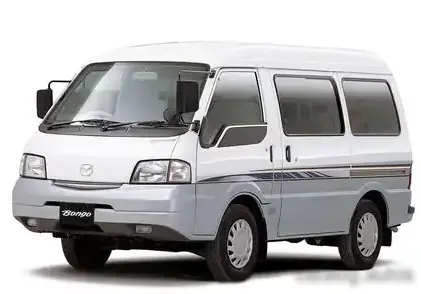
The Mazda Bongo Friendee 2.5DT, produced between 1999 and 2004, represents a significant iteration of Mazda’s popular Bongo van, specifically tailored for the Japanese domestic market (JDM) and export to select regions. This variant, powered by a 2.5-liter naturally aspirated diesel engine producing 130 horsepower, occupied a middle ground within the Friendee lineup, offering a balance between utility, fuel efficiency, and affordability. The Bongo Friendee, built on the platform code Bongo SR20, was known for its spacious interior, versatile seating configurations, and robust build quality, making it a popular choice for families and commercial users alike. The “Friendee” designation denoted a more comfort-oriented trim level compared to the more utilitarian Bongo Van.
Technical Specifications
| Brand | Mazda |
| Model | Bongo |
| Generation | Bongo Friendee |
| Type (Engine) | 2.5DT (130 Hp) |
| Start of Production | 1999 |
| End of Production | 2004 |
| Powertrain Architecture | Internal Combustion Engine (Diesel) |
| Body Type | Minivan |
| Fuel Type | Diesel |
| Power | 130 Hp |
| Engine Aspiration | Naturally Aspirated |
Powertrain & Engine Architecture
The heart of the Bongo Friendee 2.5DT is the Mazda WL-T 2.5-liter four-cylinder diesel engine. This engine, while not a high-performance unit, was designed for durability and low-end torque. It features indirect fuel injection, a common characteristic of diesel engines from this era, utilizing a distributor-type injection pump. The engine block is cast iron, contributing to its robustness, while the cylinder head is aluminum. The valvetrain consists of a single overhead camshaft (SOHC) operating two valves per cylinder. The WL-T engine is known for its relatively simple mechanical design, making it easier to maintain and repair compared to more complex, modern diesel engines. The 130 horsepower output is achieved at approximately 3,500 rpm, and peak torque of around 235 Nm (173 lb-ft) is available from a low 2,000 rpm. This torque curve is well-suited for hauling passengers and cargo. The transmission paired with the 2.5DT engine is typically a four-speed automatic, designed for smooth operation and ease of use. While a five-speed manual transmission was available on other Bongo Friendee models, the automatic was a popular choice for those prioritizing convenience.
Driving Characteristics
The Bongo Friendee 2.5DT with the four-speed automatic transmission delivers a comfortable, if not particularly sporty, driving experience. Acceleration is adequate for everyday driving, but the van is not designed for quick bursts of speed. The automatic transmission’s gear ratios are optimized for fuel efficiency and smooth cruising, rather than aggressive performance. The low-end torque of the diesel engine provides sufficient power for climbing hills and carrying a full load of passengers or cargo. The steering is light and easy, making it maneuverable in urban environments. However, the van’s relatively high center of gravity and soft suspension contribute to noticeable body roll during cornering. Compared to the gasoline-powered Bongo Friendee variants, the 2.5DT offers significantly better fuel economy, making it a more economical choice for high-mileage drivers. The manual transmission versions of the Bongo Friendee, particularly those with the gasoline engines, offered more engaging driving dynamics and quicker acceleration, but at the expense of fuel efficiency and ease of use. The 2.5DT automatic strikes a balance between these two extremes.
Equipment & Trim Levels
The Bongo Friendee 2.5DT typically came equipped with a range of features designed to enhance comfort and convenience. Standard equipment often included air conditioning, power steering, central locking, and electric windows. The interior upholstery was typically cloth, with options for upgraded materials and colors. The dashboard layout is functional and straightforward, with easy-to-read gauges and controls. Higher trim levels offered additional features such as alloy wheels, a more sophisticated audio system, and woodgrain interior trim. The Friendee trim level, in general, focused on providing a more refined and comfortable interior compared to the base Bongo Van models. Optional extras included a sunroof, rear air conditioning, and upgraded seating configurations. Many examples were also equipped with Mazda’s optional automatic sliding doors, a popular feature for families.
Chassis & Braking
The Bongo Friendee 2.5DT utilizes a body-on-frame construction, providing a robust and durable platform. The suspension consists of independent double wishbones at the front and a leaf spring setup at the rear. This configuration prioritizes load-carrying capacity and ride comfort over handling precision. The braking system typically features disc brakes at the front and drum brakes at the rear. Anti-lock brakes (ABS) were not standard on all models, but were available as an option. The chassis and braking system are designed to handle the van’s weight and payload capacity safely and reliably. Stabilizer bars were often included to reduce body roll, but their effectiveness is limited by the van’s overall height and weight.
Market Reception & Comparison
The Mazda Bongo Friendee 2.5DT was generally well-received in the Japanese market and in export markets where it was sold. Critics praised its spacious interior, versatile seating configurations, and fuel-efficient diesel engine. However, some reviewers noted its lack of performance and somewhat dated interior design. Compared to other minivans of the era, such as the Toyota Hiace and Nissan Serena, the Bongo Friendee offered a competitive combination of features, reliability, and affordability. The 2.5DT variant, in particular, appealed to buyers who prioritized fuel economy and low-cost maintenance. The gasoline-powered Bongo Friendee models offered more spirited performance, but at the expense of fuel efficiency. The diesel version provided a more practical and economical option for those who primarily used the van for hauling passengers or cargo.
Legacy
The Mazda Bongo Friendee 2.5DT has proven to be a remarkably durable and reliable vehicle. Many examples are still on the road today, testament to the quality of its construction and the robustness of its diesel engine. The WL-T engine, while not particularly sophisticated, is known for its longevity and relatively simple maintenance requirements. In the used car market, the Bongo Friendee 2.5DT remains a popular choice for those seeking an affordable and practical minivan. Its spacious interior, fuel efficiency, and reliable powertrain make it a compelling option for families, small businesses, and anyone who needs a versatile vehicle for hauling passengers or cargo. Parts availability can be a concern in some regions, but the engine’s simplicity and the van’s widespread popularity mean that parts are generally obtainable. The Bongo Friendee 2.5DT represents a practical and enduring example of Japanese automotive engineering.