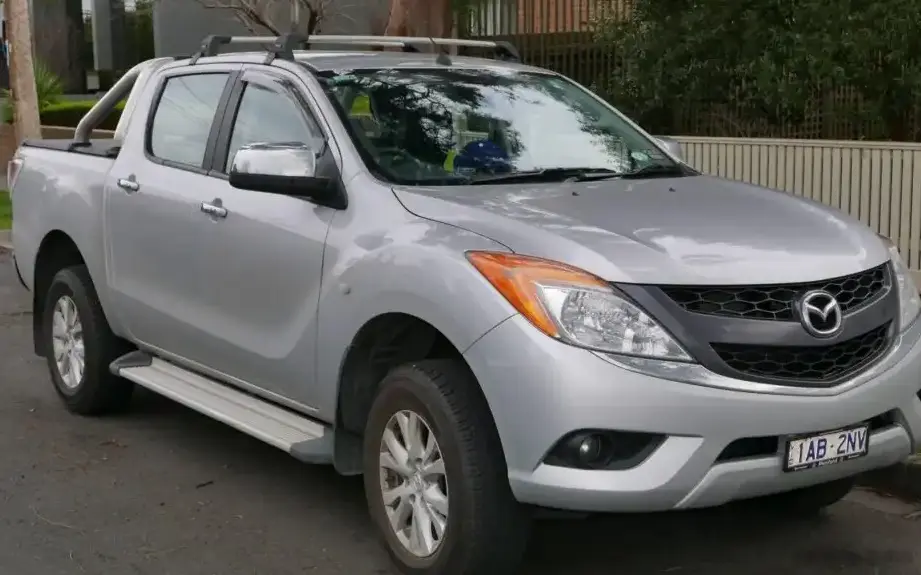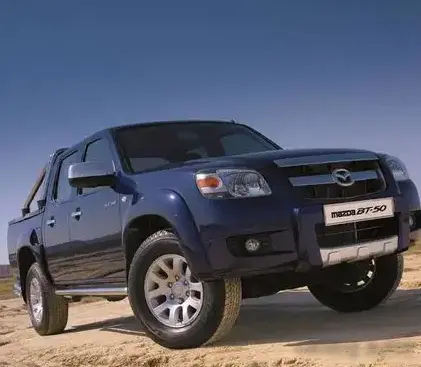
The Mazda BT-50 Double Cab I 2.5 TD (143 hp) 4×4, produced between 2006 and 2008, represents Mazda’s entry into the increasingly popular mid-size pickup truck segment. This first generation BT-50 was a collaborative effort with Ford, sharing a platform and many components with the Ford Ranger T6. Positioned as a workhorse with some comfort features, the 2.5-liter turbodiesel engine with a manual transmission aimed to balance affordability, capability, and fuel efficiency for buyers needing a versatile vehicle for both commercial and personal use. It was primarily sold in markets outside of North America, including Australia, Europe, and parts of Asia and Latin America.
Technical Specifications
| Brand | Mazda |
| Model | BT-50 |
| Generation | BT-50 Double Cab I |
| Type (Engine) | 2.5 TD (143 Hp) 4×4 |
| Start of production | 2006 |
| End of production | 2008 |
| Powertrain Architecture | Internal Combustion engine |
| Body type | Pick-up |
| Seats | 5 |
| Doors | 4 |
| Fuel consumption (urban) | 10.9 l/100 km (21.6 US mpg) |
| Fuel consumption (extra urban) | 7.8 l/100 km (30.2 US mpg) |
| Fuel consumption (combined) | 8.9 l/100 km (26.4 US mpg) |
| CO2 emissions | 244 g/km |
| Fuel Type | Diesel |
| Acceleration 0 – 100 km/h | 12.5 sec |
| Acceleration 0 – 62 mph | 12.5 sec |
| Acceleration 0 – 60 mph | 11.9 sec |
| Maximum speed | 158 km/h (98.18 mph) |
| Emission standard | Euro 4 |
| Weight-to-power ratio | 12.4 kg/Hp |
| Weight-to-torque ratio | 5.4 kg/Nm |
| Power | 143 Hp @ 3500 rpm |
| Torque | 330 Nm @ 1800 rpm (243.4 lb.-ft. @ 1800 rpm) |
| Engine layout | Front, Longitudinal |
| Engine Model/Code | WLAA |
| Engine displacement | 2499 cm3 (152.5 cu. in.) |
| Number of cylinders | 4 |
| Engine configuration | Inline |
| Cylinder Bore | 93 mm (3.66 in.) |
| Piston Stroke | 92 mm (3.62 in.) |
| Compression ratio | 18:1 |
| Number of valves per cylinder | 4 |
| Fuel injection system | Diesel Commonrail |
| Engine aspiration | Turbocharger, Intercooler |
| Engine oil capacity | 7 l (7.4 US qt | 6.16 UK qt) |
| Coolant capacity | 8.8 l (9.3 US qt | 7.74 UK qt) |
| Kerb Weight | 1780 kg (3924.23 lbs.) |
| Max. weight | 3030 kg (6680.01 lbs.) |
| Max load | 1250 kg (2755.78 lbs.) |
| Fuel tank capacity | 70 l (18.49 US gal | 15.4 UK gal) |
| Permitted trailer load with brakes (12%) | 3000 kg (6613.87 lbs.) |
| Length | 5075 mm (199.8 in.) |
| Width | 1805 mm (71.06 in.) |
| Height | 1755-1760 mm (69.09 – 69.29 in.) |
| Wheelbase | 3000 mm (118.11 in.) |
| Front track | 1445-1475 mm (56.89 – 58.07 in.) |
| Rear track | 1440-1470 mm (56.69 – 57.87 in.) |
| Ride height (ground clearance) | 207 mm (8.15 in.) |
| Minimum turning circle | 12.6 m (41.34 ft.) |
| Drive wheel | All wheel drive (4×4) |
| Number of gears | 5 |
| Gearbox type | Manual transmission |
| Front suspension | Double wishbone |
| Rear suspension | Leaf spring |
| Front brakes | Ventilated discs |
| Rear brakes | Drum |
| Assisting systems | ABS (Anti-lock braking system) |
| Power steering | Hydraulic Steering |
| Tires size | 235/75 R15; 245/70 R16 |
| Wheel rims size | 6.5J x 15; 7J x 16 |
Powertrain & Engine Architecture
The heart of the BT-50 2.5 TD was the WLAA engine, a 2.5-liter inline-four cylinder turbodiesel. This engine utilized a common rail direct injection system, a technology that allowed for precise fuel delivery and improved combustion efficiency. The turbocharger, coupled with an intercooler, boosted power output to 143 horsepower at 3500 rpm and 330 Nm (243 lb-ft) of torque at a relatively low 1800 rpm. This torque curve was crucial for providing usable power for hauling and towing. The engine featured a compression ratio of 18:1, indicative of a diesel engine designed for efficiency. The five-speed manual transmission was the only gearbox option for this variant, offering a direct connection to the engine and allowing the driver to fully utilize the available torque.
Driving Characteristics
The BT-50 2.5 TD 4×4, with its 143 hp and manual transmission, offered a practical, if not particularly sporty, driving experience. Acceleration was adequate, taking around 12.5 seconds to reach 60 mph, but the engine’s strength lay in its mid-range torque. This made it well-suited for carrying loads or towing trailers. The manual transmission provided good control, but the gear ratios were geared towards utility rather than performance. Compared to higher-output versions of the BT-50, such as those equipped with larger engines, this variant felt less refined and had a slower response. However, it offered better fuel economy and a simpler, more robust powertrain. The 4×4 system, selectable via a rotary dial, provided enhanced traction in off-road conditions.
Equipment & Trim Levels
The BT-50 Double Cab I 2.5 TD 4×4 was typically equipped with a functional, rather than luxurious, interior. Standard features included air conditioning, power steering, and a basic audio system. The interior trim was generally utilitarian, with durable cloth upholstery. Higher trim levels, if available in specific markets, might have added features like alloy wheels, upgraded audio systems, and power windows. Safety features were relatively basic for the time, typically including ABS brakes and a driver’s airbag. The Double Cab configuration offered seating for five passengers, making it a practical choice for families or work crews.
Chassis & Braking
The BT-50’s chassis was a robust ladder-frame construction, providing a solid foundation for its work-oriented purpose. The front suspension utilized a double wishbone setup, while the rear suspension employed leaf springs, a common configuration for pickup trucks designed to carry heavy loads. Braking duties were handled by ventilated discs at the front and drum brakes at the rear. The hydraulic power steering provided reasonable assistance, but the steering feel was not particularly precise. The ground clearance of 207 mm (8.15 inches) allowed for moderate off-road capability.
Market Reception & Comparison
The Mazda BT-50 2.5 TD 4×4 was generally well-received as a capable and affordable workhorse. Critics praised its robust construction, fuel efficiency, and strong torque output. However, some reviewers noted its relatively basic interior and lack of refinement compared to some of its competitors. Compared to other trims in the BT-50 lineup, the 2.5 TD offered a more economical option, but at the expense of performance. The Ford Ranger, being mechanically similar, was a direct competitor, often offering comparable features and pricing. Other competitors included the Toyota Hilux and Isuzu D-Max.
Legacy
The WLAA engine, while not known for being exceptionally complex, proved to be reasonably reliable when properly maintained. Common issues included turbocharger wear and potential problems with the fuel injection system. Today, the BT-50 2.5 TD 4×4 can be found on the used car market at relatively affordable prices. Its simplicity and robust construction make it an appealing option for those seeking a practical and durable pickup truck. However, potential buyers should be aware of the age-related issues common to older diesel engines and ensure a thorough inspection before purchase. The first-generation BT-50 laid the groundwork for Mazda’s continued presence in the pickup truck market, establishing a reputation for reliability and value.