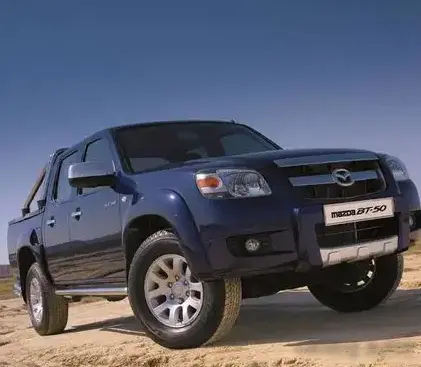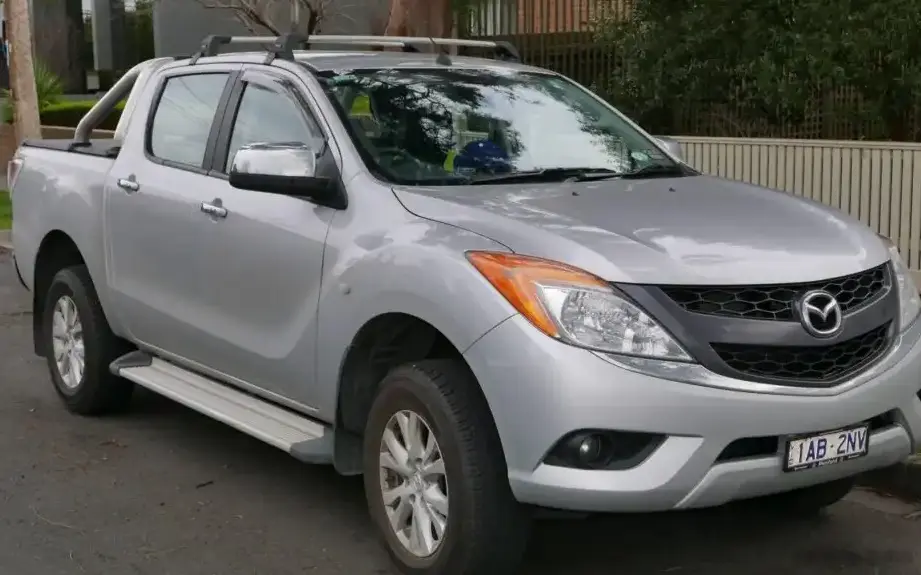
The Mazda BT-50 Dual Cab II, specifically the 3.2-liter (200 horsepower) 4×4 Automatic variant, was a mid-size pickup truck produced from 2011 to 2014. This generation represented a significant collaboration between Mazda and Ford, sharing a platform and many components with the Ford Ranger T6. Positioned as a robust and capable workhorse, the BT-50 aimed to compete with established players like the Toyota Hilux and Nissan Navara, particularly in markets outside of North America where pickup trucks are frequently used as daily drivers. The Dual Cab configuration offered seating for five passengers, making it a practical choice for families and work crews alike. This particular engine and transmission combination represented a balance between power, usability, and affordability within the BT-50 lineup.
Technical Specifications
| Brand | Mazda |
| Model | BT-50 |
| Generation | BT-50 Dual Cab II |
| Type (Engine) | 3.2 (200 Hp) 4×4 Automatic |
| Start of production | 2011 |
| End of production | 2014 |
| Powertrain Architecture | Internal Combustion engine |
| Body type | Pick-up |
| Seats | 5 |
| Doors | 4 |
| Fuel consumption (combined) | 9.2 l/100 km (25.6 US mpg, 30.7 UK mpg, 10.9 km/l) |
| Fuel Type | Diesel |
| Emission standard | Euro 4 |
| Weight-to-power ratio | 10.3 kg/Hp, 97 Hp/tonne |
| Weight-to-torque ratio | 4.4 kg/Nm, 228 Nm/tonne |
| Power | 200 Hp @ 3000 rpm |
| Power per litre | 62.5 Hp/l |
| Torque | 470 Nm @ 1750-2500 rpm (346.65 lb.-ft. @ 1750-2500 rpm) |
| Engine layout | Front, Longitudinal |
| Engine displacement | 3198 cm3 (195.15 cu. in.) |
| Number of cylinders | 5 |
| Engine configuration | Inline |
| Cylinder Bore | 89.9 mm (3.54 in.) |
| Piston Stroke | 100.7 mm (3.96 in.) |
| Compression ratio | 15.5:1 |
| Number of valves per cylinder | 4 |
| Fuel injection system | Diesel Commonrail |
| Engine aspiration | Turbocharger, Intercooler |
| Valvetrain | DOHC |
| Engine oil capacity | 9.75 l (10.3 US qt | 8.58 UK qt) |
| Coolant | 13.3 l (14.05 US qt | 11.7 UK qt) |
| Kerb Weight | 2061 kg (4543.73 lbs.) |
| Max. weight | 3200 kg (7054.79 lbs.) |
| Max load | 1139 kg (2511.07 lbs.) |
| Fuel tank capacity | 80 l (21.13 US gal | 17.6 UK gal) |
| Permitted trailer load with brakes (12%) | 3500 kg (7716.18 lbs.) |
| Permitted trailer load without brakes | 750 kg (1653.47 lbs.) |
| Permitted towbar download | 350 kg (771.62 lbs.) |
| Length | 5373 mm (211.54 in.) |
| Width | 1850 mm (72.83 in.) |
| Height | 1815 mm (71.46 in.) |
| Wheelbase | 3220 mm (126.77 in.) |
| Front track | 1560 mm (61.42 in.) |
| Rear (Back) track | 1560 mm (61.42 in.) |
| Front overhang | 919 mm (36.18 in.) |
| Rear overhang | 1234 mm (48.58 in.) |
| Ride height (ground clearance) | 200 mm (7.87 in.) |
| Minimum turning circle (turning diameter) | 12.4 m (40.68 ft.) |
| Approach angle | 27.6° |
| Departure angle | 27.1° |
| Ramp-over (brakeover) angle | 24.4° |
| Wading depth | 800 mm (31.5 in.) |
| Drivetrain Architecture | All wheel drive (4×4). ICE drives permanently the four wheels. |
| Drive wheel | All wheel drive (4×4) |
| Number of gears and type of gearbox | 6 gears, automatic transmission |
| Front suspension | Double wishbone |
| Rear suspension | Leaf spring |
| Front brakes | Ventilated discs, 302 mm |
| Rear brakes | Drum, 295 mm |
| Assisting systems | ABS (Anti-lock braking system) |
| Steering type | Steering rack and pinion |
| Power steering | Hydraulic Steering |
| Tires size | 255/70 R16 111T |
| Wheel rims size | 7.0J x 16 |
Powertrain & Engine Architecture
The heart of this BT-50 variant is the 3.2-liter Duratorq diesel engine, a five-cylinder inline powerplant. This engine, developed by Ford but adapted for Mazda’s application, utilizes a common-rail direct fuel injection system and a variable geometry turbocharger with an intercooler. The combination of these technologies allows for a broad torque curve and responsive power delivery. The engine’s DOHC (Double Overhead Camshaft) valvetrain, with four valves per cylinder, contributes to its efficiency and power output. The 4×4 system is a part-time four-wheel drive, selectable via a rotary dial, offering 2H (rear-wheel drive), 4H (four-wheel drive high range), and 4L (four-wheel drive low range) modes. The automatic transmission is a six-speed unit, providing smooth shifts and optimized gear ratios for both on-road cruising and off-road capability.
Driving Characteristics
The 3.2-liter engine paired with the six-speed automatic delivers a respectable driving experience. While not exceptionally quick, the BT-50 offers ample torque for hauling and towing. The automatic transmission is well-tuned, providing smooth gear changes and preventing the engine from feeling strained during acceleration. Compared to the five-speed manual transmission available on other BT-50 models, the automatic prioritizes ease of use over outright performance. The automatic’s gear ratios are geared towards maximizing fuel efficiency and providing a comfortable driving experience, rather than aggressive acceleration. The 4×4 system provides excellent traction in challenging conditions, making it suitable for both on-road and off-road use. However, the leaf spring rear suspension, while robust, can result in a somewhat firm ride when unladen.
Equipment & Trim Levels
The BT-50 Dual Cab II 3.2 4×4 Automatic typically came equipped with a reasonable level of standard features. These included air conditioning, power windows, power door locks, a basic audio system with CD player, and ABS brakes. Higher trim levels, often denoted by specific packages, added features such as alloy wheels, a more advanced audio system with Bluetooth connectivity, cruise control, and side steps. Interior upholstery was typically cloth, with options for leather available on higher-spec models. The dashboard layout was functional and straightforward, prioritizing practicality over luxury.
Chassis & Braking
The BT-50’s chassis is a robust ladder-frame construction, providing a solid foundation for its work-oriented purpose. The front suspension utilizes a double wishbone setup, offering a degree of ride comfort and handling precision. The rear suspension employs leaf springs, which are well-suited for carrying heavy loads but can contribute to a firmer ride quality. Braking duties are handled by ventilated discs at the front and drum brakes at the rear. The inclusion of ABS (Anti-lock Braking System) enhances safety by preventing wheel lockup during hard braking. The hydraulic power steering provides a reasonable level of assistance, making the BT-50 relatively easy to maneuver.
Market Reception & Comparison
The Mazda BT-50 Dual Cab II 3.2 4×4 Automatic was generally well-received by automotive critics as a capable and reliable pickup truck. Its fuel economy of around 9.2 l/100 km (25.6 US mpg) was competitive within its class. Compared to the lower-powered 2.5-liter engine options, the 3.2-liter diesel offered a significant performance advantage, particularly when towing or carrying heavy loads. However, it wasn’t as refined or fuel-efficient as some of its competitors, such as the Toyota Hilux. The automatic transmission was praised for its smoothness, but some reviewers noted that it could occasionally feel hesitant during quick acceleration.
Legacy
The Mazda BT-50 Dual Cab II 3.2 4×4 Automatic has proven to be a relatively reliable vehicle in the used car market. The Duratorq diesel engine is known for its durability, provided it has been properly maintained. Common maintenance items include regular oil changes, filter replacements, and inspection of the turbocharger and fuel injection system. While the leaf spring rear suspension can wear over time, it is generally a straightforward and affordable repair. Today, these BT-50s represent a good value for buyers seeking a capable and affordable pickup truck, particularly those who need a vehicle for work or recreational purposes. The collaboration with Ford resulted in a robust platform that continues to be appreciated by owners for its practicality and dependability.