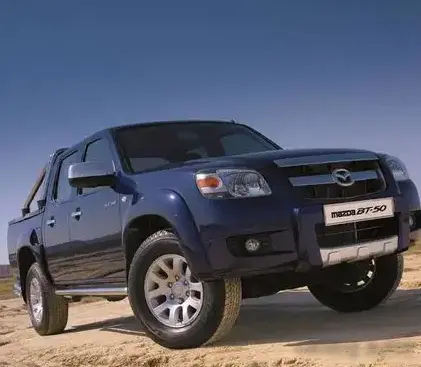
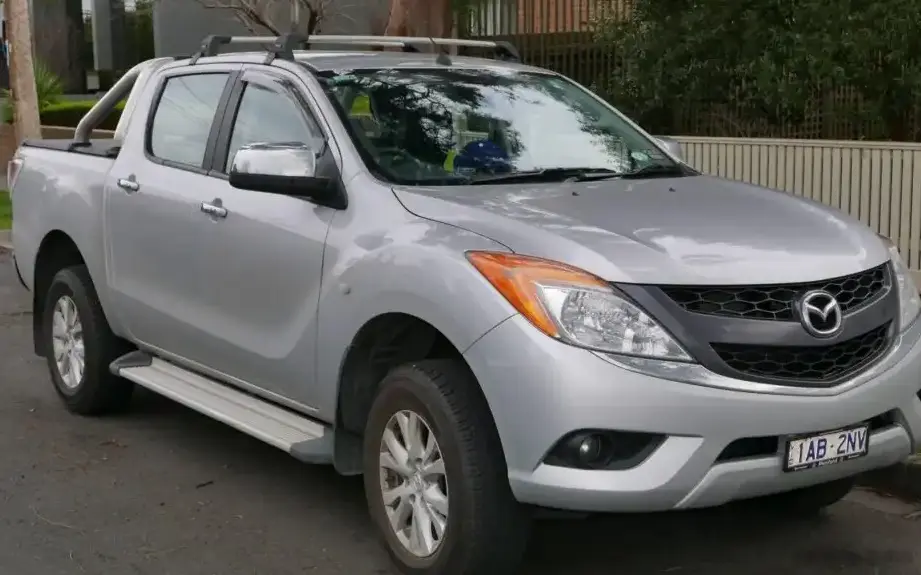
The Mazda BT-50 Dual Cab II, specifically the facelifted version introduced in 2015, represented Mazda’s entry into the highly competitive mid-size pickup truck market. This iteration, produced through 2018, was a collaborative effort with Isuzu, sharing a platform and many components with the Isuzu D-Max. The 3.2-liter, 200 horsepower 4×4 Automatic variant occupied a sweet spot in the lineup, offering a balance of capability, comfort, and features aimed at both commercial and recreational buyers in markets like Australia, South Africa, and parts of South America. This model aimed to provide a more refined experience than some of its more utilitarian competitors, while still maintaining the ruggedness expected of a pickup truck.
Technical Specifications
| Brand | Mazda |
| Model | BT-50 |
| Generation | BT-50 Dual Cab II (facelift 2015) |
| Type (Engine) | 3.2 (200 Hp) 4×4 Automatic |
| Start of production | 2015 |
| End of production | 2018 |
| Powertrain Architecture | Internal Combustion engine |
| Body type | Pick-up |
| Seats | 5 |
| Doors | 4 |
| Fuel consumption (combined) | 9.2 l/100 km (25.6 US mpg, 30.7 UK mpg, 10.9 km/l) |
| Fuel Type | Diesel |
| Emission standard | Euro 4 |
| Weight-to-power ratio | 10.2 kg/Hp, 98.2 Hp/tonne |
| Weight-to-torque ratio | 4.3 kg/Nm, 230.8 Nm/tonne |
| Power | 200 Hp @ 3000 rpm |
| Power per litre | 62.5 Hp/l |
| Torque | 470 Nm @ 1750-2500 rpm (346.65 lb.-ft. @ 1750-2500 rpm) |
| Engine layout | Front, Longitudinal |
| Engine displacement | 3198 cm3 (195.15 cu. in.) |
| Number of cylinders | 5 |
| Engine configuration | Inline |
| Cylinder Bore | 89.9 mm (3.54 in.) |
| Piston Stroke | 100.7 mm (3.96 in.) |
| Compression ratio | 15.5:1 |
| Number of valves per cylinder | 4 |
| Fuel injection system | Diesel Commonrail |
| Engine aspiration | Turbocharger, Intercooler |
| Valvetrain | DOHC |
| Engine oil capacity | 9.75 l (10.3 US qt | 8.58 UK qt) |
| Coolant | 13.3 l (14.05 US qt | 11.7 UK qt) |
| Kerb Weight | 2036 kg (4488.61 lbs.) |
| Max. weight | 3200 kg (7054.79 lbs.) |
| Max load | 1164 kg (2566.18 lbs.) |
| Fuel tank capacity | 80 l (21.13 US gal | 17.6 UK gal) |
| Permitted trailer load with brakes (12%) | 3500 kg (7716.18 lbs.) |
| Permitted trailer load without brakes | 750 kg (1653.47 lbs.) |
| Permitted towbar download | 350 kg (771.62 lbs.) |
| Length | 5373 mm (211.54 in.) |
| Width | 1850 mm (72.83 in.) |
| Height | 1815 mm (71.46 in.) |
| Wheelbase | 3220 mm (126.77 in.) |
| Front track | 1560 mm (61.42 in.) |
| Rear (Back) track | 1560 mm (61.42 in.) |
| Front overhang | 919 mm (36.18 in.) |
| Rear overhang | 1234 mm (48.58 in.) |
| Ride height (ground clearance) | 200-205 mm (7.87 – 8.07 in.) |
| Minimum turning circle (turning diameter) | 12.4 m (40.68 ft.) |
| Approach angle | 27.6° |
| Departure angle | 27.1° |
| Ramp-over (brakeover) angle | 24.4° |
| Wading depth | 800 mm (31.5 in.) |
| Drivetrain Architecture | All wheel drive (4×4). ICE drives permanently the four wheels. |
| Drive wheel | All wheel drive (4×4) |
| Number of gears and type of gearbox | 6 gears, automatic transmission |
| Front suspension | Double wishbone |
| Rear suspension | Leaf spring |
| Front brakes | Ventilated discs, 302 mm |
| Rear brakes | Drum, 295 mm |
| Assisting systems | ABS (Anti-lock braking system) |
| Steering type | Steering rack and pinion |
| Power steering | Hydraulic Steering |
| Tires size | 255/70 R16 111T |
| Wheel rims size | 7.0J x 16 |
Powertrain & Engine Architecture
The heart of the BT-50 3.2 Automatic is the 4JJ1-TC 3.0-liter inline-five cylinder diesel engine. This engine, developed by Isuzu, is a robust and relatively simple design known for its durability. The 3.2-liter displacement was achieved through a slightly larger bore than the 3.0-liter version. It features a common rail direct injection system, delivering fuel at extremely high pressures for efficient combustion. A variable geometry turbocharger (VGT) with an intercooler further enhances performance and reduces turbo lag. The engine utilizes a double overhead camshaft (DOHC) valvetrain with four valves per cylinder, optimizing airflow for increased power and torque. The six-speed automatic transmission, sourced from Isuzu, was chosen for its reliability and ability to handle the engine’s substantial torque output. While not the most technologically advanced automatic on the market, it provided smooth shifts and adequate responsiveness for most driving situations.
Driving Characteristics
The 200 horsepower and 470 Nm (346 lb-ft) of torque delivered by the 3.2-liter engine provided the BT-50 with respectable performance. While not a sports truck, it offered ample power for hauling loads, towing trailers, and navigating challenging terrain. The automatic transmission, while smooth, did slightly diminish the engine’s responsiveness compared to the available manual transmission. The gear ratios were tuned for practicality and fuel efficiency rather than outright acceleration. In real-world driving, the BT-50 felt capable and composed, with a comfortable ride quality, especially when unladen. The 4×4 system, selectable via a rotary dial, allowed for easy switching between two-wheel drive and four-wheel drive modes, including a low-range setting for off-road adventures.
Equipment & Trim Levels
The BT-50 3.2 4×4 Automatic typically came well-equipped, positioning it as a mid-to-upper trim level. Standard features often included air conditioning, power windows and locks, a basic audio system with USB connectivity, and alloy wheels. Higher trim levels added features like a touchscreen infotainment system, satellite navigation, leather upholstery, and a reversing camera. Safety features such as ABS brakes, airbags, and stability control were generally standard across the range. The interior design was functional and durable, prioritizing practicality over luxury. The Dual Cab configuration offered seating for five passengers, with a reasonably spacious rear seat.
Chassis & Braking
The BT-50’s chassis was a robust ladder-frame construction, providing a solid foundation for both on-road and off-road driving. The front suspension utilized a double wishbone setup, while the rear suspension employed leaf springs, a traditional design favored for its load-carrying capacity. The braking system consisted of ventilated discs on the front wheels and drum brakes on the rear. While the drum brakes were adequate for most applications, they were a point of criticism compared to the all-disc setups found on some competitors. Hydraulic power steering provided a comfortable and manageable steering feel.
Market Reception & Comparison
The Mazda BT-50 3.2 4×4 Automatic was generally well-received by automotive critics. It was praised for its robust engine, comfortable ride, and practical features. However, some reviewers noted that the automatic transmission could feel slightly sluggish, and the interior design was somewhat dated compared to newer rivals. Compared to the Ford Ranger, a key competitor, the BT-50 offered a more comfortable ride but lacked the Ranger’s more modern interior and advanced technology. The Toyota Hilux, another major competitor, was often seen as more reliable but less refined than the BT-50. Fuel economy was competitive for its class, averaging around 9.2 l/100km (25.6 mpg).
Legacy
The Mazda BT-50 3.2 4×4 Automatic has proven to be a reliable and durable workhorse. The Isuzu-derived engine is known for its longevity, and the automatic transmission has generally held up well over time. In the used car market, these models remain popular due to their reputation for dependability and affordability. While they may not offer the latest features or the most refined driving experience, they represent a solid value for buyers seeking a capable and practical pickup truck. Regular maintenance, including timely oil changes and filter replacements, is crucial for ensuring the continued reliability of this powertrain.