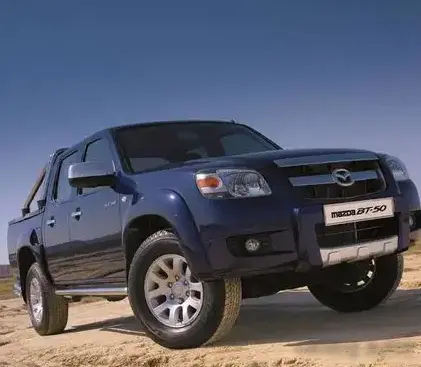
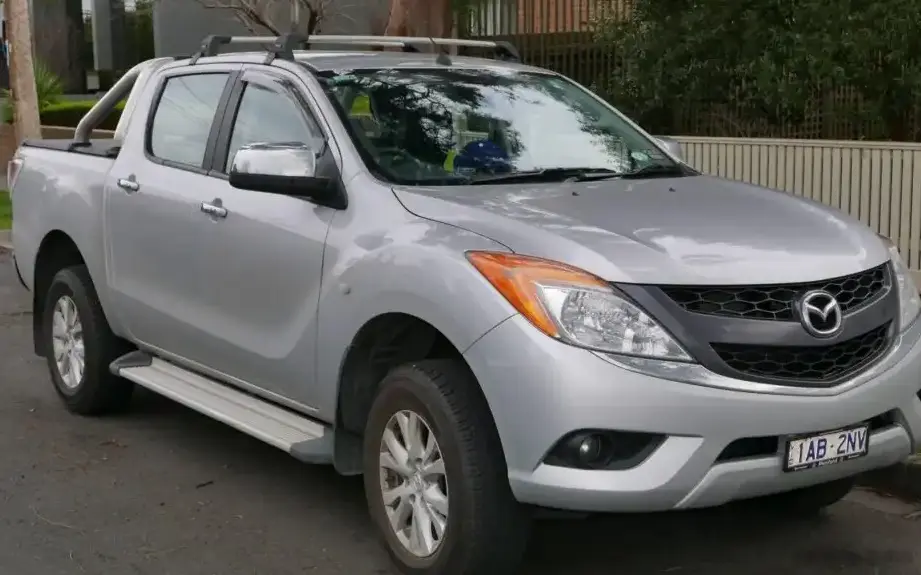
The Mazda BT-50 Dual Cab II, specifically the XTR 3.2 variant produced from 2015 to 2018, represents a significant iteration of Mazda’s mid-size pickup truck. This facelifted model built upon the foundation of the original BT-50 (launched in 2011), which was developed in collaboration with Ford. The BT-50 aimed to provide Mazda with a competitive offering in the global pickup market, particularly in regions like Australia, New Zealand, South Africa, and parts of Europe and Asia. The XTR 3.2, positioned as a mid-to-high trim level, offered a balance of capability, comfort, and features, appealing to both commercial and recreational buyers. It served as a workhorse for many, while also providing a reasonably comfortable and well-equipped vehicle for family use.
Technical Specifications
| Brand | Mazda |
| Model | BT-50 |
| Generation | BT-50 Dual Cab II (facelift 2015) |
| Type (Engine) | XTR 3.2 (200 Hp) |
| Start of production | 2015 |
| End of production | 2018 |
| Powertrain Architecture | Internal Combustion engine |
| Body type | Pick-up |
| Seats | 5 |
| Doors | 4 |
| Fuel consumption (combined) | 8.4 l/100 km (28 US mpg, 33.6 UK mpg, 11.9 km/l) |
| Fuel Type | Diesel |
| Emission standard | Euro 4 |
| Weight-to-power ratio | 9.9 kg/Hp, 100.6 Hp/tonne |
| Weight-to-torque ratio | 4.2 kg/Nm, 236.4 Nm/tonne |
| Power | 200 Hp @ 3000 rpm |
| Power per litre | 62.5 Hp/l |
| Torque | 470 Nm @ 1750-2500 rpm (346.65 lb.-ft. @ 1750-2500 rpm) |
| Engine layout | Front, Longitudinal |
| Engine displacement | 3198 cm3 (195.15 cu. in.) |
| Number of cylinders | 5 |
| Engine configuration | Inline |
| Cylinder Bore | 89.9 mm (3.54 in.) |
| Piston Stroke | 100.7 mm (3.96 in.) |
| Compression ratio | 15.5:1 |
| Number of valves per cylinder | 4 |
| Fuel injection system | Diesel Commonrail |
| Engine aspiration | Turbocharger, Intercooler |
| Valvetrain | DOHC |
| Engine oil capacity | 9.75 l (10.3 US qt | 8.58 UK qt) |
| Coolant capacity | 12.9 l (13.63 US qt | 11.35 UK qt) |
| Kerb Weight | 1988 kg (4382.79 lbs.) |
| Max. weight | 3200 kg (7054.79 lbs.) |
| Max load | 1212 kg (2672 lbs.) |
| Fuel tank capacity | 80 l (21.13 US gal | 17.6 UK gal) |
| Permitted trailer load with brakes (12%) | 3500 kg (7716.18 lbs.) |
| Permitted trailer load without brakes | 750 kg (1653.47 lbs.) |
| Permitted towbar download | 350 kg (771.62 lbs.) |
| Length | 5365 mm (211.22 in.) |
| Width | 1850 mm (72.83 in.) |
| Height | 1821 mm (71.69 in.) |
| Wheelbase | 3220 mm (126.77 in.) |
| Front track | 1560 mm (61.42 in.) |
| Rear track | 1560 mm (61.42 in.) |
| Front overhang | 919 mm (36.18 in.) |
| Rear overhang | 1226 mm (48.27 in.) |
| Ride height (ground clearance) | 205 mm (8.07 in.) |
| Minimum turning circle | 12.4 m (40.68 ft.) |
| Approach angle | 28.2° |
| Departure angle | 26.4° |
| Ramp-over angle | 25.0° |
| Wading depth | 800 mm (31.5 in.) |
| Drivetrain Architecture | Rear wheel drive |
| Number of gears and type of gearbox | 6 gears, manual transmission |
| Front suspension | Double wishbone |
| Rear suspension | Leaf spring |
| Front brakes | Ventilated discs, 302 mm |
| Rear brakes | Drum, 270 mm |
| Assisting systems | ABS (Anti-lock braking system) |
| Steering type | Steering rack and pinion |
| Power steering | Hydraulic Steering |
| Tires size | 265/65 R17 112T |
| Wheel rims size | 8.0J x 17 |
Powertrain & Engine Architecture
The heart of the BT-50 XTR 3.2 is the 3.2-liter inline-five cylinder diesel engine. This engine, known internally as the WL-T, is a robust and relatively simple design. It features a cast iron block and aluminum cylinder head, contributing to its durability. The engine utilizes a common rail direct injection system, delivering fuel at extremely high pressures for efficient combustion. A variable geometry turbocharger (VGT) with an intercooler is employed to boost power and torque across a wide RPM range. The engine’s DOHC (Double Overhead Camshaft) valvetrain, with four valves per cylinder, further enhances its breathing and performance. The XTR 3.2 was exclusively offered with a six-speed manual transmission, providing drivers with full control over gear selection. This transmission was chosen for its durability and suitability for demanding applications like towing and off-road driving.
Driving Characteristics
The BT-50 XTR 3.2, with its 200 horsepower and 470 Nm (346.65 lb-ft) of torque, offered a strong and usable powerband. The engine delivered peak torque from 1750 to 2500 rpm, making it well-suited for hauling heavy loads or navigating challenging terrain. While not a particularly fast vehicle, the BT-50 provided ample power for everyday driving and overtaking maneuvers. The six-speed manual transmission allowed for precise gear changes and helped to keep the engine in its optimal power range. Compared to lower-powered BT-50 variants, the XTR 3.2 offered a noticeable improvement in performance, especially when carrying a load or towing a trailer. However, it didn’t quite match the refinement or outright power of some of its competitors, such as the Holden Colorado or Ford Ranger with higher-output diesel engines.
Equipment & Trim Levels
The XTR trim level of the BT-50 Dual Cab II offered a good level of standard equipment. Typically, it included features such as air conditioning, power windows, power door locks, a basic audio system with USB connectivity, and steel wheels with hubcaps. Higher-spec XTR models could be equipped with alloy wheels, a more advanced audio system with Bluetooth connectivity, and a reversing camera. Interior upholstery was typically cloth, with durable and practical materials used throughout the cabin. Optional extras included a tow bar, a bed liner, and various accessories for off-road adventures.
Chassis & Braking
The BT-50’s chassis was a robust ladder-frame construction, providing a solid foundation for its work-oriented design. The front suspension utilized a double wishbone setup, while the rear suspension employed leaf springs. This combination offered a good balance of ride comfort and load-carrying capacity. The XTR 3.2 was equipped with ventilated disc brakes at the front and drum brakes at the rear. An Anti-lock Braking System (ABS) was standard, enhancing safety during emergency braking situations. The hydraulic power steering provided a reasonable level of assistance, making the BT-50 relatively easy to maneuver.
Market Reception & Comparison
The Mazda BT-50, including the XTR 3.2 variant, was generally well-received in the markets where it was sold. Critics praised its robust construction, capable engine, and practical interior. However, some reviewers noted that the BT-50’s ride quality was not as refined as some of its competitors, and its interior design was somewhat dated. In terms of fuel economy, the BT-50 XTR 3.2 offered a respectable 8.4 l/100 km (28 US mpg), but it wasn’t class-leading. Reliability was generally good, with the 3.2-liter diesel engine proving to be durable and long-lasting.
Legacy
The Mazda BT-50 Dual Cab II XTR 3.2 has established a reputation as a reliable and capable workhorse. On the used car market, these models continue to hold their value reasonably well, particularly those that have been well-maintained. The 3.2-liter diesel engine is known for its longevity, and with regular servicing, it can provide many years of trouble-free operation. While newer pickup trucks offer more advanced technology and features, the BT-50 XTR 3.2 remains a popular choice for buyers seeking a practical and dependable vehicle at an affordable price.