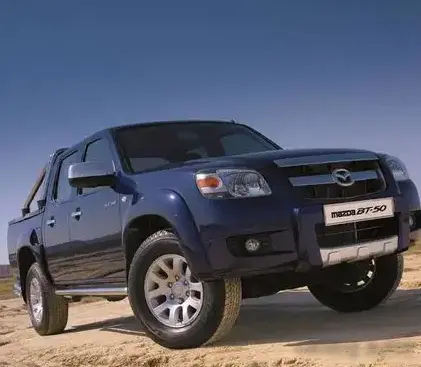
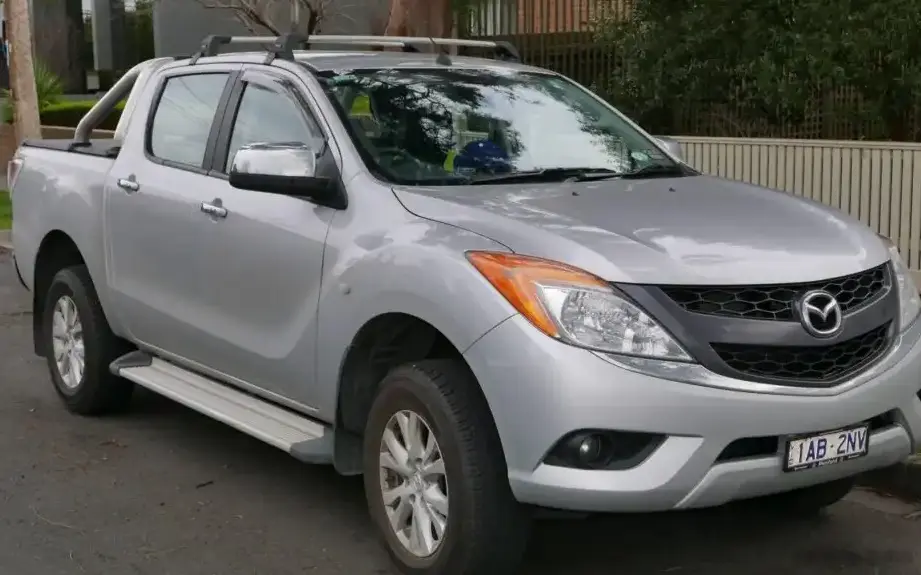
The Mazda BT-50 Freestyle Cab II XTR 3.2 (200 Hp) 4×4, produced between 2011 and 2014, represents a significant iteration of Mazda’s mid-size pickup truck offering. This variant, built in collaboration with Ford (sharing a platform with the Ford Ranger T6), was primarily aimed at the Australian, New Zealand, and broader Asia-Pacific markets, where robust and capable pickups are highly valued. The “Freestyle Cab II” designation refers to the extended cab body style, offering limited rear seating and increased cargo flexibility compared to the standard cab models. The XTR 3.2 trim level positioned itself as a mid-to-high range offering, balancing work-oriented practicality with a degree of comfort and refinement.
Technical Specifications
| Brand | Mazda |
| Model | BT-50 |
| Generation | BT-50 Freestyle Cab II |
| Type (Engine) | XTR 3.2 (200 Hp) 4×4 |
| Start of production | 2011 |
| End of production | 2014 |
| Powertrain Architecture | Internal Combustion engine |
| Body type | Pick-up |
| Seats | 4 |
| Doors | 4 |
| Fuel consumption (combined) | 8.9 l/100 km (26.4 US mpg, 31.7 UK mpg, 11.2 km/l) |
| Fuel Type | Diesel |
| Emission standard | Euro 4 |
| Weight-to-power ratio | 10.2 kg/Hp, 98.2 Hp/tonne |
| Weight-to-torque ratio | 4.3 kg/Nm, 230.7 Nm/tonne |
| Power | 200 Hp @ 3000 rpm |
| Power per litre | 62.5 Hp/l |
| Torque | 470 Nm @ 1750-2500 rpm (346.65 lb.-ft. @ 1750-2500 rpm) |
| Engine layout | Front, Longitudinal |
| Engine displacement | 3198 cm3 (195.15 cu. in.) |
| Number of cylinders | 5 |
| Engine configuration | Inline |
| Cylinder Bore | 89.9 mm (3.54 in.) |
| Piston Stroke | 100.7 mm (3.96 in.) |
| Compression ratio | 15.5:1 |
| Number of valves per cylinder | 4 |
| Fuel injection system | Diesel Commonrail |
| Engine aspiration | Turbocharger, Intercooler |
| Valvetrain | DOHC |
| Engine oil capacity | 9.75 l (10.3 US qt | 8.58 UK qt) |
| Coolant | 12.9 l (13.63 US qt | 11.35 UK qt) |
| Kerb Weight | 2037 kg (4490.82 lbs.) |
| Max. weight | 3200 kg (7054.79 lbs.) |
| Max load | 1163 kg (2563.98 lbs.) |
| Fuel tank capacity | 80 l (21.13 US gal | 17.6 UK gal) |
| Permitted trailer load with brakes (12%) | 3500 kg (7716.18 lbs.) |
| Permitted trailer load without brakes | 750 kg (1653.47 lbs.) |
| Permitted towbar download | 350 kg (771.62 lbs.) |
| Length | 5365 mm (211.22 in.) |
| Width | 1850 mm (72.83 in.) |
| Height | 1810 mm (71.26 in.) |
| Wheelbase | 3220 mm (126.77 in.) |
| Front track | 1560 mm (61.42 in.) |
| Rear (Back) track | 1560 mm (61.42 in.) |
| Front overhang | 919 mm (36.18 in.) |
| Rear overhang | 1226 mm (48.27 in.) |
| Ride height (ground clearance) | 205 mm (8.07 in.) |
| Minimum turning circle (turning diameter) | 12.4 m (40.68 ft.) |
| Approach angle | 28.2° |
| Departure angle | 26.4° |
| Ramp-over (brakeover) angle | 25.0° |
| Wading depth | 800 mm (31.5 in.) |
| Drivetrain Architecture | All wheel drive (4×4). ICE drives permanently the four wheels. |
| Drive wheel | All wheel drive (4×4) |
| Number of gears and type of gearbox | 6 gears, manual transmission |
| Front suspension | Double wishbone |
| Rear suspension | Leaf spring |
| Front brakes | Ventilated discs, 302 mm |
| Rear brakes | Drum, 295 mm |
| Assisting systems | ABS (Anti-lock braking system) |
| Steering type | Steering rack and pinion |
| Power steering | Hydraulic Steering |
| Tires size | 265/65 R17 112T |
| Wheel rims size | 8.0J x 17 |
Powertrain & Engine Architecture
The heart of the BT-50 XTR 3.2 is the 3.2-liter Duratorq inline-five cylinder diesel engine. This engine, developed by Ford but adapted for Mazda’s application, is characterized by its robust construction and strong low-end torque. The engine code is typically associated with Ford’s Puma engine family. It utilizes a common rail direct injection system, delivering fuel at extremely high pressures for efficient combustion. A variable geometry turbocharger (VGT) with an intercooler further enhances performance by increasing air intake and reducing intake air temperature. The engine features a double overhead camshaft (DOHC) valvetrain with four valves per cylinder, optimizing gas flow for improved power output. The 6-speed manual transmission was the standard offering for this trim, providing a balance between fuel efficiency and driver control. The transmission’s gear ratios were tuned to maximize the engine’s torque, making it well-suited for towing and hauling.
Driving Characteristics
The BT-50 XTR 3.2 4×4, with its 200 horsepower and 470 Nm of torque, offered a compelling driving experience. While not a sports truck, it provided ample power for everyday driving, hauling loads, and navigating challenging terrain. The manual transmission allowed for precise control, and the engine’s strong low-end torque meant that frequent downshifting wasn’t necessary, even when carrying a load. Compared to the lower-powered 2.5-liter engine options available in the BT-50 range, the 3.2 offered significantly more performance. It also felt more refined than the base models. While the automatic transmission option was available, the manual was favored by those prioritizing control and fuel economy. The 4×4 system, with its selectable modes, provided excellent traction in off-road conditions.
Equipment & Trim Levels
The XTR trim level placed the BT-50 Freestyle Cab II in a comfortable middle ground. Standard features typically included air conditioning, power windows, power door locks, a basic audio system with CD player, and steel wheels. The interior was functional and durable, with cloth upholstery and hard-wearing plastics. Optional extras could include alloy wheels, a more advanced audio system with Bluetooth connectivity, and a limited-slip differential for improved off-road capability. The Freestyle Cab II offered limited rear seating, best suited for occasional use or carrying smaller passengers. The cargo bed, a defining feature of any pickup truck, was robust and capable of handling substantial loads.
Chassis & Braking
The BT-50’s chassis was designed for durability and load-carrying capacity. The front suspension utilized a double wishbone setup, providing a comfortable ride and good handling characteristics. The rear suspension employed leaf springs, a traditional design choice for pickup trucks that prioritized load-carrying ability. The braking system featured ventilated discs on the front wheels and drum brakes on the rear. Anti-lock Braking System (ABS) was standard, enhancing safety during emergency braking situations. The steering was hydraulic power-assisted, providing a responsive and predictable feel.
Market Reception & Comparison
The Mazda BT-50, and specifically the XTR 3.2 4×4 variant, was generally well-received by automotive critics and consumers alike. It was praised for its robust engine, capable 4×4 system, and practical interior. Fuel economy, at 8.9 l/100 km, was competitive for a vehicle of its size and capability. Compared to the Ford Ranger (with which it shared a platform), the BT-50 often benefited from Mazda’s reputation for build quality and refinement. The 3.2-liter engine offered a significant performance advantage over the lower-powered engine options in the BT-50 lineup, but came at a higher price point. Reliability was generally good, although diesel engines can be susceptible to issues with the fuel injection system and turbocharger if not properly maintained.
Legacy
The BT-50 Freestyle Cab II XTR 3.2 4×4 has proven to be a durable and reliable workhorse in the used car market. Its robust engine and 4×4 system continue to appeal to buyers seeking a capable pickup truck. While newer models offer more advanced technology and features, the BT-50 remains a popular choice for those prioritizing practicality and value. Regular maintenance, including timely oil changes and fuel filter replacements, is crucial for ensuring the longevity of the engine and transmission. The availability of spare parts is generally good, thanks to the shared platform with the Ford Ranger. Overall, the BT-50 XTR 3.2 4×4 represents a solid and dependable pickup truck that continues to hold its own in the used car market.