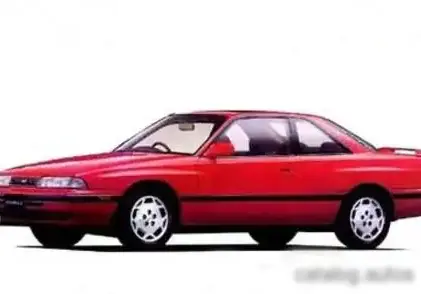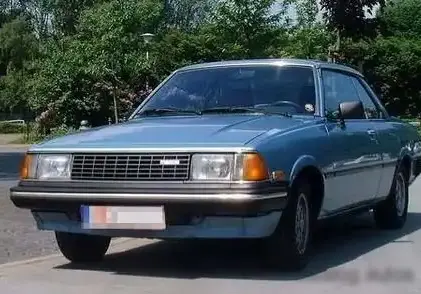
The Mazda Capella 2.0 i, produced between 1997 and 2002, represented a significant offering in Mazda’s mid-size sedan lineup. Positioned as a step up from the base models, the 2.0 i provided a balance of performance and affordability, appealing to buyers seeking a comfortable and reliable family vehicle. This generation of Capella, known internally as the EP, was primarily sold in markets outside of North America, particularly in Asia and Europe, where the demand for well-equipped, mid-sized sedans was strong. It served as a competitor to vehicles like the Toyota Camry, Honda Accord, and Nissan Maxima, offering a distinctive Mazda driving experience.
Technical Specifications
| Brand | Mazda |
| Model | Capella |
| Generation | Capella |
| Type (Engine) | 2.0 i (140 Hp) |
| Start of production | 1997 |
| End of production | 2002 |
| Powertrain Architecture | Internal Combustion engine |
| Body type | Sedan |
| Seats | 5 |
| Doors | 4 |
| Fuel Type | Petrol (Gasoline) |
| Weight-to-power ratio | 8.6 kg/Hp, 115.7 Hp/tonne |
| Weight-to-torque ratio | 6.5 kg/Nm, 153.7 Nm/tonne |
| Power | 140 Hp @ 6500 rpm |
| Power per litre | 70.2 Hp/l |
| Torque | 186 Nm @ 4000 rpm (137.19 lb.-ft. @ 4000 rpm) |
| Engine layout | Front, Transverse |
| Engine displacement | 1995 cm3 (121.74 cu. in.) |
| Number of cylinders | 4 |
| Engine configuration | Inline |
| Cylinder Bore | 84 mm (3.31 in.) |
| Piston Stroke | 90 mm (3.54 in.) |
| Compression ratio | 9.7:1 |
| Number of valves per cylinder | 4 |
| Fuel injection system | Multi-port manifold injection |
| Engine aspiration | Naturally aspirated engine |
| Valvetrain | DOHC |
| Kerb Weight | 1210 kg (2667.59 lbs.) |
| Fuel tank capacity | 60 l (15.85 US gal | 13.2 UK gal) |
| Length | 4575 mm (180.12 in.) |
| Width | 1695 mm (66.73 in.) |
| Height | 1440 mm (56.69 in.) |
| Wheelbase | 2610 mm (102.76 in.) |
| Front track | 1475 mm (58.07 in.) |
| Rear (Back) track | 1480 mm (58.27 in.) |
| Minimum turning circle | 10 m (32.81 ft.) |
| Drivetrain | Front wheel drive |
| Front brakes | Ventilated discs |
| Rear brakes | Drum |
| Tires size | 175/70 R14 |
| Wheel rims size | 5.5J x 14 ET 45 |
Powertrain & Engine Architecture
The heart of the Capella 2.0 i was the Mazda F2 engine, a 1.995-liter inline-four cylinder powerplant. This engine utilized a double overhead camshaft (DOHC) valvetrain with four valves per cylinder, contributing to its respectable power output for its displacement. The F2 engine employed multi-port fuel injection, a common technology in the late 1990s, ensuring efficient fuel delivery and smooth operation. The engine’s 9.7:1 compression ratio was a compromise between performance and the ability to run on readily available fuel grades. The engine was transversely mounted in the front of the vehicle, driving the front wheels. While a five-speed manual transmission was available on some Capella models, the 2.0 i was frequently paired with a four-speed automatic transmission. This automatic, while providing convenience, was not known for its particularly sporty shift characteristics, prioritizing smooth transitions over aggressive downshifts.
Driving Characteristics
The 140 horsepower and 186 Nm (137 lb-ft) of torque produced by the 2.0 i engine provided adequate, though not exhilarating, performance. Acceleration from 0 to 60 mph was typically in the 10-11 second range. The four-speed automatic transmission, while smooth, did contribute to a feeling of the engine being slightly overworked during hard acceleration. The gear ratios were geared towards fuel efficiency and comfortable cruising rather than outright speed. Compared to the more powerful V6 options available in some markets, or even the later turbocharged versions, the 2.0 i felt noticeably less responsive. However, for everyday driving and commuting, the engine provided sufficient power. The front-wheel-drive configuration offered predictable handling, although it lacked the dynamic finesse of rear-wheel-drive alternatives.
Equipment & Trim Levels
The Capella 2.0 i typically came equipped with a reasonable level of standard features. These generally included power windows and locks, air conditioning, and a basic audio system. Higher trim levels, often denoted by suffixes like “S” or “E”, added features such as alloy wheels, upgraded interior upholstery (often cloth or a combination of cloth and vinyl), a more sophisticated audio system, and sometimes even features like a sunroof. The interior design was functional and relatively spacious, offering comfortable seating for five adults. Safety features were typical for the era, including dual front airbags and anti-lock brakes (ABS) on some models.
Chassis & Braking
The Capella 2.0 i utilized a MacPherson strut front suspension and a multi-link rear suspension, a common configuration for front-wheel-drive vehicles of this era. This setup provided a comfortable ride quality, absorbing bumps and imperfections in the road reasonably well. The front brakes were ventilated discs, providing adequate stopping power, while the rear brakes were drums, a cost-saving measure common in this class of vehicle. Stabilizer bars were fitted to both the front and rear axles to reduce body roll during cornering. The 175/70 R14 tires provided a good balance of grip and ride comfort.
Market Reception & Comparison
The Mazda Capella 2.0 i was generally well-received by automotive critics as a practical and reliable family sedan. It was praised for its comfortable ride, spacious interior, and reasonable fuel economy. However, some critics noted that the engine lacked the refinement and power of some of its competitors. Compared to the manual transmission versions, the automatic suffered from a slight performance penalty and reduced fuel efficiency. In terms of reliability, the F2 engine proved to be a durable unit, with relatively few major issues reported. The Capella 2.0 i offered a compelling value proposition, providing a good level of equipment and features for its price.
Legacy
Today, the Mazda Capella 2.0 i is becoming increasingly sought after by enthusiasts and collectors, particularly those interested in Japanese domestic market (JDM) vehicles. The F2 engine, while not a high-performance unit, is known for its reliability and relatively simple maintenance requirements. Parts availability is generally good, although some specific trim pieces may be difficult to find. Well-maintained examples of the Capella 2.0 i can still provide years of reliable service, offering a comfortable and enjoyable driving experience. Its status as a relatively affordable and well-built mid-size sedan has cemented its place as a desirable classic in certain markets.