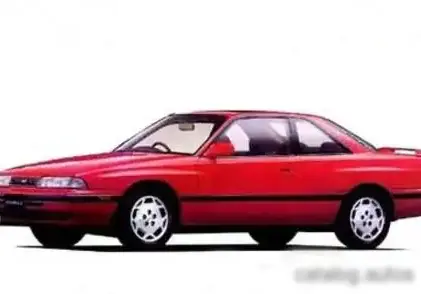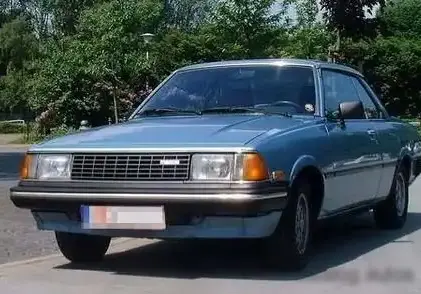
The Mazda Capella 2.0i, produced between 1989 and 1994, was a key offering in Mazda’s lineup during that period. Part of the broader Capella generation (known as the 626 in North America), this variant – specifically the 2.0-liter, 145 horsepower model – aimed to provide a balance of performance and practicality for the mid-size sedan market. It was positioned as a step up from the base models, offering more power and refinement while remaining accessible to a wider range of buyers. The Capella served as a key competitor to vehicles like the Toyota Camry, Honda Accord, and Nissan Sentra, offering a distinctly Japanese approach to design and engineering.
Technical Specifications
| Brand | Mazda |
| Model | Capella |
| Generation | Capella |
| Type (Engine) | 2.0i (145 Hp) |
| Start of production | 1989 |
| End of production | 1994 |
| Powertrain Architecture | Internal Combustion engine |
| Body type | Sedan |
| Seats | 5 |
| Doors | 4 |
| Fuel Type | Petrol (Gasoline) |
| Power | 145 Hp @ 6500 rpm |
| Power per litre | 72.5 Hp/l |
| Torque | 184 Nm @ 5000 rpm |
| Torque (lb-ft) | 135.71 lb.-ft. @ 5000 rpm |
| Engine layout | Front, Transverse |
| Engine displacement | 1999 cm3 |
| Engine displacement (cu. in.) | 121.99 cu. in. |
| Number of cylinders | 4 |
| Engine configuration | Inline |
| Cylinder Bore | 87.5 mm |
| Cylinder Bore (in.) | 3.44 in. |
| Piston Stroke | 83.1 mm |
| Piston Stroke (in.) | 3.27 in. |
| Compression ratio | 10:1 |
| Number of valves per cylinder | 4 |
| Fuel injection system | Multi-port manifold injection |
| Engine aspiration | Naturally aspirated engine |
| Valvetrain | DOHC |
| Fuel tank capacity | 60 l |
| Fuel tank capacity (US gal) | 15.85 US gal |
| Fuel tank capacity (UK gal) | 13.2 UK gal |
| Length | 4515 mm |
| Length (in.) | 177.76 in. |
| Width | 1690 mm |
| Width (in.) | 66.54 in. |
| Height | 1395 mm |
| Height (in.) | 54.92 in. |
| Wheelbase | 2575 mm |
| Wheelbase (in.) | 101.38 in. |
| Front track | 1460 mm |
| Front track (in.) | 57.48 in. |
| Rear track | 1455 mm |
| Rear track (in.) | 57.28 in. |
| Drivetrain Architecture | The Internal combustion engine (ICE) drives the front wheels of the vehicle. |
| Drive wheel | Front wheel drive |
| Number of gears | 5 |
| Type of gearbox | Manual transmission |
| Front brakes | Ventilated discs |
| Rear brakes | Drum |
| Tires size | 165/80 R13 |
| Wheel rims size | 4.5J x 13 |
Powertrain & Engine Architecture
The heart of the Capella 2.0i was the F2 engine, a 1999cc inline-four cylinder powerplant. This engine utilized a double overhead camshaft (DOHC) valvetrain, operating 16 valves (four per cylinder) to optimize airflow and enhance performance. The engine employed multi-port fuel injection, a relatively advanced system for its time, delivering fuel directly to each intake port for precise control and improved efficiency. The 10:1 compression ratio was a standard figure for naturally aspirated engines of this era, balancing power output with fuel economy and reliability. The F2 engine was known for its relatively smooth operation and decent power delivery, although it wasn’t considered a particularly high-performance unit. The five-speed manual transmission was the standard offering, providing drivers with full control over the engine’s powerband. This transmission was a conventional design, prioritizing durability and ease of maintenance over complex features.
Driving Characteristics
The 145 horsepower and 184 Nm (135.71 lb-ft) of torque provided by the 2.0i engine translated to adequate, but not exhilarating, performance. Acceleration was respectable for everyday driving, with the Capella capable of reaching highway speeds without feeling strained. The five-speed manual transmission allowed drivers to keep the engine in its optimal power range, maximizing acceleration and responsiveness. Compared to the base engine options, the 2.0i offered a noticeable improvement in both acceleration and cruising ability. However, it didn’t possess the sporty character of some of its competitors, focusing more on comfortable and reliable transportation. The gear ratios were fairly standard for the time, prioritizing fuel efficiency alongside performance. The engine felt most responsive in the mid-range, making it well-suited for typical highway passing maneuvers. While not a sports car, the 2.0i provided a pleasant and predictable driving experience.
Equipment & Trim Levels
The Capella 2.0i typically came equipped with a reasonable level of standard features. These generally included power steering, a basic audio system, cloth upholstery, and manual windows and locks. Air conditioning was often an optional extra, as were features like power windows and upgraded audio systems. Interior trim levels varied depending on the specific market and optional packages selected. The dashboard layout was functional and straightforward, prioritizing ease of use over stylistic flair. Higher trim levels might have included features like a sunroof, upgraded seat fabrics, and alloy wheels. The overall interior design was typical of Japanese cars of the era – practical, durable, and focused on functionality rather than luxury.
Chassis & Braking
The Capella 2.0i utilized a front-engine, front-wheel-drive layout. The suspension consisted of MacPherson struts at the front and a semi-independent torsion beam setup at the rear. This configuration provided a comfortable ride quality, although it wasn’t particularly sporty in handling. The front brakes were ventilated discs, offering good stopping power, while the rear brakes were drum brakes, a cost-saving measure common in this class of vehicle. Tire size was typically 165/80 R13, mounted on 4.5J x 13 inch steel wheels. Stabilizer bars were included, contributing to reduced body roll during cornering. The suspension was tuned for comfort, absorbing bumps and irregularities in the road surface effectively. The braking system, while adequate, lacked the sophistication of more modern systems.
Market Reception & Comparison
The Mazda Capella 2.0i was generally well-received by automotive critics as a practical and reliable family sedan. It offered a good balance of features and performance for its price point. Compared to other trims in the Capella lineup, the 2.0i represented a significant step up in terms of power and driving enjoyment. However, some reviewers noted that it lacked the refinement and sophistication of some of its European and Japanese competitors. Fuel economy was considered average for the class, and reliability was generally good, although maintenance costs could be moderate. In North America, where it was sold as the Mazda 626, it faced stiff competition from established players like the Honda Accord and Toyota Camry.
Legacy
The Mazda Capella 2.0i, and the broader Capella generation, established Mazda as a credible competitor in the mid-size sedan segment. The F2 engine proved to be a durable and reliable powerplant, and many examples are still on the road today. In the used car market, the 2.0i variant is often sought after for its combination of performance and affordability. While not a particularly collectible vehicle, it represents a well-built and practical car from a bygone era, offering a glimpse into the automotive landscape of the late 1980s and early 1990s. Parts availability is generally good, making it a relatively easy vehicle to maintain and repair. The Capella 2.0i remains a testament to Mazda’s commitment to building reliable and affordable transportation.