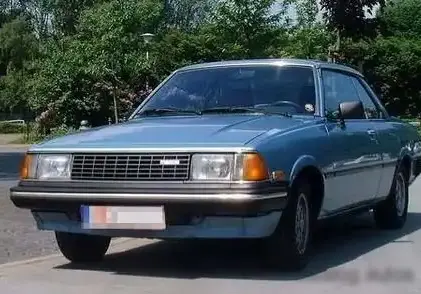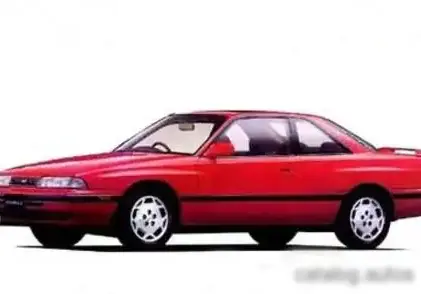
The Mazda Capella Coupe 1.8, produced between 1989 and 1994, represented a stylish and accessible entry point into Mazda’s coupe range. Positioned within the second generation (CD) Capella lineup, this variant offered a balance between affordability, reasonable performance, and Mazda’s reputation for reliability. The Capella, known as the 626 in North America, was a significant model for Mazda, aiming to compete with established Japanese and European rivals in the mid-size segment. The Coupe body style, a two-door derivative, added a sporty dimension to the practical Capella platform, appealing to buyers seeking a more individualistic vehicle. This 1.8-liter version served as the base engine option for the coupe, offering a more economical alternative to the higher-performance variants.
Technical Specifications
| Brand | Mazda |
| Model | Capella |
| Generation | Capella Coupe |
| Type (Engine) | 1.8 (115 Hp) |
| Start of production | 1989 |
| End of production | 1994 |
| Powertrain Architecture | Internal Combustion engine |
| Body type | Coupe |
| Seats | 5 |
| Doors | 2 |
| Fuel Type | Petrol (Gasoline) |
| Weight-to-power ratio | 10.1 kg/Hp, 99.1 Hp/tonne |
| Weight-to-torque ratio | 7.2 kg/Nm, 138.8 Nm/tonne |
| Power | 115 Hp @ 6000 rpm |
| Power per litre | 62.5 Hp/l |
| Torque | 161 Nm @ 4000 rpm (118.75 lb.-ft. @ 4000 rpm) |
| Engine layout | Front, Transverse |
| Engine displacement | 1840 cm3 (112.28 cu. in.) |
| Number of cylinders | 4 |
| Engine configuration | Inline |
| Cylinder Bore | 83 mm (3.27 in.) |
| Piston Stroke | 85 mm (3.35 in.) |
| Compression ratio | 9.7:1 |
| Number of valves per cylinder | 4 |
| Fuel injection system | Multi-port manifold injection |
| Engine aspiration | Naturally aspirated engine |
| Valvetrain | DOHC |
| Kerb Weight | 1160 kg (2557.36 lbs.) |
| Fuel tank capacity | 60 l (15.85 US gal | 13.2 UK gal) |
| Length | 4450 mm (175.2 in.) |
| Width | 1690 mm (66.54 in.) |
| Height | 1360 mm (53.54 in.) |
| Wheelbase | 2515 mm (99.02 in.) |
| Minimum turning circle | 11 m (36.09 ft.) |
| Drivetrain Architecture | The Internal combustion engine (ICE) drives the front wheels of the vehicle. |
| Drive wheel | Front wheel drive |
| Front brakes | Ventilated discs |
| Rear brakes | Drum |
| Tires size | 195/60 R15 86 H |
| Wheel rims size | 6J x 15 ET 50 |
Powertrain & Engine Architecture
The heart of the Capella Coupe 1.8 was the Mazda F8 engine, an inline four-cylinder unit displacing 1840cc (1.8 liters). This engine utilized a double overhead camshaft (DOHC) valvetrain, operating four valves per cylinder, which contributed to its relatively good breathing and power output for its displacement. Fuel delivery was managed by a multi-port fuel injection system, providing precise fuel metering for improved efficiency and reduced emissions. The engine featured a compression ratio of 9.7:1. The F8 engine was known for its durability and relatively simple design, making it easier to maintain. The engine was transversely mounted in the front of the vehicle, driving the front wheels. The transmission paired with this engine was typically a four-speed automatic, although a five-speed manual was also available. The automatic transmission was chosen by many buyers for its convenience, particularly in urban driving conditions.
Driving Characteristics
The 1.8-liter engine, producing 115 horsepower, provided adequate, but not exhilarating, performance in the Capella Coupe. Acceleration was respectable for everyday driving, but it wasn’t designed for rapid overtaking or sporty driving. The automatic transmission, while smooth, did contribute to some power loss compared to the manual version. Gear ratios were tuned for fuel economy and comfortable cruising rather than outright performance. The car felt relatively light and nimble, thanks to its front-wheel-drive layout and relatively low weight (1160 kg). Compared to the higher-spec Capella Coupes equipped with larger engines (such as the 2.0-liter), the 1.8 felt noticeably less powerful, especially when fully loaded with passengers and luggage. However, the 1.8 offered a more forgiving and accessible driving experience for less experienced drivers.
Equipment & Trim Levels
The 1.8-liter Capella Coupe typically represented the entry-level trim. Standard equipment generally included power steering, central locking, electric windows, and a basic audio system. Interior upholstery was usually cloth, with a relatively simple dashboard layout. Optional extras available for this trim level included air conditioning, alloy wheels, a sunroof, and upgraded audio systems. Higher trim levels, such as the V6 models, offered more luxurious features like leather upholstery, wood trim, and more advanced audio systems. The base 1.8 trim focused on providing essential features at an affordable price point.
Chassis & Braking
The Capella Coupe utilized a MacPherson strut front suspension and a torsion beam rear suspension. This setup provided a good balance between ride comfort and handling. The front brakes were ventilated discs, offering good stopping power, while the rear brakes were drum brakes, a cost-saving measure common in this class of vehicle. The steering was rack-and-pinion, providing precise and responsive steering feel. The 195/60 R15 tires offered adequate grip for everyday driving conditions. Stabilizer bars were fitted to both the front and rear axles to reduce body roll during cornering.
Market Reception & Comparison
The Mazda Capella Coupe 1.8 was generally well-received by critics as a stylish and practical coupe. It was praised for its comfortable ride, reliable engine, and attractive design. However, some critics noted that the 1.8-liter engine lacked the power to fully exploit the coupe’s sporty styling. Compared to other coupes in its class, such as the Toyota Celica or Honda Prelude, the Capella Coupe 1.8 offered a more affordable price point, but with slightly less performance. Fuel economy was considered good for its time, averaging around 28-32 mpg in mixed driving conditions. The 1.8L automatic was often seen as a sensible choice for buyers prioritizing fuel efficiency and ease of use over outright performance.
Legacy
The Mazda Capella Coupe 1.8, while not the most powerful or technologically advanced version of the Capella, has proven to be a relatively reliable and durable vehicle. The F8 engine is known for its longevity, and many examples are still on the road today. In the used car market, these coupes are often sought after by enthusiasts looking for a classic Japanese coupe that is relatively affordable to maintain. Parts availability is generally good, and the simple engine design makes it relatively easy to work on. The Capella Coupe 1.8 represents a significant piece of Mazda’s history, showcasing the company’s commitment to building stylish, reliable, and accessible vehicles.