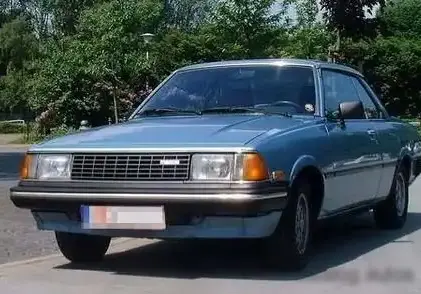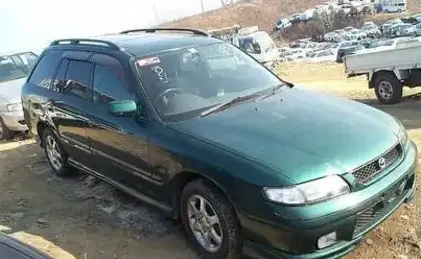
The Mazda Capella Wagon 1.8i (115 hp) was a practical and popular station wagon produced by Mazda between 1988 and 1997. Part of the broader Capella range, which included sedan and coupe body styles, the wagon variant offered increased cargo capacity and versatility, appealing to families and those requiring a larger vehicle. This specific 1.8-liter engine and five-speed manual transmission configuration represented a mid-range offering within the Capella Wagon lineup, positioned between the base models and the more powerful, often luxury-oriented, trims. The Capella, known as the 626 in North American markets, was a key model for Mazda, demonstrating their commitment to building reliable and well-equipped vehicles for the global market.
Technical Specifications
| Brand | Mazda |
| Model | Capella |
| Generation | Capella Wagon |
| Type (Engine) | 1.8i (115 Hp) |
| Start of production | 1988 |
| End of production | 1997 |
| Powertrain Architecture | Internal Combustion engine |
| Body type | Station wagon (estate) |
| Seats | 5 |
| Doors | 5 |
| Fuel Type | Petrol (Gasoline) |
| Weight-to-power ratio | 10.8 kg/Hp, 92.7 Hp/tonne |
| Weight-to-torque ratio | 7.7 kg/Nm, 129.8 Nm/tonne |
| Power | 115 Hp @ 6000 rpm |
| Power per litre | 62.5 Hp/l |
| Torque | 161 Nm @ 4000 rpm (118.75 lb.-ft. @ 4000 rpm) |
| Engine layout | Front, Transverse |
| Engine displacement | 1840 cm3 (112.28 cu. in.) |
| Number of cylinders | 4 |
| Engine configuration | Inline |
| Cylinder Bore | 83 mm (3.27 in.) |
| Piston Stroke | 85 mm (3.35 in.) |
| Compression ratio | 9.7:1 |
| Number of valves per cylinder | 4 |
| Fuel injection system | Multi-port manifold injection |
| Engine aspiration | Naturally aspirated engine |
| Valvetrain | DOHC |
| Kerb Weight | 1240 kg (2733.73 lbs.) |
| Fuel tank capacity | 60 l (15.85 US gal | 13.2 UK gal) |
| Length | 4590 mm (180.71 in.) |
| Width | 1690 mm (66.54 in.) |
| Height | 1430 mm (56.3 in.) |
| Wheelbase | 2575 mm (101.38 in.) |
| Front track | 1455 mm (57.28 in.) |
| Rear (Back) track | 1465 mm (57.68 in.) |
| Minimum turning circle | 10 m (32.81 ft.) |
| Drivetrain Architecture | The Internal combustion engine (ICE) drives the front wheels of the vehicle. |
| Drive wheel | Front wheel drive |
| Number of gears and type of gearbox | 5 gears, manual transmission |
| Front brakes | Ventilated discs |
| Rear brakes | Drum |
| Tires size | 185/70 R14 88 S |
| Wheel rims size | 5.5J x 14 ET 42 |
Powertrain & Engine Architecture
The heart of the Capella Wagon 1.8i was the Mazda F8 engine, an inline four-cylinder gasoline engine displacing 1840cc. This engine utilized a double overhead camshaft (DOHC) valvetrain, operating four valves per cylinder, which contributed to its relatively good power output for its displacement. The F8 featured multi-port fuel injection, a significant advancement over earlier carburetor systems, improving fuel efficiency and throttle response. The 9.7:1 compression ratio was a compromise between performance and the fuel quality available in various markets. The five-speed manual transmission provided a good balance between fuel economy and driver control. Gear ratios were fairly conventional for the time, prioritizing acceleration in the lower gears and comfortable cruising at highway speeds. The engine code variations existed depending on the market, but the core architecture remained consistent.
Driving Characteristics
The 1.8-liter engine in the Capella Wagon provided adequate, though not exhilarating, performance. With 115 horsepower, acceleration was respectable for everyday driving, but it wasn’t designed for rapid overtaking or sporty driving. The five-speed manual transmission allowed drivers to keep the engine in its optimal power band, improving responsiveness. Compared to the larger 2.0-liter engines offered in other Capella Wagon trims, the 1.8i felt less powerful, particularly when fully loaded with passengers and cargo. However, the lighter engine weight contributed to slightly better handling and fuel economy. The manual transmission offered a more engaging driving experience than the optional automatic transmission, providing greater control over gear selection and engine braking.
Equipment & Trim Levels
The 1.8i trim level of the Capella Wagon typically included features such as power steering, central locking, and electric windows. Interior upholstery was usually cloth, with a relatively simple dashboard layout. Optional extras included air conditioning, a sunroof, and upgraded audio systems. The level of equipment varied depending on the specific market and package selected. Generally, the 1.8i was considered a well-equipped, mid-range model, offering a good balance of features and affordability. Higher trim levels often featured leather upholstery, woodgrain interior trim, and more advanced audio systems.
Chassis & Braking
The Capella Wagon utilized a front-wheel-drive chassis with independent suspension at the front and a semi-independent torsion beam suspension at the rear. The front suspension featured MacPherson struts, while the rear torsion beam provided a comfortable ride and adequate handling. Braking was accomplished via ventilated discs at the front and drum brakes at the rear. The braking system was adequate for normal driving conditions, but lacked the stopping power of more advanced systems found on higher-end vehicles. Stabilizer bars were typically fitted to both the front and rear axles to reduce body roll during cornering.
Market Reception & Comparison
The Mazda Capella Wagon 1.8i was generally well-received by automotive critics as a practical and reliable family vehicle. It was praised for its spacious interior, comfortable ride, and fuel efficiency. However, some critics noted that the 1.8-liter engine lacked the power of larger engines offered in competing models. Compared to other station wagons in its class, such as the Toyota Corolla Wagon and the Nissan Sunny Wagon, the Capella Wagon offered a more modern design and a slightly more engaging driving experience. Fuel economy was competitive, typically achieving around 28-32 mpg in mixed driving conditions. Reliability was generally good, with the F8 engine proving to be a durable and long-lasting unit.
Legacy
The Mazda Capella Wagon, and specifically the 1.8i variant, has developed a reputation for reliability and affordability in the used car market. The F8 engine is known for its durability, and with proper maintenance, can provide many years of service. Parts availability is generally good, although some specific trim pieces may be difficult to find. Today, these wagons are often sought after by enthusiasts looking for a practical and affordable classic car. While not a performance icon, the Capella Wagon 1.8i represents a solid and dependable vehicle from a period when Mazda was establishing itself as a major player in the global automotive market. Its blend of practicality, reliability, and reasonable running costs continues to make it a viable option for those seeking a classic station wagon.