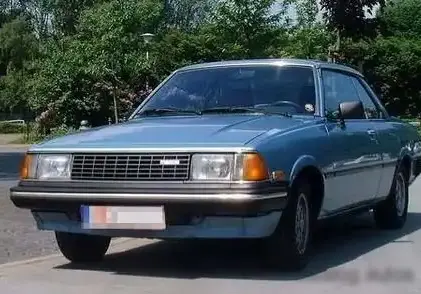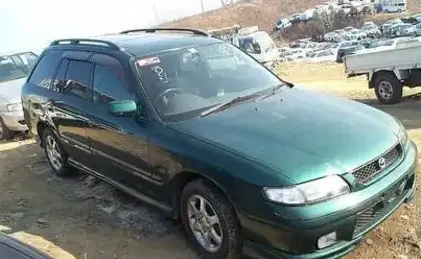
The Mazda Capella Wagon 1.8i (97 hp) was a variant of the Capella Wagon, produced between 1988 and 1997. Positioned as an entry-level to mid-range offering within the broader Capella Wagon lineup, it catered to buyers seeking a practical and economical family vehicle. The Capella, known as the 626 in North America, represented Mazda’s offering in the competitive mid-size segment. The wagon body style, popular in Europe and Japan, provided increased cargo capacity and versatility compared to the sedan version. This particular 1.8-liter engine and five-speed manual transmission combination aimed to balance affordability with reasonable performance.
Technical Specifications
| Brand | Mazda |
| Model | Capella |
| Generation | Capella Wagon |
| Type (Engine) | 1.8i (97 Hp) |
| Start of production | 1988 |
| End of production | 1997 |
| Powertrain Architecture | Internal Combustion engine |
| Body type | Station wagon (estate) |
| Seats | 5 |
| Doors | 5 |
| Fuel Type | Petrol (Gasoline) |
| Weight-to-power ratio | 12.8 kg/Hp, 78.2 Hp/tonne |
| Power | 97 Hp |
| Engine aspiration | Naturally aspirated engine |
| Kerb Weight | 1240 kg (2733.73 lbs.) |
| Fuel tank capacity | 60 l (15.85 US gal | 13.2 UK gal) |
| Length | 4590 mm (180.71 in.) |
| Width | 1690 mm (66.54 in.) |
| Height | 1430 mm (56.3 in.) |
| Wheelbase | 2575 mm (101.38 in.) |
| Front track | 1455 mm (57.28 in.) |
| Rear (Back) track | 1465 mm (57.68 in.) |
| Minimum turning circle | 10 m (32.81 ft.) |
| Drivetrain Architecture | Front wheel drive, Internal Combustion Engine |
| Number of gears and type of gearbox | 5 gears, manual transmission |
| Front brakes | Ventilated discs |
| Rear brakes | Drum |
| Tires size | 185/70 R14 |
| Wheel rims size | 5.5J x 14 |
Powertrain & Engine Architecture
The Capella Wagon 1.8i was powered by Mazda’s FE engine family. Specifically, it utilized a 1.8-liter (1839cc) naturally aspirated inline-four cylinder engine. This engine, typically designated as the FE-DE, featured a single overhead camshaft (SOHC) valvetrain with two valves per cylinder. Fuel delivery was managed by a multi-point fuel injection system, contributing to improved fuel efficiency and smoother operation compared to earlier carbureted designs. The engine produced 97 horsepower and approximately 138 Nm (102 lb-ft) of torque. The five-speed manual transmission was a standard feature, offering a relatively direct driving experience. The transmission’s gear ratios were tuned for a balance of acceleration and fuel economy, prioritizing everyday usability over outright performance.
Driving Characteristics
The 1.8-liter engine, paired with the five-speed manual transmission, provided adequate, though not exhilarating, performance. Acceleration was modest, with a 0-60 mph time estimated to be around 11-12 seconds. The engine felt most comfortable in the mid-range, offering sufficient power for highway cruising and overtaking maneuvers. The manual transmission allowed for greater driver control and engagement compared to the optional automatic transmission available on other Capella Wagon variants. The gear ratios were spaced to keep the engine within its optimal power band during typical driving conditions. Compared to the more powerful 2.0-liter engines offered in the Capella Wagon range, the 1.8i felt less responsive, particularly when fully loaded with passengers and cargo. However, this trade-off was offset by improved fuel economy and a lower purchase price.
Equipment & Trim Levels
The 1.8i trim level generally represented the base model of the Capella Wagon. Standard equipment typically included cloth upholstery, a basic stereo system, power steering, and manual windows and door locks. Air conditioning was often an optional extra. Interior plastics were durable but not particularly luxurious. The dashboard layout was functional and straightforward, prioritizing ease of use over aesthetic appeal. Optional extras could include alloy wheels, a sunroof, and upgraded audio systems. The overall interior ambiance was geared towards practicality and affordability.
Chassis & Braking
The Capella Wagon featured a MacPherson strut front suspension and a semi-independent torsion beam rear suspension. This setup provided a comfortable ride quality, suitable for everyday driving. The front brakes were ventilated discs, offering good stopping power, while the rear brakes were drum brakes, a cost-saving measure common in this class of vehicle. The steering was relatively light and easy to use, making it well-suited for urban driving. Stabilizer bars were included on both axles to reduce body roll during cornering. The suspension tuning prioritized comfort over sporty handling, resulting in a predictable and stable driving experience.
Market Reception & Comparison
The Mazda Capella Wagon 1.8i was generally well-received as a practical and reliable family vehicle. Critics praised its spacious interior, good fuel economy, and reasonable price. However, some reviewers noted that the 1.8-liter engine lacked the power and refinement of the larger engines available in the Capella Wagon range. Compared to competitors such as the Toyota Corolla Wagon and Nissan Sunny Wagon, the Capella Wagon offered a slightly more engaging driving experience and a more modern interior design. Fuel economy was competitive, averaging around 30-35 mpg in mixed driving conditions. Reliability was generally good, with the FE engine family proving to be durable and long-lasting.
Legacy
The Mazda Capella Wagon 1.8i remains a relatively common sight on used car markets, particularly in Europe and Japan. The FE engine is known for its reliability and relatively low maintenance costs. While not a particularly exciting vehicle, it represents a solid and dependable choice for buyers seeking an affordable and practical family wagon. Parts availability is generally good, and the simple mechanical design makes it relatively easy to repair. The 1.8i variant, while not the most powerful or luxurious Capella Wagon, offers a good balance of affordability, fuel economy, and practicality, making it a popular choice for budget-conscious buyers.