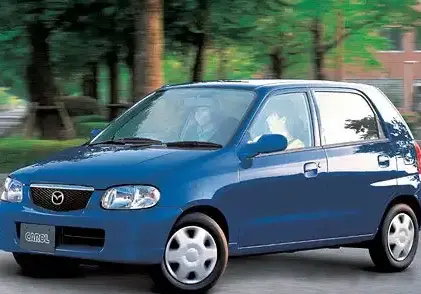
The Mazda Carol 0.7i 12V 4WD, produced between 1989 and 1998, represents a unique offering within the broader Mazda Carol lineage. This particular variant, characterized by its diminutive 657cc engine and all-wheel drive configuration, was primarily aimed at the Japanese domestic market (JDM) where compact, fuel-efficient vehicles with enhanced traction were highly valued. It falls within the third generation of the Carol (1989-1998), a series known for its practicality and affordability. The 0.7i 12V 4WD occupied the entry-level position within the Carol range, offering a basic but functional transportation solution.
Technical Specifications
| Brand | Mazda |
| Model | Carol |
| Generation | Carol |
| Type (Engine) | 0.7i 12V 4WD (55 Hp) |
| Start of production | 1989 |
| End of production | 1998 |
| Powertrain Architecture | Internal Combustion engine |
| Body type | Hatchback |
| Seats | 5 |
| Doors | 3 |
| Fuel consumption (combined) | 5.4 l/100 km (43.6 US mpg, 52.3 UK mpg, 18.5 km/l) |
| Fuel Type | Petrol (Gasoline) |
| Weight-to-power ratio | 12.5 kg/Hp, 79.7 Hp/tonne |
| Weight-to-torque ratio | 12.1 kg/Nm, 82.6 Nm/tonne |
| Power | 55 Hp @ 7500 rpm |
| Power per litre | 83.7 Hp/l |
| Torque | 57 Nm @ 5500 rpm (42.04 lb.-ft. @ 5500 rpm) |
| Engine layout | Front, Transverse |
| Engine displacement | 657 cm3 (40.09 cu. in.) |
| Number of cylinders | 3 |
| Engine configuration | Inline |
| Cylinder Bore | 65 mm (2.56 in.) |
| Piston Stroke | 66 mm (2.6 in.) |
| Compression ratio | 10.5:1 |
| Number of valves per cylinder | 4 |
| Fuel injection system | Multi-port manifold injection |
| Engine aspiration | Naturally aspirated engine |
| Valvetrain | OHC |
| Kerb Weight | 690 kg (1521.19 lbs.) |
| Fuel tank capacity | 30 l (7.93 US gal | 6.6 UK gal) |
| Length | 3290 mm (129.53 in.) |
| Width | 1395 mm (54.92 in.) |
| Height | 1425 mm (56.1 in.) |
| Wheelbase | 2335 mm (91.93 in.) |
| Front track | 1220 mm (48.03 in.) |
| Rear track | 1200 mm (47.24 in.) |
| Drive wheel | All wheel drive (4×4) |
| Number of gears and type of gearbox | 5 gears, manual transmission |
| Front suspension | Wishbone |
| Rear suspension | Coil spring |
| Front brakes | Disc |
| Rear brakes | Drum |
| Assisting systems | ABS (Anti-lock braking system) |
| Steering type | Steering rack and pinion |
| Tires size | 155/70 R12 75 S |
| Wheel rims size | 4J x 12 ET 45 |
Powertrain & Engine Architecture
The heart of the Carol 0.7i 12V 4WD is its 657cc inline-three cylinder engine. This engine, designated with various codes depending on the specific year of manufacture, utilized a single overhead camshaft (OHC) valvetrain operating four valves per cylinder. The 12V designation refers to the total number of valves. Fuel delivery was managed by a multi-port fuel injection system, a relatively modern feature for a vehicle of this class at the time, contributing to improved fuel efficiency and smoother operation compared to carbureted alternatives. The engine produced a modest 55 horsepower at 7500 rpm and 57 Nm (42.04 lb-ft) of torque at 5500 rpm. The engine’s compact size and lightweight construction were key to minimizing the overall vehicle weight. The transmission was a standard five-speed manual, chosen for its simplicity and efficiency. An automatic transmission was not offered with this specific engine and drivetrain combination.
Driving Characteristics
The driving experience in the Carol 0.7i 12V 4WD was defined by its nimble handling and adequate, though not exhilarating, performance. The all-wheel drive system provided enhanced traction, particularly on slippery surfaces, making it a practical choice for regions experiencing inclement weather. However, the limited horsepower and torque meant acceleration was slow, especially when fully loaded. The five-speed manual transmission allowed drivers to keep the engine in its optimal power band, but frequent gear changes were necessary for maintaining speed on inclines or during overtaking maneuvers. Compared to potential higher-spec Carol variants (if available in 4WD), this model prioritized fuel economy and usability over outright performance. The gearing was optimized for low-speed driving and maximizing fuel efficiency.
Equipment & Trim Levels
The Carol 0.7i 12V 4WD was positioned as a basic, no-frills transportation option. Standard equipment typically included cloth upholstery, a simple dashboard layout with basic instrumentation, and manual windows and door locks. Air conditioning and power steering were often optional extras, adding to the vehicle’s cost. The interior was designed for practicality and durability rather than luxury. Trim levels were minimal, with most variations stemming from optional equipment packages. The focus was on providing a functional and affordable vehicle for everyday use.
Chassis & Braking
The Carol 0.7i 12V 4WD featured a lightweight chassis designed to maximize fuel efficiency. Front suspension utilized a wishbone setup, while the rear employed a coil spring arrangement. Braking duties were handled by disc brakes at the front and drum brakes at the rear – a common configuration for vehicles in this price range. An Anti-lock Braking System (ABS) was included as a safety feature, enhancing braking performance and stability, particularly on slippery surfaces. The steering system was a rack and pinion type, providing responsive and precise steering control.
Market Reception & Comparison
The Mazda Carol 0.7i 12V 4WD was well-received in the Japanese market as a practical and economical vehicle. Critics praised its fuel efficiency, compact size, and all-wheel drive capability. However, its limited power and basic interior were points of criticism. Compared to other Kei cars and subcompacts available at the time, the Carol offered a competitive combination of features and affordability. Its fuel economy of 5.4 l/100km was a significant selling point, particularly in a market sensitive to fuel costs. The 4WD system differentiated it from many competitors, providing a valuable advantage in regions with challenging weather conditions.
Legacy
The Mazda Carol 0.7i 12V 4WD, while not a performance icon, holds a place in automotive history as a representative of Japan’s efficient and practical automotive engineering. The engine, while small, proved to be relatively reliable with proper maintenance. Today, these vehicles are becoming increasingly rare and sought after by collectors of JDM cars. The simplicity of the design and the availability of spare parts contribute to its continued usability. The 0.7i 12V 4WD remains a testament to Mazda’s ability to create affordable and functional vehicles that met the needs of a specific market segment.