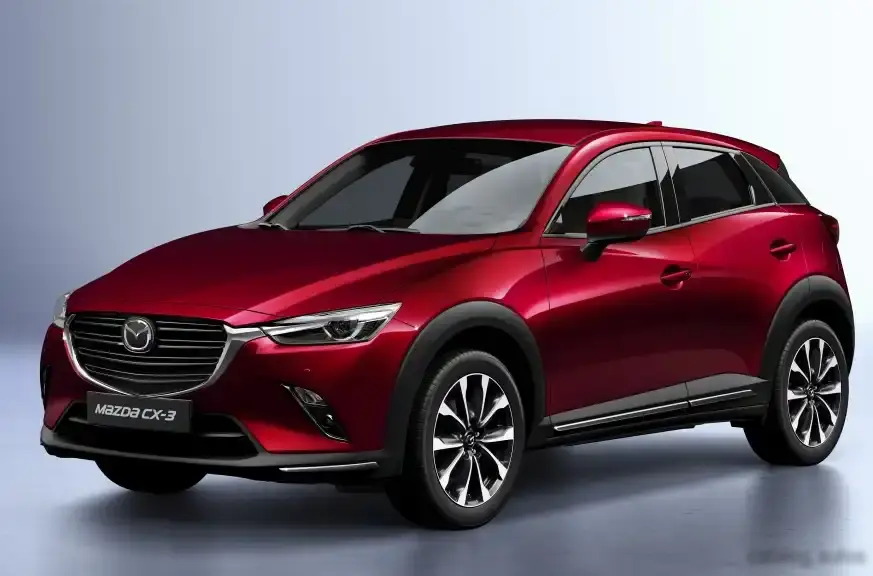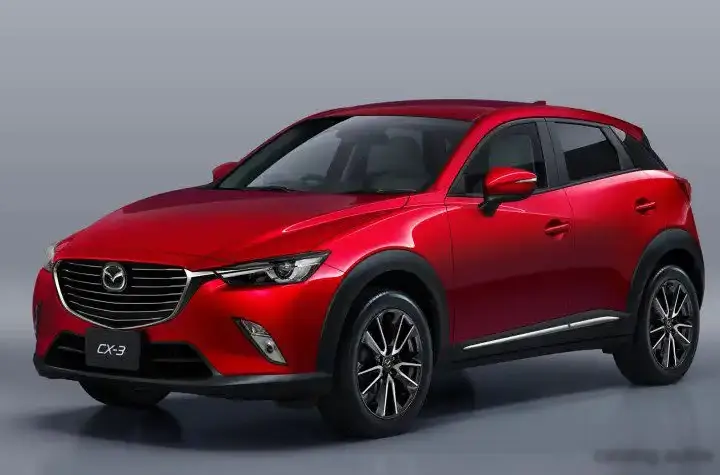
The Mazda CX-3 2.0i i-Eloop 4×4 was a compact crossover SUV produced by Mazda from 2015 to 2018. Positioned as a premium subcompact offering, it represented Mazda’s entry into the burgeoning crossover market, aiming to attract buyers seeking a stylish, fuel-efficient, and engaging driving experience. This particular variant, equipped with the 2.0-liter Skyactiv-G engine and all-wheel drive, occupied a mid-to-high trim level within the CX-3 lineup, offering a balance of performance, features, and efficiency. The “i-Eloop” designation refers to Mazda’s Smart Idle Stop System, a fuel-saving technology that automatically shuts off the engine when the vehicle is stationary.
Technical Specifications
| Brand | Mazda |
| Model | CX-3 |
| Generation | CX-3 |
| Type (Engine) | 2.0i (150 Hp) i-Eloop 4×4 |
| Start of production | 2015 |
| End of production | 2018 |
| Powertrain Architecture | Internal Combustion engine |
| Body type | SUV |
| Seats | 5 |
| Doors | 5 |
| Fuel consumption (urban) | 8.1 l/100 km (29 US mpg, 34.9 UK mpg, 12.3 km/l) |
| Fuel consumption (extra urban) | 5.5 l/100 km (42.8 US mpg, 51.4 UK mpg, 18.2 km/l) |
| Fuel consumption (combined) | 6.4 l/100 km (36.8 US mpg, 44.1 UK mpg, 15.6 km/l) |
| CO2 emissions | 150 g/km |
| Fuel Type | Petrol (Gasoline) |
| Acceleration 0 – 100 km/h | 8.7 sec |
| Acceleration 0 – 62 mph | 8.7 sec |
| Acceleration 0 – 60 mph | 8.3 sec |
| Maximum speed | 200 km/h (124.27 mph) |
| Emission standard | Euro 6 |
| Weight-to-power ratio | 8.2 kg/Hp, 121.5 Hp/tonne |
| Weight-to-torque ratio | 6.1 kg/Nm, 165.2 Nm/tonne |
| Power | 150 Hp @ 6000 rpm |
| Power per litre | 75.1 Hp/l |
| Torque | 204 Nm @ 2800 rpm (150.46 lb.-ft. @ 2800 rpm) |
| Engine layout | Front, Transverse |
| Engine Model/Code | PEX3, PEXB, PEXT |
| Engine displacement | 1998 cm3 (121.93 cu. in.) |
| Number of cylinders | 4 |
| Engine configuration | Inline |
| Cylinder Bore | 83.5 mm (3.29 in.) |
| Piston Stroke | 91.2 mm (3.59 in.) |
| Compression ratio | 14:1 |
| Number of valves per cylinder | 4 |
| Fuel injection system | Direct injection |
| Engine aspiration | Naturally aspirated engine |
| Engine oil capacity | 4.2 l (4.44 US qt | 3.7 UK qt) |
| Coolant | 5.6 l (5.92 US qt | 4.93 UK qt) |
| Kerb Weight | 1235 kg (2722.71 lbs.) |
| Max. weight | 1860 kg (4100.6 lbs.) |
| Max load | 625 kg (1377.89 lbs.) |
| Trunk (boot) space – minimum | 350 l (12.36 cu. ft.) |
| Trunk (boot) space – maximum | 1260 l (44.5 cu. ft.) |
| Fuel tank capacity | 44 l (11.62 US gal | 9.68 UK gal) |
| Max. roof load | 50 kg (110.23 lbs.) |
| Permitted trailer load with brakes (8%) | 1200 kg (2645.55 lbs.) |
| Permitted trailer load with brakes (12%) | 1200 kg (2645.55 lbs.) |
| Permitted trailer load without brakes | 645 kg (1421.98 lbs.) |
| Permitted towbar download | 75 kg (165.35 lbs.) |
| Length | 4275 mm (168.31 in.) |
| Width | 1765 mm (69.49 in.) |
| Width including mirrors | 2049 mm (80.67 in.) |
| Height | 1535 mm (60.43 in.) |
| Wheelbase | 2570 mm (101.18 in.) |
| Front track | 1523 mm (59.96 in.) |
| Rear (Back) track | 1521 mm (59.88 in.) |
| Ride height (ground clearance) | 155 mm (6.1 in.) |
| Minimum turning circle | 10.6 m (34.78 ft.) |
| Drive wheel | All wheel drive (4×4) |
| Number of gears and type of gearbox | 6 gears, manual transmission |
| Front brakes | Ventilated discs |
| Rear brakes | Disc |
| Assisting systems | ABS (Anti-lock braking system) |
| Steering type | Steering rack and pinion |
| Power steering | Electric Steering |
Powertrain & Engine Architecture
The CX-3 2.0i i-Eloop 4×4 is powered by Mazda’s Skyactiv-G 2.0-liter inline-four cylinder engine, specifically the PEX3, PEXB, or PEXT variant depending on the specific market and year. This engine is characterized by its high compression ratio of 14:1, achieved through careful engineering and optimized combustion chamber design. This high compression ratio, combined with direct fuel injection, contributes to both improved thermal efficiency and increased power output. The engine utilizes a variable valve timing system to optimize performance across the rev range. The i-Eloop system, a capacitor-based regenerative braking system, stores energy recovered during deceleration and uses it to power the vehicle’s electrical systems, reducing the load on the engine and improving fuel economy. The engine is transversely mounted at the front of the vehicle. The 6-speed manual transmission delivers power to all four wheels via Mazda’s i-Activ all-wheel-drive system, which intelligently distributes torque between the front and rear axles based on road conditions and driver input.
Driving Characteristics
The 150 horsepower and 204 Nm (150.46 lb-ft) of torque provided a respectable, though not overwhelming, level of performance. Acceleration from 0-60 mph took approximately 8.3 seconds. The manual transmission offered precise shifts and allowed for a more engaging driving experience compared to the automatic options available on other CX-3 trims. The all-wheel-drive system provided enhanced traction and stability, particularly in inclement weather. While not a sports car, the CX-3 2.0i i-Eloop 4×4 offered a balanced and enjoyable driving experience, with responsive steering and a relatively firm suspension. The gear ratios were tuned for a balance of fuel efficiency and everyday drivability, with a focus on providing adequate torque in the lower and mid-range of the rev band.
Equipment & Trim Levels
The 2.0i i-Eloop 4×4 trim typically included standard features such as air conditioning, power windows and locks, a touchscreen infotainment system with Bluetooth connectivity, and a rearview camera. Higher trim levels added features like leather upholstery, a sunroof, automatic climate control, and advanced safety technologies such as blind-spot monitoring and lane departure warning. Interior upholstery was typically cloth, with optional leather upgrades available. The dashboard layout was modern and driver-focused, with a clear and intuitive design. Optional extras included a premium sound system, navigation system, and adaptive front lighting.
Chassis & Braking
The CX-3 utilized a front MacPherson strut suspension and a rear torsion beam suspension. This setup provided a good balance of ride comfort and handling. The all-wheel-drive system added to the vehicle’s stability and cornering ability. Braking duties were handled by ventilated discs at the front and solid discs at the rear. The vehicle was equipped with an Anti-lock Braking System (ABS) as standard, enhancing braking performance and safety. Steering was provided by an electric power steering system, offering light and precise control.
Market Reception & Comparison
The Mazda CX-3 2.0i i-Eloop 4×4 was generally well-received by automotive critics. It was praised for its stylish design, engaging driving dynamics, and fuel efficiency. Compared to other trims in the CX-3 lineup, the 2.0i i-Eloop 4×4 offered a more potent engine and the added security of all-wheel drive. However, some critics noted that the rear seat space was somewhat limited. Fuel economy was competitive for its class, averaging around 36.8 US mpg in combined driving. Reliability was generally good, with Mazda consistently ranking well in consumer reports.
Legacy
The Mazda CX-3, including the 2.0i i-Eloop 4×4 variant, established Mazda as a serious contender in the subcompact crossover segment. The Skyactiv-G engine proved to be a reliable and efficient powerplant, and the i-Eloop system demonstrated Mazda’s commitment to fuel-saving technologies. On the used car market, these models continue to be sought after for their combination of style, performance, and fuel economy. While not without its minor shortcomings, the CX-3 2.0i i-Eloop 4×4 remains a well-regarded and capable compact crossover.