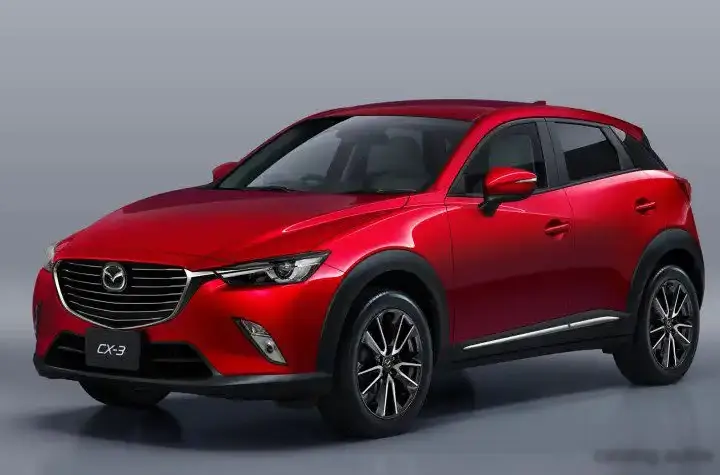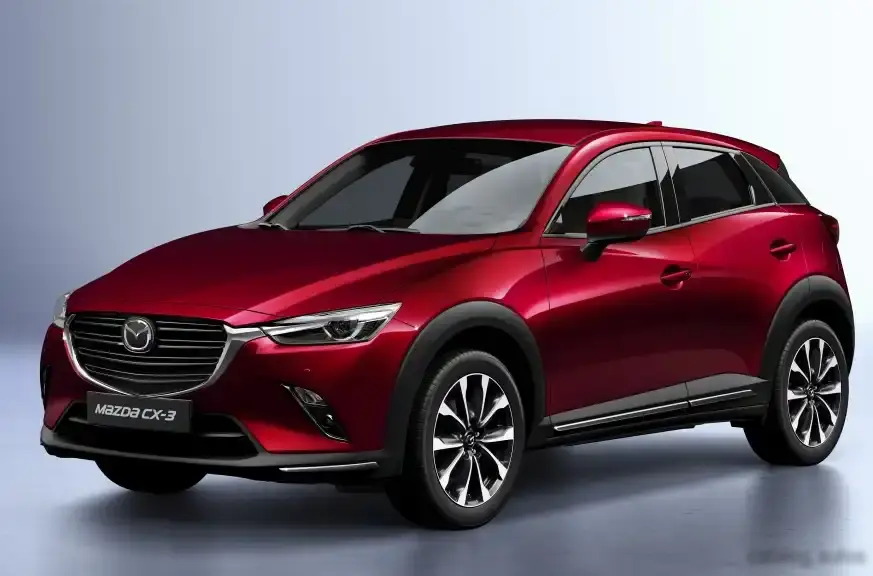
The Mazda CX-3 (facelift 2018) 1.8 SKYACTIV-D (115 Hp) SKYACTIV-Drive represents a specific configuration within the second generation of Mazda’s popular subcompact crossover SUV. Introduced in 2018 as part of a mid-cycle refresh, this variant combined a fuel-efficient 1.8-liter diesel engine with Mazda’s proprietary six-speed SKYACTIV-Drive automatic transmission. Positioned as a mid-range offering in many European markets, it aimed to balance economy with acceptable performance for daily driving. The CX-3 itself was designed to appeal to buyers seeking a stylish and engaging alternative to more conventional small SUVs, and the 1.8 SKYACTIV-D Automatic trim was a key part of that strategy.
Technical Specifications
| Brand | Mazda |
| Model | CX-3 |
| Generation | CX-3 (facelift 2018) |
| Type (Engine) | 1.8 SKYACTIV-D (115 Hp) SKYACTIV-Drive |
| Start of production | 2018 |
| Powertrain Architecture | Internal Combustion engine |
| Body type | SUV |
| Seats | 5 |
| Doors | 5 |
| Fuel consumption (urban) | 5.3 l/100 km (44.4 US mpg, 53.3 UK mpg, 18.9 km/l) |
| Fuel consumption (extra urban) | 4.7 l/100 km (50 US mpg, 60.1 UK mpg, 21.3 km/l) |
| Fuel consumption (combined) | 4.9 l/100 km (48 US mpg, 57.6 UK mpg, 20.4 km/l) |
| CO2 emissions | 129 g/km |
| Fuel Type | Diesel |
| Acceleration 0 – 100 km/h | 11 sec |
| Acceleration 0 – 62 mph | 11 sec |
| Acceleration 0 – 60 mph | 10.5 sec |
| Maximum speed | 183 km/h (113.71 mph) |
| Emission standard | Euro 6 |
| Weight-to-power ratio | 11 kg/Hp, 91.2 Hp/tonne |
| Weight-to-torque ratio | 4.7 kg/Nm, 214.1 Nm/tonne |
| Power | 115 Hp @ 4000 rpm |
| Power per litre | 65.4 Hp/l |
| Torque | 270 Nm @ 1600-2600 rpm (199.14 lb.-ft. @ 1600-2600 rpm) |
| Engine layout | Front, Transverse |
| Engine Model/Code | S8Y1 |
| Engine displacement | 1759 cm3 (107.34 cu. in.) |
| Number of cylinders | 4 |
| Engine configuration | Inline |
| Cylinder Bore | 79 mm (3.11 in.) |
| Piston Stroke | 89.7 mm (3.53 in.) |
| Compression ratio | 14.8:1 |
| Number of valves per cylinder | 4 |
| Fuel injection system | Diesel Commonrail |
| Engine aspiration | Turbocharger, Intercooler |
| Engine oil capacity | 5.1 l (5.39 US qt | 4.49 UK qt) |
| Coolant | 6.8 l (7.19 US qt | 5.98 UK qt) |
| Kerb Weight | 1261-1310 kg (2780.03 – 2888.06 lbs.) |
| Max. weight | 1780 kg (3924.23 lbs.) |
| Max load | 470-519 kg (1036.17 – 1144.2 lbs.) |
| Trunk (boot) space – minimum | 350 l (12.36 cu. ft.) |
| Trunk (boot) space – maximum | 1260 l (44.5 cu. ft.) |
| Fuel tank capacity | 48 l (12.68 US gal | 10.56 UK gal) |
| Max. roof load | 50 kg (110.23 lbs.) |
| Permitted trailer load with brakes (8%) | 1200 kg (2645.55 lbs.) |
| Permitted trailer load with brakes (12%) | 1200 kg (2645.55 lbs.) |
| Permitted trailer load without brakes | 665 kg (1466.07 lbs.) |
| Permitted towbar download | 75 kg (165.35 lbs.) |
| Length | 4275 mm (168.31 in.) |
| Width | 1765 mm (69.49 in.) |
| Height | 1535 mm (60.43 in.) |
| Wheelbase | 2570 mm (101.18 in.) |
| Front track | 1523 mm (59.96 in.) |
| Rear (Back) track | 1521 mm (59.88 in.) |
| Ride height (ground clearance) | 155 mm (6.1 in.) |
| Minimum turning circle (turning diameter) | 10.6 m (34.78 ft.) |
| Drivetrain Architecture | The Internal combustion engine (ICE) drives the front wheels of the vehicle. |
| Drive wheel | Front wheel drive |
| Number of gears and type of gearbox | 6 gears, automatic transmission |
| Front brakes | Ventilated discs |
| Rear brakes | Ventilated discs |
| Assisting systems | ABS (Anti-lock braking system) |
| Steering type | Steering rack and pinion |
| Power steering | Electric Steering |
Powertrain & Engine Architecture
At the heart of this CX-3 variant lies Mazda’s 1.8-liter SKYACTIV-D diesel engine, designated as the S8Y1. This engine is a four-cylinder, inline configuration, featuring a high compression ratio of 14.8:1, contributing to its fuel efficiency. The engine utilizes a common-rail direct injection system and a turbocharger with an intercooler to optimize combustion and boost power output. The SKYACTIV-D engines were known for their relatively low emissions and smooth operation compared to older diesel designs. The engine produces 115 horsepower at 4000 rpm and 270 Nm (199 lb-ft) of torque between 1600 and 2600 rpm. Paired with this engine is Mazda’s SKYACTIV-Drive six-speed automatic transmission. This transmission isn’t a traditional torque-converter automatic; instead, it employs a torque converter with a continuously variable lock-up clutch, aiming to provide the efficiency of a manual transmission with the convenience of an automatic.
Driving Characteristics
The 1.8 SKYACTIV-D Automatic CX-3 offered a comfortable and economical driving experience. While not particularly sporty, the engine provided adequate power for everyday driving situations. Acceleration from 0-60 mph took around 10.5 seconds, and top speed was rated at 113.71 mph. The SKYACTIV-Drive transmission, while efficient, could sometimes feel hesitant during quick acceleration, as it prioritized fuel economy over outright performance. Compared to the more powerful 2.0-liter gasoline engine options available in the CX-3 range, this diesel variant felt noticeably slower. However, the diesel’s superior torque delivery at low engine speeds made it more relaxed for highway cruising and overtaking. The gear ratios were tuned for fuel efficiency, meaning the engine often operated at lower RPMs during normal driving.
Equipment & Trim Levels
The 1.8 SKYACTIV-D Automatic trim typically included standard features such as air conditioning, power windows and mirrors, a touchscreen infotainment system with Bluetooth connectivity, and a suite of safety features including ABS, stability control, and multiple airbags. Interior upholstery was generally cloth, with options for leather upgrades available. Higher trim levels within the CX-3 range offered additional features like a sunroof, heated seats, and advanced driver-assistance systems such as lane departure warning and adaptive cruise control. The specific standard equipment varied slightly depending on the country and market.
Chassis & Braking
The CX-3 featured a front-wheel-drive chassis with independent suspension at all four corners. The front suspension utilized MacPherson struts, while the rear employed a torsion beam setup. Braking duties were handled by ventilated discs on all four wheels. The suspension was tuned to provide a balance between comfort and handling, offering a relatively compliant ride quality. Stabilizer bars were fitted to both the front and rear axles to reduce body roll during cornering. The brake system was adequate for the vehicle’s weight and performance, providing reliable stopping power.
Market Reception & Comparison
The Mazda CX-3, in general, was well-received by automotive critics for its stylish design, engaging driving dynamics, and premium interior. The 1.8 SKYACTIV-D Automatic variant was praised for its fuel efficiency and low running costs, making it an attractive option for buyers prioritizing economy. However, some reviewers noted that the engine lacked the punch of the gasoline alternatives. Compared to other small diesel SUVs in the European market, the CX-3 offered a more refined driving experience and a more upscale interior. Fuel economy figures of around 48 US mpg combined were competitive for its class.
Legacy
The 1.8 SKYACTIV-D engine proved to be a relatively reliable unit, although, like all diesel engines, it required regular maintenance, including oil changes and diesel particulate filter (DPF) regeneration. On the used car market, CX-3 models equipped with this engine and transmission are generally considered a good value, offering a blend of practicality, economy, and style. The SKYACTIV technology, including the engine and transmission, helped establish Mazda as a brand known for innovation and efficiency. While diesel engine popularity has waned in some markets due to emissions concerns, the 1.8 SKYACTIV-D remains a viable option for buyers seeking a fuel-efficient and reliable small SUV.