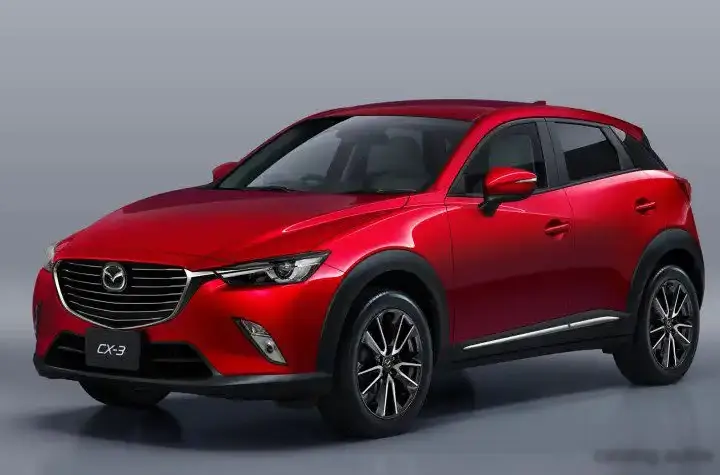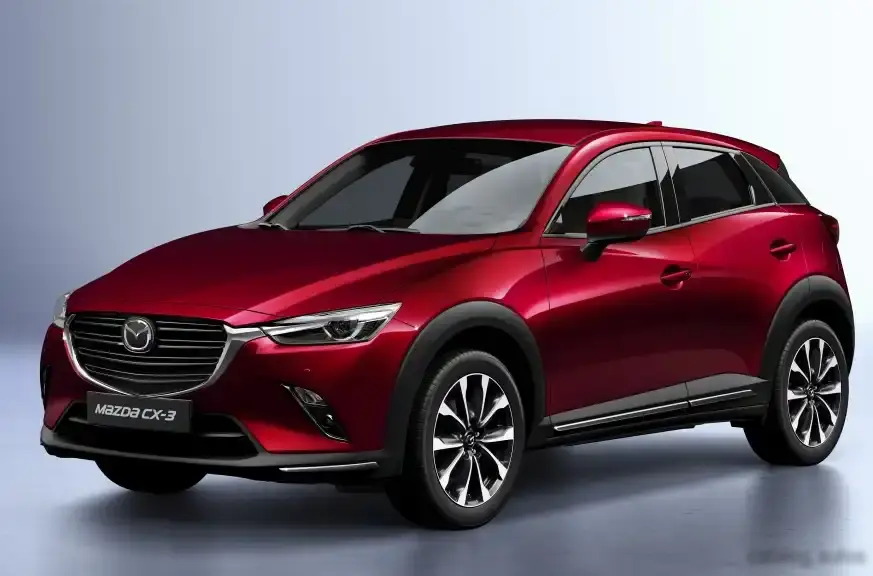
The Mazda CX-3 (facelift 2018) 2.0 SKYACTIV-G (121 Hp) SKYACTIV-Drive represents a significant iteration of Mazda’s subcompact crossover SUV, introduced as part of the second-generation CX-3 refresh. Production began in 2018, building upon the success of the original CX-3 launched in 2015. This variant aimed to balance fuel efficiency with adequate performance for the North American and global markets, slotting into the mid-range of the CX-3 lineup. It was positioned as an alternative to vehicles like the Honda HR-V and Toyota C-HR, offering Mazda’s signature driving dynamics in a practical package. The “SKYACTIV” designation denotes Mazda’s suite of technologies focused on improving engine efficiency and responsiveness.
Technical Specifications
| Brand | Mazda |
| Model | CX-3 |
| Generation | CX-3 (facelift 2018) |
| Type (Engine) | 2.0 SKYACTIV-G (121 Hp) SKYACTIV-Drive |
| Start of production | 2018 |
| Powertrain Architecture | Internal Combustion engine |
| Body type | SUV |
| Seats | 5 |
| Doors | 5 |
| Fuel consumption (urban) | 7.2 l/100 km (32.7 US mpg) |
| Fuel consumption (extra urban) | 5.5 l/100 km (42.8 US mpg) |
| Fuel consumption (combined) | 6.1 l/100 km (38.6 US mpg) |
| CO2 emissions | 140 g/km |
| Fuel Type | Petrol (Gasoline) |
| Acceleration 0 – 100 km/h | 9.9 sec |
| Acceleration 0 – 62 mph | 9.9 sec |
| Acceleration 0 – 60 mph | 9.4 sec |
| Maximum speed | 187 km/h (116.2 mph) |
| Emission standard | Euro 6 |
| Weight-to-power ratio | 10 kg/Hp |
| Weight-to-torque ratio | 5.9 kg/Nm |
| Power | 121 Hp @ 6000 rpm |
| Torque | 207 Nm @ 2800 rpm (152.68 lb.-ft. @ 2800 rpm) |
| Engine layout | Front, Transverse |
| Engine Model/Code | PEXB, PEXT |
| Engine displacement | 1998 cm3 (121.93 cu. in.) |
| Number of cylinders | 4 |
| Engine configuration | Inline |
| Cylinder Bore | 83.5 mm (3.29 in.) |
| Piston Stroke | 91.2 mm (3.59 in.) |
| Compression ratio | 14:1 |
| Number of valves per cylinder | 4 |
| Fuel injection system | Direct injection |
| Engine oil capacity | 4.2 l (4.44 US qt | 3.7 UK qt) |
| Coolant capacity | 5.9 l (6.23 US qt | 5.19 UK qt) |
| Kerb Weight | 1213-1265 kg (2674.21 – 2788.85 lbs.) |
| Max. weight | 1727 kg (3807.38 lbs.) |
| Max load | 462-514 kg (1018.54 – 1133.18 lbs.) |
| Trunk (boot) space – minimum | 350 l (12.36 cu. ft.) |
| Trunk (boot) space – maximum | 1260 l (44.5 cu. ft.) |
| Fuel tank capacity | 48 l (12.68 US gal | 10.56 UK gal) |
| Max. roof load | 50 kg (110.23 lbs.) |
| Permitted trailer load with brakes (8%) | 1200 kg (2645.55 lbs.) |
| Permitted trailer load with brakes (12%) | 1200 kg (2645.55 lbs.) |
| Permitted trailer load without brakes | 640 kg (1410.96 lbs.) |
| Permitted towbar download | 75 kg (165.35 lbs.) |
| Length | 4275 mm (168.31 in.) |
| Width | 1765 mm (69.49 in.) |
| Height | 1535 mm (60.43 in.) |
| Wheelbase | 2570 mm (101.18 in.) |
| Front track | 1523 mm (59.96 in.) |
| Rear track | 1521 mm (59.88 in.) |
| Ride height (ground clearance) | 155 mm (6.1 in.) |
| Minimum turning circle | 10.6 m (34.78 ft.) |
| Drivetrain Architecture | Front wheel drive |
| Number of gears and type of gearbox | 6 gears, automatic transmission |
| Front brakes | Ventilated discs |
| Rear brakes | Ventilated discs |
| Assisting systems | ABS (Anti-lock braking system) |
| Steering type | Steering rack and pinion |
| Power steering | Electric Steering |
INTRODUCTION
The 2018 Mazda CX-3 2.0 SKYACTIV-G (121 Hp) SKYACTIV-Drive is a front-wheel-drive, five-passenger subcompact SUV. It represents a facelift of the original CX-3, incorporating styling updates and refinements to the powertrain. This particular variant, powered by the 2.0-liter SKYACTIV-G engine paired with a six-speed SKYACTIV-Drive automatic transmission, was a popular choice for buyers seeking a balance between fuel economy and usability. It occupied a middle ground in the CX-3 range, offering more power than the base 2.0-liter engine but falling short of the performance offered by higher-spec models. The CX-3, in general, was designed to appeal to a younger demographic and those seeking a more engaging driving experience than typically found in the subcompact SUV segment.
Powertrain & Engine Architecture
At the heart of this CX-3 variant lies Mazda’s 2.0-liter SKYACTIV-G inline-four cylinder engine, designated as PEXB or PEXT depending on the specific market. This engine is characterized by its high compression ratio of 14:1, achieved through careful engineering and optimized combustion chamber design. It utilizes direct fuel injection, enhancing fuel atomization and improving efficiency. The engine produces 121 horsepower at 6000 rpm and 207 Nm (152.68 lb-ft) of torque at 2800 rpm. The SKYACTIV-Drive automatic transmission is a six-speed unit designed to provide smooth and responsive shifts. Unlike traditional torque-converter automatics, the SKYACTIV-Drive utilizes a torque converter with a multi-plate clutch, offering quicker shifts and a more direct feel. This transmission is programmed to prioritize fuel efficiency while still providing adequate acceleration.
Driving Characteristics
The 2.0-liter engine and SKYACTIV-Drive automatic transmission combination delivers a comfortable and predictable driving experience. Acceleration from 0-60 mph takes approximately 9.4 seconds, which is adequate for everyday driving but doesn’t offer particularly sporty performance. The transmission is well-tuned for smooth upshifts and downshifts, and the multi-plate clutch helps to minimize power loss during gear changes. Compared to the manual transmission version of the same engine, the automatic offers slightly reduced fuel economy and a less engaging driving experience. However, it provides greater convenience, especially in urban traffic. The gear ratios are optimized for fuel efficiency at highway speeds, but can feel slightly tall when accelerating quickly.
Equipment & Trim Levels
The 2018 CX-3 2.0 SKYACTIV-G (121 Hp) SKYACTIV-Drive typically came standard with features such as air conditioning, power windows and locks, a rearview camera, and a basic infotainment system with a 7-inch touchscreen display. Higher trim levels added features like leather upholstery, a premium sound system, automatic climate control, and advanced safety technologies such as blind-spot monitoring and rear cross-traffic alert. Interior upholstery was typically cloth in the base trims, with leather options available on higher-spec models. Dashboard configuration was consistent across all trims, featuring a minimalist design with a focus on driver ergonomics. Optional extras included a sunroof, navigation system, and adaptive front lighting system.
Chassis & Braking
The CX-3 utilizes a front-wheel-drive platform with independent suspension at all four corners. The front suspension consists of MacPherson struts, while the rear features a torsion beam setup. This configuration provides a good balance between ride comfort and handling. Braking duties are handled by ventilated discs on all four wheels, providing adequate stopping power. The vehicle is equipped with an Anti-lock Braking System (ABS) as standard, enhancing safety during emergency braking situations. Stabilizer bars are fitted to both the front and rear axles to reduce body roll during cornering.
Market Reception & Comparison
The 2018 Mazda CX-3 2.0 SKYACTIV-G (121 Hp) SKYACTIV-Drive received generally positive reviews from automotive critics. It was praised for its stylish design, engaging driving dynamics, and fuel efficiency. However, some critics noted that the 121-horsepower engine could feel underpowered when fully loaded or driving uphill. Compared to the higher-output 2.5-liter engine option, this variant offered lower performance but better fuel economy. The 2.0-liter engine also tended to require less frequent and less expensive maintenance than the 2.5-liter. Fuel economy figures averaged around 38.6 US mpg combined, making it a competitive option in the subcompact SUV segment.
Legacy
The Mazda CX-3, including the 2.0 SKYACTIV-G (121 Hp) SKYACTIV-Drive variant, has proven to be a reliable vehicle in the used car market. The SKYACTIV engines are known for their durability and relatively low maintenance costs. While some owners have reported minor issues with the infotainment system, the powertrain itself has generally been trouble-free. The combination of Mazda’s engineering and the SKYACTIV-Drive transmission has resulted in a vehicle that continues to hold its value and appeal to buyers seeking a practical and enjoyable subcompact SUV.