
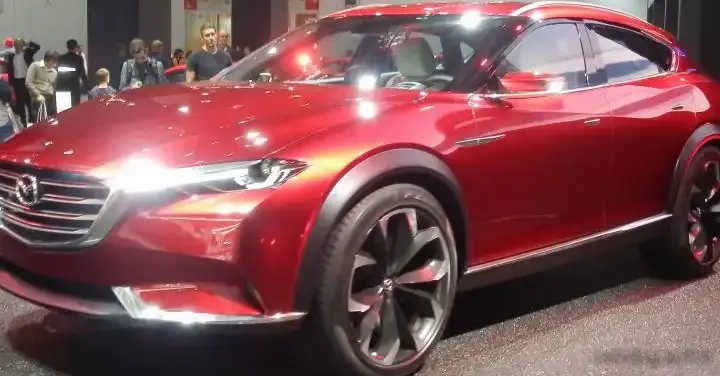
The Mazda CX-4 2.0 SKYACTIV-G (158 Hp) Automatic, launched in 2016, represents a unique offering within Mazda’s expanding SUV lineup. Positioned as a coupe-style crossover, the CX-4 was primarily aimed at the Chinese market, where demand for stylish and practical vehicles was – and remains – high. It slots into the Mazda range between the more conventional CX-5 and the smaller CX-3, offering a blend of sporty aesthetics and family-friendly functionality. This particular variant, equipped with the 2.0-liter SKYACTIV-G engine and a six-speed automatic transmission, served as a mainstream option within the CX-4 range, balancing performance with fuel efficiency and affordability.
Technical Specifications
| Brand | Mazda |
| Model | CX-4 |
| Generation | CX-4 |
| Type (Engine) | 2.0 SKYACTIV-G (158 Hp) Automatic |
| Start of production | 2016 |
| Powertrain Architecture | Internal Combustion engine |
| Body type | SUV |
| Seats | 5 |
| Doors | 5 |
| Fuel consumption (combined) | 6.2 l/100 km (37.9 US mpg, 45.6 UK mpg, 16.1 km/l) |
| Fuel Type | Petrol (Gasoline) |
| Maximum speed | 192 km/h (119.3 mph) |
| Emission standard | Euro 6 |
| Weight-to-power ratio | 9.2 kg/Hp, 109 Hp/tonne |
| Weight-to-torque ratio | 7.2 kg/Nm, 139.3 Nm/tonne |
| Power | 158 Hp @ 6400 rpm |
| Power per litre | 79.1 Hp/l |
| Torque | 202 Nm @ 4000 rpm (148.99 lb.-ft. @ 4000 rpm) |
| Engine layout | Front, Transverse |
| Engine Model/Code | PE-VPS |
| Engine displacement | 1998 cm3 (121.93 cu. in.) |
| Number of cylinders | 4 |
| Engine configuration | Inline |
| Cylinder Bore | 83.5 mm (3.29 in.) |
| Piston Stroke | 91.2 mm (3.59 in.) |
| Compression ratio | 13:1 |
| Number of valves per cylinder | 4 |
| Fuel injection system | Direct injection |
| Engine aspiration | Naturally aspirated engine |
| Valvetrain | DOHC |
| Engine oil capacity | 4.2 l (4.44 US qt | 3.7 UK qt) |
| Coolant | 6.7 l (7.08 US qt | 5.9 UK qt) |
| Kerb Weight | 1450 kg (3196.7 lbs.) |
| Fuel tank capacity | 51 l (13.47 US gal | 11.22 UK gal) |
| Length | 4633 mm (182.4 in.) |
| Width | 1840 mm (72.44 in.) |
| Height | 1535 mm (60.43 in.) |
| Wheelbase | 2700 mm (106.3 in.) |
| Front track | 1584 mm (62.36 in.) |
| Rear track | 1586 mm (62.44 in.) |
| Ride height (ground clearance) | 197 mm (7.76 in.) |
| Drag coefficient (Cd) | 0.33 |
| Minimum turning circle | 11.2 m (36.75 ft.) |
| Drivetrain Architecture | Front wheel drive |
| Number of gears and type of gearbox | 6 gears, automatic transmission |
| Front suspension | Independent, type McPherson with coil spring and anti-roll bar |
| Rear suspension | Independent multi-link suspension |
| Front brakes | Ventilated discs |
| Rear brakes | Disc |
| Assisting systems | ABS (Anti-lock braking system) |
| Steering type | Steering rack and pinion |
| Power steering | Electric Steering |
| Tires size | 225/65 R17 |
| Wheel rims size | 17 |
Powertrain & Engine Architecture
At the heart of the CX-4 2.0 SKYACTIV-G Automatic lies Mazda’s PE-VPS engine, a 1.998-liter inline-four cylinder gasoline engine. This engine is a key component of Mazda’s SKYACTIV technology suite, designed to maximize efficiency and responsiveness. The PE-VPS features direct injection, a high compression ratio of 13:1, and a lightweight design. The direct injection system allows for precise fuel delivery, optimizing combustion and reducing emissions. The engine utilizes a double overhead camshaft (DOHC) valvetrain, contributing to improved breathing and power output. Paired with this engine is a six-speed automatic transmission, specifically tuned for smooth operation and efficient power delivery. This transmission isn’t a particularly advanced unit, prioritizing reliability and cost-effectiveness over cutting-edge features like paddle shifters or adaptive shift logic.
Driving Characteristics
The 158 horsepower and 202 Nm (148.99 lb-ft) of torque produced by the 2.0-liter engine provide adequate, but not exhilarating, performance. Acceleration is reasonably brisk for everyday driving, but the CX-4 Automatic doesn’t offer the same level of responsiveness as the higher-output 2.5-liter SKYACTIV-G variants or those equipped with a manual transmission. The six-speed automatic transmission is generally smooth-shifting, but can sometimes feel hesitant during quick overtaking maneuvers. The gear ratios are geared towards fuel economy, resulting in a comfortable cruising experience but potentially requiring more aggressive throttle input for rapid acceleration. Compared to the manual transmission option, the automatic sacrifices some driver engagement and fuel efficiency, but offers greater convenience, particularly in congested urban environments.
Equipment & Trim Levels
The CX-4 2.0 SKYACTIV-G Automatic typically came equipped with a respectable level of standard features. These included air conditioning, power windows and locks, a basic infotainment system with a touchscreen display, and a rearview camera. Higher trim levels offered upgrades such as leather upholstery, a sunroof, automatic climate control, and a more advanced infotainment system with navigation. Safety features such as ABS, electronic stability control, and multiple airbags were standard across the range. The interior design was generally modern and well-appointed, reflecting Mazda’s focus on creating a premium feel even in its more affordable models.
Chassis & Braking
The CX-4 utilizes a front-wheel-drive layout with an independent McPherson strut suspension at the front and an independent multi-link suspension at the rear. This suspension setup provides a comfortable ride quality, effectively absorbing bumps and irregularities in the road surface. The front brakes are ventilated discs, offering good stopping power, while the rear brakes are solid discs. The steering is electrically assisted, providing a light and responsive feel. The chassis is tuned for a balance between comfort and handling, leaning more towards the former. Stabilizer bars are fitted to both the front and rear axles to reduce body roll during cornering.
Market Reception & Comparison
The Mazda CX-4 was well-received in the Chinese market, where its stylish design and practical features resonated with consumers. Critics praised its comfortable ride, well-appointed interior, and fuel-efficient engine. However, some reviewers noted that the 2.0-liter engine felt underpowered compared to the larger 2.5-liter option. In terms of fuel economy, the 2.0-liter Automatic offered competitive figures, achieving around 6.2 l/100 km (37.9 US mpg) in combined driving. Compared to the 2.5-liter variants, the 2.0-liter model offered a more affordable entry point into the CX-4 range, making it an attractive option for budget-conscious buyers.
Legacy
The Mazda CX-4, while not widely available outside of China, represents an interesting chapter in Mazda’s SUV history. The 2.0-liter SKYACTIV-G engine paired with the six-speed automatic transmission has proven to be a relatively reliable powertrain. In the used car market, these models are generally considered to be a good value, offering a blend of style, practicality, and affordability. Maintenance costs are typically reasonable, and parts availability is generally good. While not a performance standout, the CX-4 2.0 Automatic remains a competent and comfortable crossover, particularly for those seeking a stylish and fuel-efficient vehicle.
