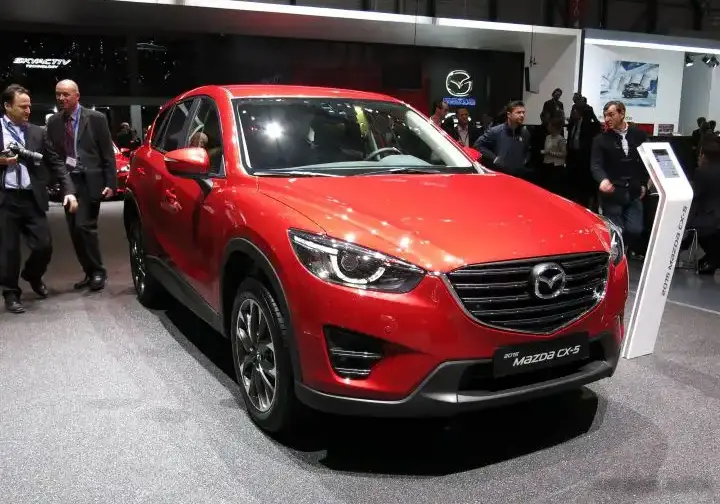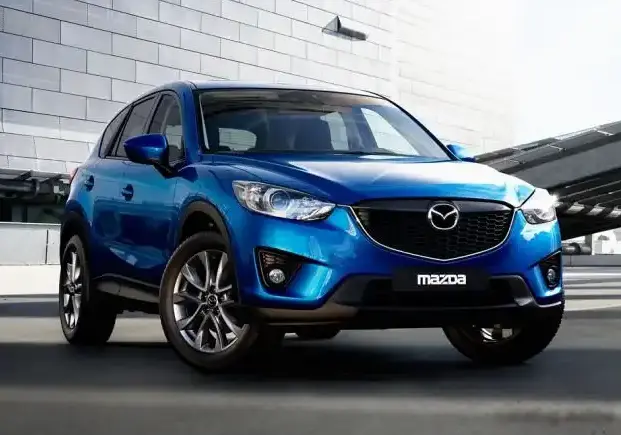
The Mazda CX-5 2.5 SKYACTIV-G Automatic, produced from November 2012 to 2015, represented a significant entry in Mazda’s burgeoning SUV lineup. Positioned as a mid-range offering within the first generation (KE series) CX-5, this variant combined Mazda’s innovative SKYACTIV technology with a comfortable and accessible automatic transmission. It was designed to appeal to buyers seeking a fuel-efficient, well-equipped, and stylish compact SUV. The CX-5, as a whole, was Mazda’s first model to fully embody the “KODO – Soul of Motion” design philosophy and the SKYACTIV suite of technologies, marking a turning point for the brand. This specific 2.5-liter configuration aimed to balance performance with practicality, offering a step up from the base 2.0-liter engine while remaining more affordable than potential future turbocharged options.
Technical Specifications
| Brand | Mazda |
| Model | CX-5 |
| Generation | CX-5 (KE) |
| Type (Engine) | 2.5 SKYACTIV-G (184 Hp) Automatic |
| Start of production | November, 2012 |
| End of production | 2015 |
| Powertrain Architecture | Internal Combustion engine |
| Body type | SUV |
| Seats | 5 |
| Doors | 5 |
| Fuel consumption (economy) – urban (EPA) | 9.4 l/100 km (25 US mpg) |
| Fuel consumption (economy) – extra urban (EPA) | 7.4 l/100 km (31.8 US mpg) |
| Fuel Type | Petrol (Gasoline) |
| Maximum speed | 203 km/h (126.14 mph) |
| Weight-to-power ratio | 8.3 kg/Hp |
| Weight-to-torque ratio | 6.1 kg/Nm |
| Power | 184 Hp @ 5700 rpm |
| Power per litre | 74 Hp/l |
| Torque | 251 Nm @ 3250 rpm (185.13 lb.-ft. @ 3250 rpm) |
| Maximum engine speed | 6500 rpm |
| Engine layout | Front, Transverse |
| Engine Model/Code | PY-VPS |
| Engine displacement | 2488 cm3 (151.83 cu. in.) |
| Number of cylinders | 4 |
| Engine configuration | Inline |
| Cylinder Bore | 89 mm (3.5 in.) |
| Piston Stroke | 100 mm (3.94 in.) |
| Compression ratio | 13:1 |
| Number of valves per cylinder | 4 |
| Fuel injection system | Direct injection |
| Engine aspiration | Naturally aspirated engine |
| Valvetrain | DOHC, VVT |
| Engine oil capacity | 4.5 l (4.76 US qt | 3.96 UK qt) |
| Coolant | 7.7 l (8.14 US qt | 6.78 UK qt) |
| Kerb Weight | 1531 kg (3375.28 lbs.) |
| Max. weight | 1987 kg (4380.59 lbs.) |
| Max load | 456 kg (1005.31 lbs.) |
| Trunk (boot) space – minimum | 503 l (17.76 cu. ft.) |
| Trunk (boot) space – maximum | 1620 l (57.21 cu. ft.) |
| Fuel tank capacity | 56 l (14.79 US gal | 12.32 UK gal) |
| Permitted trailer load with brakes (12%) | 907 kg (1999.59 lbs.) |
| Length | 4555 mm (179.33 in.) |
| Width | 1840 mm (72.44 in.) |
| Height | 1710 mm (67.32 in.) |
| Wheelbase | 2700 mm (106.3 in.) |
| Front track | 1585 mm (62.4 in.) |
| Rear (Back) track | 1590 mm (62.6 in.) |
| Ride height (ground clearance) | 215 mm (8.46 in.) |
| Drag coefficient (Cd) | 0.33 |
| Minimum turning circle (turning diameter) | 11.7 m (38.39 ft.) |
| Drivetrain Architecture | The Internal combustion engine (ICE) drives the front wheels of the vehicle. |
| Drive wheel | Front wheel drive |
| Number of gears and type of gearbox | 6 gears, automatic transmission |
| Front suspension | Independent, type McPherson with coil spring and anti-roll bar |
| Rear suspension | Independent multi-link spring suspension with stabilizer |
| Front brakes | Ventilated discs, 297×28 mm |
| Rear brakes | Disc, 303×10 mm |
| Assisting systems | ABS (Anti-lock braking system) |
| Steering type | Steering rack and pinion |
| Power steering | Electric Steering |
| Tires size | 225/65 R17; 225/55 R19 |
| Wheel rims size | 7J x 17; 7J x 19 |
Powertrain & Engine Architecture
At the heart of the CX-5 2.5 SKYACTIV-G Automatic lies Mazda’s PY-VPS engine, a 2.5-liter inline-four cylinder gasoline engine. This engine is a cornerstone of the SKYACTIV technology suite, designed to maximize efficiency and responsiveness. Key features include a high compression ratio of 13:1 (achieved through careful engine design and knock control), direct injection, and a dual overhead camshaft (DOHC) valvetrain with variable valve timing (VVT) on both intake and exhaust cams. The direct injection system precisely meters fuel into the combustion chamber, improving combustion efficiency and reducing emissions. The engine’s architecture prioritizes torque delivery across a broad RPM range, making it well-suited for everyday driving. Paired with this engine was a six-speed automatic transmission, also part of the SKYACTIV lineup. This transmission was designed for smooth and quick shifts, contributing to both fuel economy and driving enjoyment. It featured a torque converter lock-up clutch to minimize slippage and improve efficiency at cruising speeds.
Driving Characteristics
The CX-5 2.5 Automatic offered a balanced driving experience. With 184 horsepower and 185 lb-ft of torque, it provided adequate acceleration for most driving situations. While not a performance-oriented vehicle, the engine delivered a responsive feel, particularly when utilizing the transmission’s manual shift mode. Compared to the base 2.0-liter engine, the 2.5-liter offered noticeably more power, especially during highway merging and overtaking maneuvers. The six-speed automatic transmission was generally well-behaved, providing smooth shifts. However, some reviewers noted that it could occasionally be hesitant to downshift quickly when demanding more power. The gear ratios were tuned for a balance of fuel efficiency and drivability, prioritizing comfortable cruising over outright acceleration. The front-wheel-drive configuration contributed to good fuel economy, but it also meant that traction in inclement weather could be a limitation compared to all-wheel-drive variants.
Equipment & Trim Levels
The CX-5 2.5 Automatic typically came standard with a respectable array of features. Base models included air conditioning, power windows and locks, a rearview camera, and a basic infotainment system with a touchscreen display. Higher trim levels, such as the Grand Touring, added features like leather upholstery, a premium sound system, automatic climate control, and advanced safety technologies like blind-spot monitoring and rear cross-traffic alert. Optional extras included a power sunroof, navigation system, and adaptive front lighting. Interior upholstery was typically cloth on lower trims, with leather available on higher-end models. The dashboard layout was clean and modern, with a focus on ergonomics and ease of use.
Chassis & Braking
The CX-5’s chassis was designed to provide a comfortable and controlled ride. It featured an independent McPherson strut suspension in the front and an independent multi-link suspension in the rear. Stabilizer bars were included on both axles to reduce body roll during cornering. Braking duties were handled by ventilated discs in the front and solid discs in the rear. Anti-lock braking system (ABS) was standard. The suspension tuning was geared towards comfort, but it also provided decent handling characteristics. The steering was precise and responsive, offering a good level of feedback to the driver.
Market Reception & Comparison
The Mazda CX-5 2.5 Automatic was generally well-received by automotive critics. It was praised for its stylish design, fuel efficiency, and engaging driving dynamics. Compared to competitors like the Honda CR-V and Toyota RAV4, the CX-5 offered a more sporty driving experience and a more upscale interior. However, some critics noted that its rear seat space was slightly less generous than some of its rivals. Fuel economy figures were competitive, typically ranging from 25-31 mpg depending on driving conditions. Reliability was generally good, with few widespread issues reported. The 2.5-liter engine proved to be durable and relatively maintenance-free.
Legacy
The Mazda CX-5 2.5 SKYACTIV-G Automatic has proven to be a reliable and popular choice in the used car market. The PY-VPS engine is known for its longevity and relatively low maintenance costs. Common issues are infrequent, but regular maintenance, including oil changes and timing chain inspection, is crucial for long-term reliability. Today, these CX-5s represent a good value for buyers seeking a well-rounded and fuel-efficient compact SUV. The SKYACTIV technology introduced in this generation continues to influence Mazda’s engineering philosophy, and the CX-5 remains a benchmark in its class.