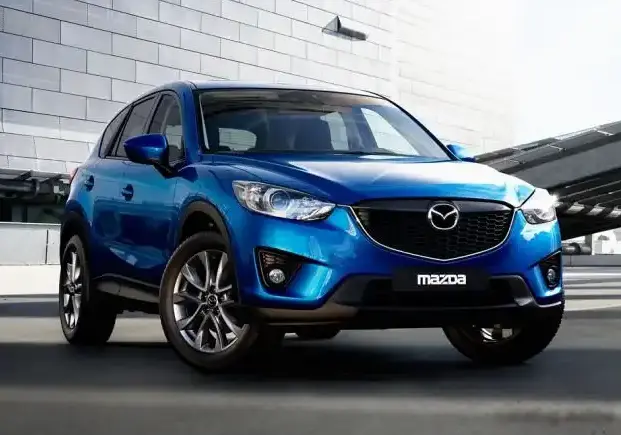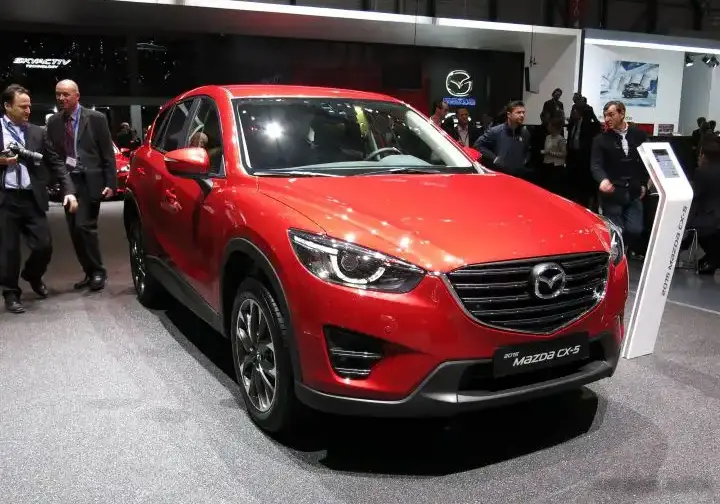
The Mazda CX-5 (facelift, 2015) 2.2d with 175 horsepower and all-wheel drive represents a significant iteration of Mazda’s popular compact SUV. Introduced in 2015 and continuing through 2017, this variant occupied a key position in the CX-5 lineup, offering a balance of fuel efficiency, performance, and practicality for buyers seeking a capable and refined crossover. It built upon the success of the original CX-5, launched in 2012, incorporating styling updates and refined mechanical components. This specific model was primarily aimed at the European and Asian markets, where diesel engines were – and continue to be – highly favored for their fuel economy and torque characteristics. In the US market, the CX-5 primarily featured gasoline engines.
Technical Specifications
| Brand | Mazda |
| Model | CX-5 |
| Generation | CX-5 (facelift 2015) |
| Type (Engine) | 2.2d (175 Hp) 4×4 |
| Start of production | 2015 |
| End of production | 2017 |
| Powertrain Architecture | Internal Combustion engine |
| Body type | SUV |
| Seats | 5 |
| Doors | 5 |
| Fuel consumption (urban) | 6 l/100 km (39.2 US mpg, 47.1 UK mpg, 16.7 km/l) |
| Fuel consumption (extra urban) | 4.7 l/100 km (50 US mpg, 60.1 UK mpg, 21.3 km/l) |
| Fuel consumption (combined) | 5.2 l/100 km (45.2 US mpg, 54.3 UK mpg, 19.2 km/l) |
| CO2 emissions | 136 g/km |
| Fuel Type | Diesel |
| Acceleration 0 – 100 km/h | 8.8 sec |
| Acceleration 0 – 62 mph | 8.8 sec |
| Acceleration 0 – 60 mph | 8.4 sec |
| Maximum speed | 207 km/h (128.62 mph) |
| Emission standard | Euro 6 |
| Weight-to-power ratio | 8.5 kg/Hp, 118.2 Hp/tonne |
| Weight-to-torque ratio | 3.5 kg/Nm, 283.8 Nm/tonne |
| Power | 175 Hp @ 4500 rpm |
| Power per litre | 79.9 Hp/l |
| Torque | 420 Nm @ 2000 rpm (309.78 lb.-ft. @ 2000 rpm) |
| Engine layout | Front, Transverse |
| Engine Model/Code | SHY4 |
| Engine displacement | 2191 cm3 (133.7 cu. in.) |
| Number of cylinders | 4 |
| Engine configuration | Inline |
| Compression ratio | 14:1 |
| Number of valves per cylinder | 4 |
| Fuel injection system | Diesel Commonrail |
| Engine aspiration | BiTurbo, Intercooler |
| Engine oil capacity | 5.1 l (5.39 US qt | 4.49 UK qt) |
| Coolant capacity | 8.5 l (8.98 US qt | 7.48 UK qt) |
| Kerb Weight | 1480 kg (3262.84 lbs.) |
| Max. weight | 2110 kg (4651.75 lbs.) |
| Max load | 630 kg (1388.91 lbs.) |
| Trunk (boot) space – minimum | 503 l (17.76 cu. ft.) |
| Trunk (boot) space – maximum | 1620 l (57.21 cu. ft.) |
| Fuel tank capacity | 58 l (15.32 US gal | 12.76 UK gal) |
| Length | 4555 mm (179.33 in.) |
| Width | 1840 mm (72.44 in.) |
| Width including mirrors | 2168 mm (85.35 in.) |
| Height | 1710 mm (67.32 in.) |
| Wheelbase | 2700 mm (106.3 in.) |
| Ride height (ground clearance) | 210 mm (8.27 in.) |
| Drive wheel | All wheel drive (4×4) |
| Number of gears and type of gearbox | 6 gears, manual transmission |
| Front brakes | Ventilated discs |
| Rear brakes | Disc |
| Assisting systems | ABS (Anti-lock braking system) |
| Steering type | Steering rack and pinion |
| Power steering | Electric Steering |
Powertrain & Engine Architecture
The heart of the CX-5 2.2d is the SHY4 engine, a 2.2-liter inline-four cylinder diesel. This engine utilizes a sophisticated bi-turbocharger setup, employing two turbochargers in series to minimize turbo lag and deliver a broad, flat torque curve. The first, smaller turbocharger spools up quickly at low engine speeds, providing immediate response. As engine speed increases, the second, larger turbocharger takes over, providing sustained power. A common-rail direct fuel injection system, operating at extremely high pressures, ensures precise fuel delivery and efficient combustion. The engine boasts a high compression ratio of 14:1, contributing to its thermal efficiency. The 6-speed manual transmission was standard, offering precise shifts and driver engagement. The transmission’s gear ratios were tuned to maximize fuel economy and provide adequate acceleration.
Driving Characteristics
The 175 horsepower and 309.78 lb-ft of torque delivered by the 2.2d engine provided a confident and capable driving experience. While not overtly sporty, the CX-5 2.2d offered ample power for everyday driving and highway cruising. The all-wheel-drive system provided enhanced traction in various weather conditions. Compared to the gasoline-powered CX-5 variants, the 2.2d offered significantly more low-end torque, making it easier to accelerate from a standstill and navigate hilly terrain. The manual transmission allowed for greater driver control, but the gear ratios were optimized for fuel efficiency rather than outright performance. Acceleration from 0-60 mph took approximately 8.4 seconds, which was competitive for its class.
Equipment & Trim Levels
The CX-5 2.2d 4×4 typically came well-equipped, even in base trim. Standard features often included automatic climate control, a touchscreen infotainment system, Bluetooth connectivity, and a suite of safety features such as ABS, traction control, and multiple airbags. Higher trim levels added features like leather upholstery, a premium sound system, a sunroof, and advanced driver-assistance systems like lane departure warning and blind-spot monitoring. Interior upholstery was typically cloth in lower trims, with leather options available. Dashboard configurations were generally consistent across trims, with a focus on a clean and functional design.
Chassis & Braking
The CX-5’s chassis was designed to provide a comfortable ride and responsive handling. The suspension utilized MacPherson struts at the front and a multi-link setup at the rear. Stabilizer bars were fitted to both axles to reduce body roll during cornering. Braking duties were handled by ventilated discs at the front and solid discs at the rear. The ABS system provided effective stopping power and stability in emergency braking situations. The all-wheel-drive system was primarily front-wheel drive biased, with power automatically transferred to the rear wheels when traction was lost.
Market Reception & Comparison
The Mazda CX-5 2.2d 4×4 was generally well-received by automotive critics. It was praised for its fuel efficiency, comfortable ride, and spacious interior. The diesel engine was noted for its refinement and strong torque output. Compared to other diesel-powered crossovers in its class, the CX-5 offered a compelling combination of performance, economy, and value. However, some critics noted that the manual transmission could feel slightly notchy, and the interior design, while functional, wasn’t as luxurious as some competitors. Fuel economy was a key selling point, with combined figures averaging around 45.2 US mpg.
Legacy
The SHY4 diesel engine, while generally reliable, has been known to require regular maintenance, particularly regarding the diesel particulate filter (DPF). Proper servicing and the use of high-quality diesel fuel are crucial to prevent DPF issues. Today, the 2015-2017 CX-5 2.2d 4×4 remains a popular choice in the used car market, particularly in Europe and Asia. Its fuel efficiency, practicality, and relatively low running costs make it an attractive option for buyers seeking a versatile and reliable crossover. The CX-5’s reputation for build quality and durability has helped it maintain strong resale values.