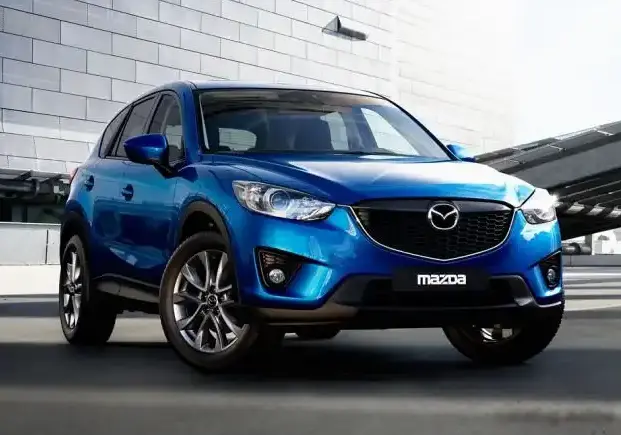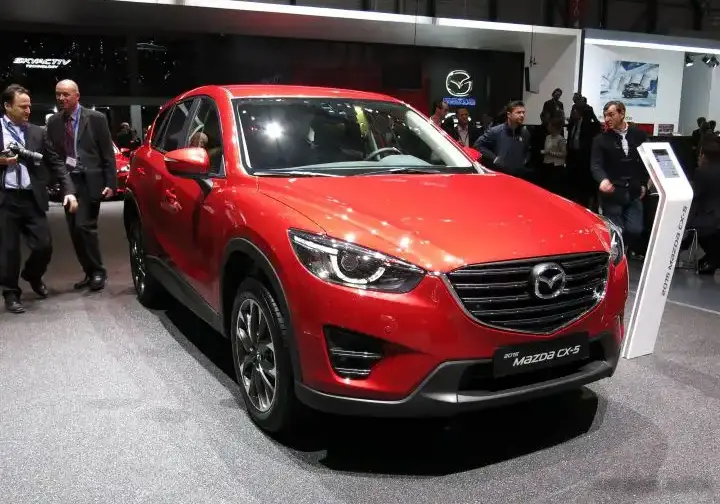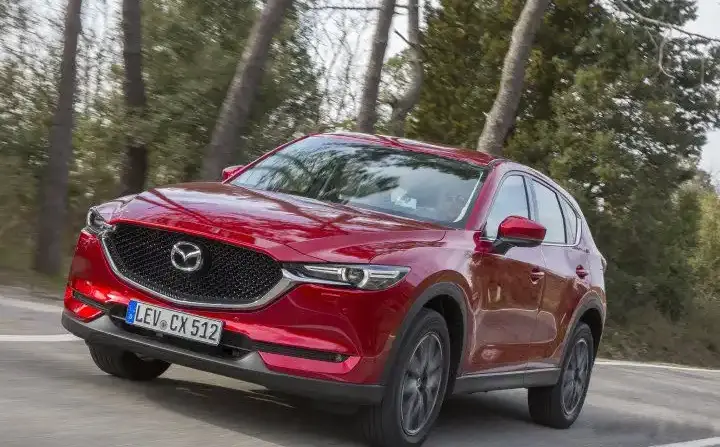
The Mazda CX-5 II 2.0 SKYACTIV-G (156 Hp) represents a key variant within the second generation of Mazda’s popular compact SUV, the CX-5. Introduced in March 2017 and continuing through the 2021 model year, this version occupied a significant position in the lineup as an entry-level to mid-range offering, balancing affordability with Mazda’s signature driving dynamics and refined interior. It was primarily marketed in Europe and Asia, where fuel efficiency and a comfortable ride were highly valued. This model utilized Mazda’s SKYACTIV technology suite, aimed at maximizing engine efficiency and responsiveness.
Technical Specifications
| Brand | Mazda |
| Model | CX-5 |
| Generation | CX-5 II |
| Type (Engine) | 2.0 SKYACTIV-G (156 Hp) |
| Start of production | March, 2017 |
| End of production | 2021 |
| Powertrain Architecture | Internal Combustion engine |
| Body type | SUV |
| Seats | 5 |
| Doors | 5 |
| Fuel consumption (urban) | 8.4 l/100 km (28 US mpg, 33.6 UK mpg, 11.9 km/l) |
| Fuel consumption (extra urban) | 6 l/100 km (39.2 US mpg, 47.1 UK mpg, 16.7 km/l) |
| Fuel consumption (combined) | 6.9 l/100 km (34.1 US mpg, 40.9 UK mpg, 14.5 km/l) |
| Fuel Type | Petrol (Gasoline) |
| Emission standard | Euro 5 |
| Weight-to-power ratio | 9.7 kg/Hp, 103.2 Hp/tonne |
| Weight-to-torque ratio | 7.6 kg/Nm, 132.4 Nm/tonne |
| Power | 156 Hp @ 6000 rpm |
| Power per litre | 78.1 Hp/l |
| Torque | 200 Nm @ 4000 rpm (147.51 lb.-ft. @ 4000 rpm) |
| Engine layout | Front, Transverse |
| Engine displacement | 1998 cm3 (121.93 cu. in.) |
| Number of cylinders | 4 |
| Engine configuration | Inline |
| Cylinder Bore | 83.5 mm (3.29 in.) |
| Piston Stroke | 91.2 mm (3.59 in.) |
| Compression ratio | 13:1 |
| Number of valves per cylinder | 4 |
| Fuel injection system | Direct injection |
| Engine aspiration | Naturally aspirated engine |
| Valvetrain | DOHC |
| Engine oil capacity | 4.2 l (4.44 US qt | 3.7 UK qt) |
| Coolant | 7.1 l (7.5 US qt | 6.25 UK qt) |
| Kerb Weight | 1511 kg (3331.18 lbs.) |
| Max. weight | 1990 kg (4387.2 lbs.) |
| Max load | 479 kg (1056.01 lbs.) |
| Trunk (boot) space – minimum | 442 l (15.61 cu. ft.) |
| Trunk (boot) space – maximum | 1342 l (47.39 cu. ft.) |
| Fuel tank capacity | 56 l (14.79 US gal | 12.32 UK gal) |
| Permitted trailer load with brakes (12%) | 1800 kg (3968.32 lbs.) |
| Permitted trailer load without brakes | 750 kg (1653.47 lbs.) |
| Permitted towbar download | 150 kg (330.69 lbs.) |
| Length | 4550 mm (179.13 in.) |
| Width | 1840 mm (72.44 in.) |
| Height | 1675 mm (65.94 in.) |
| Wheelbase | 2700 mm (106.3 in.) |
| Front track | 1585 mm (62.4 in.) |
| Rear (Back) track | 1585 mm (62.4 in.) |
| Ride height (ground clearance) | 193 mm (7.6 in.) |
| Minimum turning circle (turning diameter) | 11 m (36.09 ft.) |
| Drivetrain Architecture | The Internal combustion engine (ICE) drives the front wheels of the vehicle. |
| Drive wheel | Front wheel drive |
| Number of gears and type of gearbox | 6 gears, manual transmission |
| Front suspension | Independent, type McPherson with coil spring and anti-roll bar |
| Rear suspension | Independent multi-link spring suspension with stabilizer |
| Front brakes | Ventilated discs, 297 mm |
| Rear brakes | Disc, 303 mm |
| Assisting systems | ABS (Anti-lock braking system) |
| Steering type | Steering rack and pinion |
| Power steering | Electric Steering |
| Tires size | 225/65 R17 |
| Wheel rims size | 7J x 17 |
INTRODUCTION
The CX-5 II 2.0 SKYACTIV-G (156 Hp) was a crucial component of Mazda’s strategy to offer a compelling and efficient SUV option. Building upon the success of the first-generation CX-5, the second generation, launched in 2017, brought refinements in styling, interior quality, and driving dynamics. This particular variant, powered by the 2.0-liter SKYACTIV-G engine, was positioned as the entry point to the CX-5 range, appealing to buyers prioritizing fuel economy and a comfortable driving experience over outright performance. It competed directly with other compact SUVs like the Nissan Qashqai, Hyundai Tucson, and Kia Sportage in the European and Asian markets.
Powertrain & Engine Architecture
At the heart of this CX-5 variant lies Mazda’s PE-VPH 2.0-liter SKYACTIV-G inline-four cylinder engine. This engine is characterized by its high compression ratio of 13:1, achieved through a combination of direct injection, optimized combustion chamber design, and variable valve timing. The direct injection system precisely meters fuel into the cylinders, enhancing combustion efficiency and reducing emissions. The engine utilizes a double overhead camshaft (DOHC) valvetrain, further contributing to its responsiveness. The 156 horsepower output is achieved at 6000 rpm, while peak torque of 200 Nm (147.51 lb-ft) is delivered at 4000 rpm. This engine is naturally aspirated, meaning it does not employ turbocharging or supercharging. The 6-speed manual transmission was standard, offering precise shifts and a direct connection to the engine.
Driving Characteristics
The CX-5 II 2.0 SKYACTIV-G (156 Hp) with a manual transmission delivers a balanced driving experience. While not particularly quick, it provides adequate power for everyday driving situations. Acceleration is linear and predictable, with the engine feeling most comfortable in the mid-range. The 6-speed manual gearbox is well-matched to the engine’s characteristics, allowing drivers to maintain optimal engine speed for efficient cruising or spirited driving. Compared to the more powerful 2.5-liter SKYACTIV-G variants, this 2.0-liter engine offers less outright performance, but it compensates with improved fuel economy. The manual transmission provides a more engaging driving experience than the optional automatic, offering greater control and responsiveness. The relatively low weight of the vehicle, around 1511 kg (3331.18 lbs), helps to mitigate the effects of the modest power output.
Equipment & Trim Levels
The base trim level for the CX-5 II 2.0 SKYACTIV-G typically included features such as air conditioning, power windows and mirrors, a basic audio system with Bluetooth connectivity, and a suite of safety features including ABS, stability control, and multiple airbags. Higher trim levels added features like alloy wheels, a touchscreen infotainment system, navigation, a rearview camera, and advanced safety technologies such as lane departure warning and automatic emergency braking. Interior upholstery was typically cloth, with options for leather available on higher trims. Dashboard configuration was consistent across the range, featuring a clean and modern design with a focus on ergonomics.
Chassis & Braking
The CX-5 II utilizes a front-wheel-drive layout as standard, with all-wheel drive available as an option. The front suspension employs a McPherson strut design with coil springs and an anti-roll bar, while the rear suspension features an independent multi-link setup with a stabilizer bar. This suspension configuration provides a comfortable ride quality while maintaining good handling characteristics. The braking system consists of ventilated discs at the front and solid discs at the rear. ABS (Anti-lock Braking System) is standard, enhancing braking performance and stability in emergency situations. The steering system is a rack and pinion type with electric power assistance, providing precise and responsive steering feel.
Market Reception & Comparison
The Mazda CX-5 II 2.0 SKYACTIV-G (156 Hp) was generally well-received by automotive critics. It was praised for its stylish design, refined interior, and engaging driving dynamics. However, some reviewers noted that the 2.0-liter engine could feel underpowered, particularly when fully loaded or driving uphill. Compared to the 2.5-liter variants, the 2.0-liter model offered significantly better fuel economy, making it an attractive option for buyers prioritizing efficiency. The manual transmission was also appreciated for its precise shifts and engaging feel. Reliability reports have generally been positive, with the SKYACTIV-G engine proving to be a durable and dependable unit.
Legacy
The Mazda CX-5 II 2.0 SKYACTIV-G (156 Hp) continues to be a popular choice in the used car market. Its combination of affordability, fuel efficiency, and Mazda’s renowned reliability makes it a compelling option for buyers seeking a practical and well-rounded compact SUV. The SKYACTIV-G engine has proven to be a robust and long-lasting powertrain, with many examples exceeding 150,000 miles without major issues. The CX-5’s enduring appeal is a testament to Mazda’s commitment to quality and driving enjoyment, solidifying its position as a leading contender in the competitive compact SUV segment.