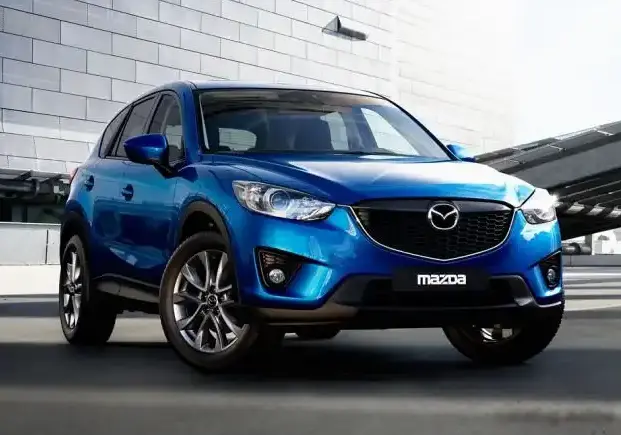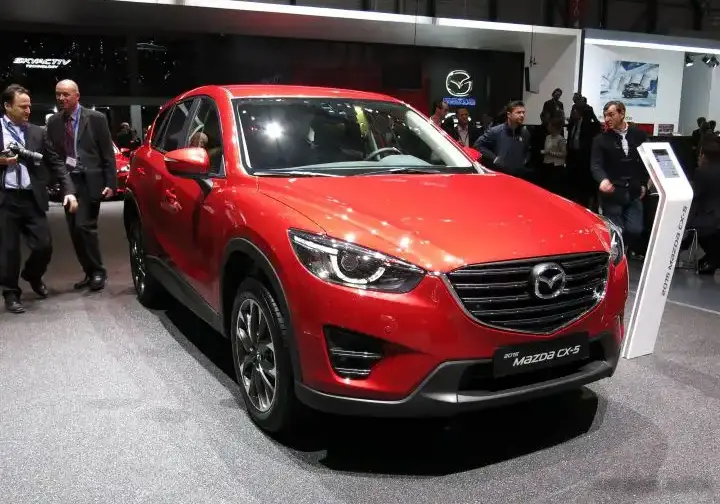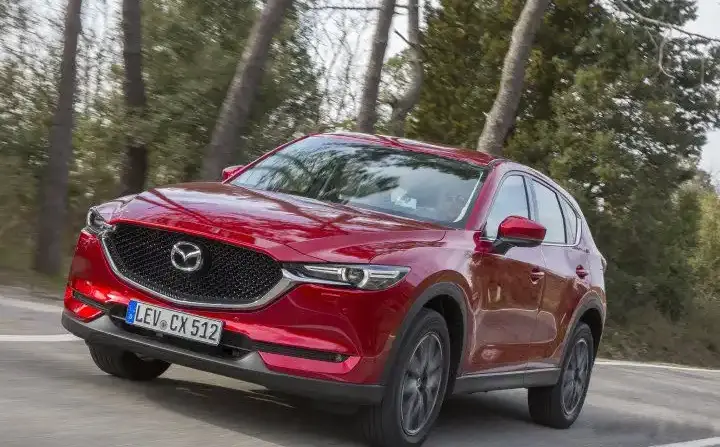
The Mazda CX-5 II 2.0 SKYACTIV-G (160 Hp) AWD Automatic represents a key variant within the second generation of Mazda’s popular compact SUV, produced from 2017 to 2018. Positioned as a mid-range offering, this model combined Mazda’s fuel-efficient SKYACTIV technology with the convenience of all-wheel drive and an automatic transmission. It played a significant role in bolstering the CX-5’s appeal to a broader customer base seeking a balance between practicality, driving enjoyment, and fuel economy in the North American and European markets. This generation, built on the Kodo – Soul of Motion design philosophy, aimed to elevate the compact SUV segment with a more premium feel and engaging driving dynamics.
Technical Specifications
| Brand | Mazda |
| Model | CX-5 |
| Generation | CX-5 II |
| Type (Engine) | 2.0 SKYACTIV-G (160 Hp) AWD Automatic |
| Start of production | 2017 |
| End of production | 2018 |
| Powertrain Architecture | Internal Combustion engine |
| Body type | SUV |
| Seats | 5 |
| Doors | 5 |
| Fuel consumption (urban) | 8 l/100 km (29.4 US mpg, 35.3 UK mpg, 12.5 km/l) |
| Fuel consumption (extra urban) | 5.8 l/100 km (40.6 US mpg, 48.7 UK mpg, 17.2 km/l) |
| Fuel consumption (combined) | 6.6 l/100 km (35.6 US mpg, 42.8 UK mpg, 15.2 km/l) |
| CO2 emissions | 155 g/km |
| Fuel Type | Petrol (Gasoline) |
| Acceleration 0 – 100 km/h | 10.5 sec |
| Acceleration 0 – 62 mph | 10.5 sec |
| Acceleration 0 – 60 mph | 10 sec |
| Maximum speed | 188 km/h (116.82 mph) |
| Emission standard | Euro 6 |
| Weight-to-power ratio | 9.4 kg/Hp, 106.7 Hp/tonne |
| Weight-to-torque ratio | 7.2 kg/Nm, 138.7 Nm/tonne |
| Power | 160 Hp @ 6000 rpm |
| Power per litre | 80.1 Hp/l |
| Torque | 208 Nm @ 4000 rpm (153.41 lb.-ft. @ 4000 rpm) |
| Engine layout | Front, Transverse |
| Engine Model/Code | PEX3 |
| Engine displacement | 1998 cm3 (121.93 cu. in.) |
| Number of cylinders | 4 |
| Engine configuration | Inline |
| Cylinder Bore | 83.5 mm (3.29 in.) |
| Piston Stroke | 91.2 mm (3.59 in.) |
| Compression ratio | 14:1 |
| Number of valves per cylinder | 4 |
| Fuel injection system | Direct injection |
| Engine aspiration | Naturally aspirated engine |
| Engine oil capacity | 4.2 l (4.44 US qt | 3.7 UK qt) |
| Coolant | 7.3 l (7.71 US qt | 6.42 UK qt) |
| Kerb Weight | 1500 kg (3306.93 lbs.) |
| Max. weight | 2115 kg (4662.78 lbs.) |
| Max load | 615 kg (1355.84 lbs.) |
| Trunk (boot) space – minimum | 506 l (17.87 cu. ft.) |
| Trunk (boot) space – maximum | 1620 l (57.21 cu. ft.) |
| Fuel tank capacity | 58 l (15.32 US gal | 12.76 UK gal) |
| Max. roof load | 50 kg (110.23 lbs.) |
| Permitted trailer load with brakes (8%) | 2000 kg (4409.25 lbs.) |
| Permitted trailer load with brakes (12%) | 2000 kg (4409.25 lbs.) |
| Permitted trailer load without brakes | 750 kg (1653.47 lbs.) |
| Permitted towbar download | 75 kg (165.35 lbs.) |
| Length | 4550 mm (179.13 in.) |
| Width | 1840 mm (72.44 in.) |
| Width including mirrors | 2115 mm (83.27 in.) |
| Height | 1680 mm (66.14 in.) |
| Wheelbase | 2700 mm (106.3 in.) |
| Front track | 1586 mm (62.44 in.) |
| Rear (Back) track | 1586 mm (62.44 in.) |
| Ride height (ground clearance) | 185-193 mm (7.28 – 7.6 in.) |
| Minimum turning circle (turning diameter) | 11.0 m (36.09 ft.) |
| Drive wheel | All wheel drive (4×4) |
| Number of gears and type of gearbox | 6 gears, automatic transmission |
| Front brakes | Ventilated discs |
| Rear brakes | Disc |
| Assisting systems | ABS (Anti-lock braking system) |
| Steering type | Steering rack and pinion |
| Power steering | Electric Steering |
| Tires size | 225/65 R17 |
| Wheel rims size | 17 |
Powertrain & Engine Architecture
At the heart of the CX-5 II 2.0 SKYACTIV-G AWD Automatic lies Mazda’s 1.998-liter (2.0-liter) SKYACTIV-G four-cylinder gasoline engine, designated as the PEX3 engine code. This engine is a cornerstone of Mazda’s efficiency-focused engineering, featuring a high compression ratio of 14:1 – a significant achievement for a gasoline engine without requiring premium fuel. This is accomplished through careful design of the combustion chamber and piston shape. The engine utilizes direct injection, optimizing fuel delivery and combustion efficiency. The valvetrain employs dual overhead camshafts (DOHC) and four valves per cylinder, enhancing breathing and power output. The SKYACTIV-G engine is known for its responsive throttle feel and relatively linear power delivery. Paired with this engine is a six-speed automatic transmission, specifically tuned for smooth operation and efficient gear changes. This transmission isn’t a traditional torque-converter automatic; it incorporates a quick-shifting design to minimize power loss and enhance the driving experience.
Driving Characteristics
The 160 hp and 153 lb-ft of torque produced by this powertrain configuration resulted in a 0-60 mph acceleration time of around 10 seconds. While not particularly sporty, the CX-5 2.0L Automatic offered adequate performance for everyday driving situations. The automatic transmission, while smooth, prioritized fuel economy over aggressive shifting. Compared to the more powerful 2.5-liter SKYACTIV-G engine option, the 2.0-liter felt less eager to accelerate, particularly when fully loaded or tackling uphill climbs. However, the all-wheel-drive system provided enhanced traction and stability in inclement weather conditions. The gear ratios were optimized for cruising efficiency, making it a comfortable highway companion. The steering felt precise and well-weighted, contributing to a more engaging driving experience than many competitors in the segment.
Equipment & Trim Levels
The 2.0 SKYACTIV-G AWD Automatic trim typically included standard features such as automatic climate control, a touchscreen infotainment system with Bluetooth connectivity, and a rearview camera. Interior upholstery was generally cloth, with options for leather upgrades available. Higher trim levels within the 2.0-liter range often added features like heated front seats, a power-adjustable driver’s seat, and a premium sound system. Optional extras included a sunroof, navigation system, and advanced safety features like blind-spot monitoring and lane departure warning. The dashboard layout was clean and modern, with a focus on ergonomics and ease of use.
Chassis & Braking
The CX-5 II utilized a MacPherson strut front suspension and a multi-link rear suspension, providing a comfortable ride and good handling characteristics. The suspension was tuned to balance ride comfort with body control. Braking duties were handled by ventilated discs at the front and solid discs at the rear. Anti-lock braking system (ABS) was standard, along with electronic brake-force distribution (EBD). The chassis was designed to be lightweight yet rigid, contributing to improved handling and safety. Stabilizer bars were fitted to both the front and rear axles to reduce body roll during cornering.
Market Reception & Comparison
Critics generally praised the Mazda CX-5 II 2.0 SKYACTIV-G AWD Automatic for its fuel efficiency, comfortable ride, and stylish design. However, some reviewers noted that the 160 hp engine could feel underpowered, especially when compared to competitors offering more powerful engine options. Fuel economy was a strong point, with combined figures averaging around 35.6 US mpg. Reliability was generally good, with Mazda consistently ranking well in consumer reports. Compared to the higher-output 2.5-liter engine, the 2.0-liter version was more affordable and offered better fuel economy, making it an attractive option for budget-conscious buyers.
Legacy
The Mazda CX-5 II 2.0 SKYACTIV-G AWD Automatic has proven to be a reliable and durable vehicle in the used car market. The SKYACTIV engine, while not known for blistering performance, has a reputation for longevity and relatively low maintenance costs. Common issues are generally minor and related to wear and tear items. Today, these models represent a good value proposition for buyers seeking a well-equipped, fuel-efficient, and reliable compact SUV. The combination of Mazda’s engineering prowess and the practicality of the CX-5 platform continues to make this variant a popular choice among used car shoppers.